








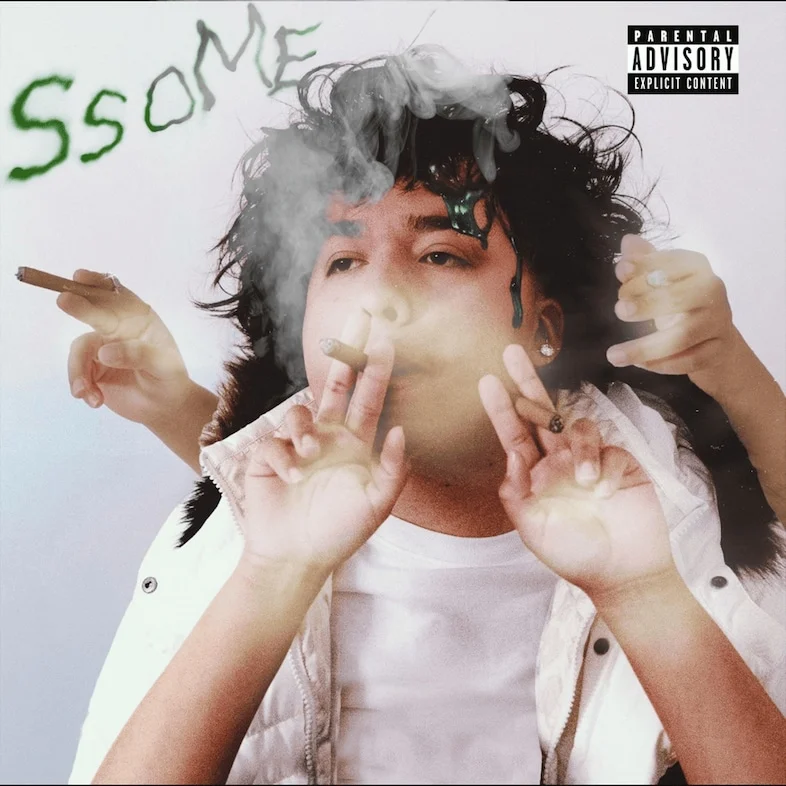
Earlier this year, the digital music landscape was once again rattled by a guide to mixing underground rap on YouTube, a video dedicated not to pristine audio engineering but to meticulously recreating the sort of clipped distortion most audio purists would deem catastrophic. This deliberate embrace of sonic imperfection is no accident; it is the defining characteristic of a burgeoning aesthetic, where speaker-shattering distortion has become a hallmark of the emerging "Ug" (underground) rap scenes across the UK and US. At the vanguard of this musical maximalism stands Oakland-born, Los Angeles-based rapper 2Slimey, an artist who has taken this sonic philosophy further than perhaps anyone before him.
2Slimey’s ascent has been rapid and polarizing, his name resonating through both enthusiastic endorsements and fervent critiques across the music industry. Lil Uzi Vert, a titan of contemporary rap, publicly lauded him as his "favourite underground artist at the moment," a significant co-sign that immediately propelled 2Slimey into wider consciousness. Conversely, Lulu of the experimental duo Frost Children famously urged listeners to "burn his music with fire," articulating a visceral rejection of his sound. Pitchfork, a bellwether of music criticism, dedicated an entire staff roundtable to dissecting his controversial aesthetic, underscoring the depth of discussion and division he inspires. His music is undeniably provocative: bass frequencies are boosted beyond conventional limits, sugar-coated melody lines clang with an almost arcade-like cacophony, and his lyrics, save for intermittent expletives, are largely unintelligible, submerged beneath layers of sonic grit. The experience has been likened to "Young Thug meets Candy Crush Saga" or, more starkly, "the heat death of the universe." Yet, 2Slimey emphatically rejects the notion of being pigeonholed as a mere meme artist; his approach is deliberate, his vision clear.
The Genesis of a Sound: From Boom Bap to Brainrot
Contrary to the chaotic impression his music conveys, 2Slimey presents a surprisingly lucid and grounded persona in conversation. He is punctual, arriving precisely for a 9 AM interview slot, noting he’s "always up early." His creative process is equally unexpected: he crafts his lyrics while listening to Italian jazz and hiking through the serene mountains surrounding Los Angeles. This juxtaposition of a tranquil personal life with an aggressively abrasive musical output highlights a carefully cultivated artistic identity.
His journey to this unique sound was not instantaneous but a series of calculated innovations. "I used to rap on that lyrical boom bap, Joey Badass, Pro Era-type shit," the 20-year-old rapper recounts with a laugh, pointing to an earlier, more traditional phase in his artistry. The pivotal shift, however, came with exposure to the murky sonic textures of the late SoundCloud star XXXTentacion and the raw, unbridled energy of Playboi Carti’s 2018 rage rap manifesto, Die Lit. These influences spurred 2Slimey to delve into his own experiments with the "dark arts of distortion." He explains, "Die Lit was one of the points that really shifted my sound," marking a "gradual transition" rather than an abrupt departure. This era, characterized by its embrace of lo-fi aesthetics and raw, often distorted, vocal deliveries, laid the groundwork for the extreme sonic explorations that define current Ug rap.
Tracing the Lineage of Sonic Extremism in Hip-Hop
The embrace of distortion and unconventional soundscapes in hip-hop, while reaching new heights with artists like 2Slimey, is not without historical precedent. From the raw, often unpolished recordings of early Memphis rap legends like Three 6 Mafia in the 1990s, where tape hiss and overloaded drums were part of the charm, to the industrial leanings of groups like Death Grips in the 2010s, hip-hop has always found ways to push against sonic norms. The early 2010s saw the rise of cloud rap and experimental producers who reveled in hazy, dreamlike textures that often flirted with sonic degradation.
The SoundCloud era, roughly spanning from the mid-2010s, served as a crucial incubator for a generation of artists who challenged mainstream production values. XXXTentacion, for instance, often featured raw, unmixed vocals and deliberately harsh instrumentation, reflecting a DIY ethos that resonated deeply with a younger, internet-native audience. Playboi Carti’s Die Lit was a landmark, popularizing "rage rap" with its maximalist, synth-heavy beats and ad-lib-driven vocal style that prioritized atmosphere over lyrical clarity. These artists demonstrated that "bad practice" could, in fact, be a potent artistic statement, attracting millions of listeners who valued authenticity and sonic rebellion over conventional polish.
This period also coincided with a broader cultural shift online towards "lo-fi" aesthetics and "brainrot" memes—content that is deliberately low-quality, bizarre, or overwhelming, designed to capture fleeting attention in an oversaturated digital environment. The "Italian brainrot meme," characterized by its jarring audio and visual elements, reflects a generation’s comfort with and even preference for content that defies traditional standards of quality and coherence. 2Slimey’s music taps directly into this zeitgeist, creating an auditory equivalent that is both disorienting and captivating.
The Evolution Beyond Rage: "Controlled Chaos"
While Playboi Carti’s Die Lit may have been a departure point for many underground artists, the "rage" subgenre has undergone a significant metamorphosis in the hands of 2Slimey and his contemporaries, including US rappers Che, Osamason, and Slayr. Their work pushes the boundaries of the sound into territories far closer to noise music than conventional hip-hop. Tracks like 2Slimey’s explosively hyperactive "Legion" or Che’s outright demonic-sounding "Promoting Violence" make Carti’s earlier work seem almost understated by comparison.
2Slimey acknowledges this evolution, stating, "I feel like rage is too bland of a description for my sound, to be honest." He grapples for an adjective that more accurately captures the emotional and sonic complexity of his artistry, ultimately settling on "controlled chaos." This term succinctly encapsulates the paradox at the heart of his music: while it may appear haphazard and unhinged, it is the product of deliberate artistic choices and a meticulous understanding of how to wield sonic extremity for maximum impact. This is not accidental distortion; it is a calculated artistic tool.
The Digital Echo Chamber and 2Slimey’s Stance
The intense discourse surrounding 2Slimey’s music has been amplified by the very internet culture that nurtured his rise. He is acutely aware of the heated debates his sound has ignited but consciously attempts to shield himself from its more corrosive aspects. "I be peeping the love, but I tend to stay away from the internet and especially Twitter nowadays," he reveals. "There’s a whole lot of hate, and the more you read, the more you fall into the fucking void."
This strategic disengagement allows him to maintain focus on his artistic vision, untainted by the negativity that often accompanies groundbreaking work. He firmly rejects the "meme artist" label frequently levied against him by detractors. "I know there are haters out there that consider me a quote-unquote ‘meme artist,’ which I’m obviously not," he asserts, underscoring his commitment to his craft as serious artistic endeavor rather than fleeting internet fodder. His ability to navigate this digital landscape, absorbing feedback while maintaining artistic integrity, is crucial for any artist pushing boundaries in the modern era.
Unpacking the Artist: Insights from 2Slimey
In an extended conversation, 2Slimey offered deeper insights into the unlikely origins of his controversial sound and his broader artistic philosophy.
On the Name "2Slimey":
His first rap moniker, GGS, held no inherent meaning, prompting a necessary rebrand. "I had a big group of friends and, you know how it goes, not everyone’s a friend. I had to cut some people. I had to get too slimey, if that makes sense." The name thus symbolizes a journey of self-preservation and discerning genuine connections.
On the Allure of Maximalist Distortion:
For 2Slimey, the appeal of these extreme sounds lies in their raw, unadulterated energy. "It’s just like the hardcore punk, fast-paced shit. It’s like an adrenaline rush. Some shit that makes me feel free." This connection to punk and hardcore highlights a shared ethos of rebellion and visceral expression, transcending genre boundaries.
On Crafting Beats:
His sonic landscape is built through collaborations with a select circle of trusted producers. "I have a few trusted producers. One’s from Belgium, vlor, and the two are from overseas. I forget where they’re from. I have people in the circle who I fuck with specifically. Vlor’s the main one, and he reached out to me. I feel like he knew what I was going for and just took it to the next level. We fuse together really well." This emphasis on synergistic creative partnerships underscores the collaborative nature of modern music production.
On the Internet’s Influence:
Like many artists of his generation, 2Slimey’s formative years were deeply intertwined with online culture. "Yeah, I was chronically online growing up, especially during that 2016 era, [Playboi] Carti, [Lil] Peep, X[XXTentacion] era." This immersion in the nascent stages of SoundCloud rap and internet-driven subcultures undeniably shaped his musical sensibilities and his understanding of how new sounds can propagate.
On the Significance of the New Wave:
2Slimey views the current Ug rap movement as a significant historical moment. "Back then, people were hating on what Uzi and Carti were doing; they considered it ‘mumble rap.’ Now, we’re like ten times that. If you showed someone in 2016 this type of music, they’d lose their mind, because they were already losing their mind over that, you know what I mean? What’s going on now is a big movement. People gonna look back and remember this era for sure." This perspective positions his work as a direct continuation and radical acceleration of the sonic experimentation initiated by his predecessors.
Explaining His Music to an Older Generation:
To bridge the generational gap in understanding, 2Slimey frames his music as an experience. "I’d say it’s like concert music. It’s meant for the show. It’s meant for performance. It’s a mix of EDM, punk and rap." This description highlights the visceral, communal aspect of his sound, designed for live energy rather than passive listening.
The "Anxiety" Albums:
His last two albums, High Anxiety and More Anxiety, bear titles that are deeply personal. "I still deal with anxiety sometimes. Growing up, I had anxiety. Funnily enough, even during school, I never liked presenting to classes, but now I’m out here doing shows in front of thousands of people." He connects the album titles to the listener’s experience: "But, with High Anxiety, or when you put 2Slimey on, you never know what to expect. It’s like you’re on the edge, anxiety. That’s the concept of the name."
He further elaborates on the therapeutic aspect: "But it also ties back to my personal issues. On More Anxiety, it ends with ‘Legion,’ which is like my realisation of the anxiety I’ve been dealing with, and I’m on the comedown. That’s why there’s the orchestra at the end, it’s a lot more quote, unquote dumbed down, more digestible. If you compare More Anxiety to High Anxiety, it’s definitely more digestible than the original project." This reveals a narrative arc within his chaotic soundscapes, suggesting a journey from peak tension to a form of resolution.
Music as a Coping Mechanism:
Asked if music helps with his anxiety, 2Slimey offers a nuanced response: "Damn, it’s 50-50. I feel like sometimes I’ll be catching myself getting anxious, but then I turn it into adrenaline, like at a show. Nowadays, I use my anxiety for positive things." He sees his music not as a calming agent in the traditional sense, but as an outlet for intense emotion. "Hell yeah. If you got anxiety, throw on High Anxiety, you’re gonna release all them emotions out. By the time you’re done with the full project, you’ll be feeling good. The juices are flowing." This perspective challenges conventional notions of musical therapy, positing that intense, cathartic release can be just as beneficial as soothing sounds.
Early Musical Foundations:
Music has always been a fundamental part of his life. "Music was always my first passion. I took a break for two years and it felt like an empty void." His early exposure to instruments is notable: "My mom played the saxophone and I used to play the piano, the trumpet and the guitar. It’s been a while, though." This background in classical and jazz instrumentation provides a surprising foundation for his current, radically experimental sound.
Unlikely Inspirations:
His creative process involves seeking solitude and unexpected sonic inputs. "Lately, I’ve been going to the mountains in LA just to look at the views. I’ve been playing a lot of jazz, Italian jazz. I’ll be vibing and have a clear mind. It helps new thoughts spark up. Just some really calm shit." The stark contrast between the serene act of listening to Italian jazz in the mountains and the abrasive nature of his own music underscores his ability to draw inspiration from diverse and seemingly contradictory sources.
The Connection Between Jazz and "Chaos":
While diametrically opposed in sound, 2Slimey finds a shared essence between jazz and his own music. "Mainly, the creativity. They might be the complete opposite, but you find peace in both. Yeah, my music is chaos, but you listen to it to escape from the world. There’s so much shit going on nowadays and, when you throw on 2Slimey, you forget about everything. You feel free." This deep connection highlights a core human desire for escapism and emotional release, regardless of the sonic vehicle.
Mainstream Ambitions:
Despite operating in a niche, experimental corner of the music world, 2Slimey harbors ambitious mainstream goals. "My end goal is to go really mainstream. Like selling out arenas, awesome shit like that. I want a fucking Grammy. Dead ass." This declaration challenges the perception that experimental, underground artists are content to remain on the fringes, suggesting a strategic long-term vision for his "controlled chaos" to resonate with a global audience.
Broader Implications and the Future of Sound
2Slimey’s rise, alongside the broader Ug rap movement, signals a significant inflection point in the evolution of hip-hop and contemporary music. It challenges entrenched notions of "good" production, "listenable" vocals, and conventional musicality. By embracing and weaponizing distortion, these artists are not only creating a distinct aesthetic but also reflecting a generational comfort with, and perhaps even preference for, sounds that defy traditional sonic fidelity.
This phenomenon also blurs the lines between genres, proving that hip-hop, EDM, punk, and noise music can coalesce into something entirely new. The "concert music" aspect 2Slimey emphasizes highlights the communal, almost ritualistic function of his sound, designed to be experienced physically and collectively. The raw energy and adrenaline it evokes can transform a live show into a cathartic release, a shared experience of "controlled chaos."
The journey of an artist like 2Slimey—from playing piano and trumpet to crafting hyper-distorted rap, from seeking peace in Italian jazz to channeling anxiety into adrenaline—underscores the multifaceted nature of modern artistry. His aspiration for mainstream success, including a Grammy, suggests a bold vision for how deeply experimental sounds can penetrate and reshape popular culture. As the internet continues to fragment and diversify musical tastes, artists like 2Slimey stand as potent examples of how authenticity, raw energy, and a fearless approach to sound can carve out a unique and unforgettable space in the ever-evolving soundscape. The "brainrot" aesthetic, far from being a passing meme, may well be a harbinger of hip-hop’s next radical frontier.