








The landscape of the global fashion industry is undergoing a seismic shift as generative artificial intelligence moves from experimental laboratory settings to the pages of the world’s most prestigious publications. When commercial model Sarah Murray first encountered an AI-generated model in 2023—a woman of color wearing a Levi’s denim overall dress—the reaction was not one of wonder, but of profound exhaustion. For Murray and thousands of her peers, the image represented more than just a technological milestone; it signaled the arrival of a digital competitor that does not tire, does not age, and does not require a day rate, travel expenses, or catering.
The controversy surrounding "artificial diversity" first reached a fever pitch when Levi Strauss & Co. announced a partnership with the digital fashion studio Lalaland.ai. The stated goal was to supplement human models with AI-generated figures to showcase products on a wider range of body types and skin tones. However, the backlash was immediate. Critics and industry professionals labeled the move a shortcut that bypassed the necessity of hiring diverse human talent, effectively creating a "digital veneer" of inclusivity without providing economic opportunities to the communities being represented.
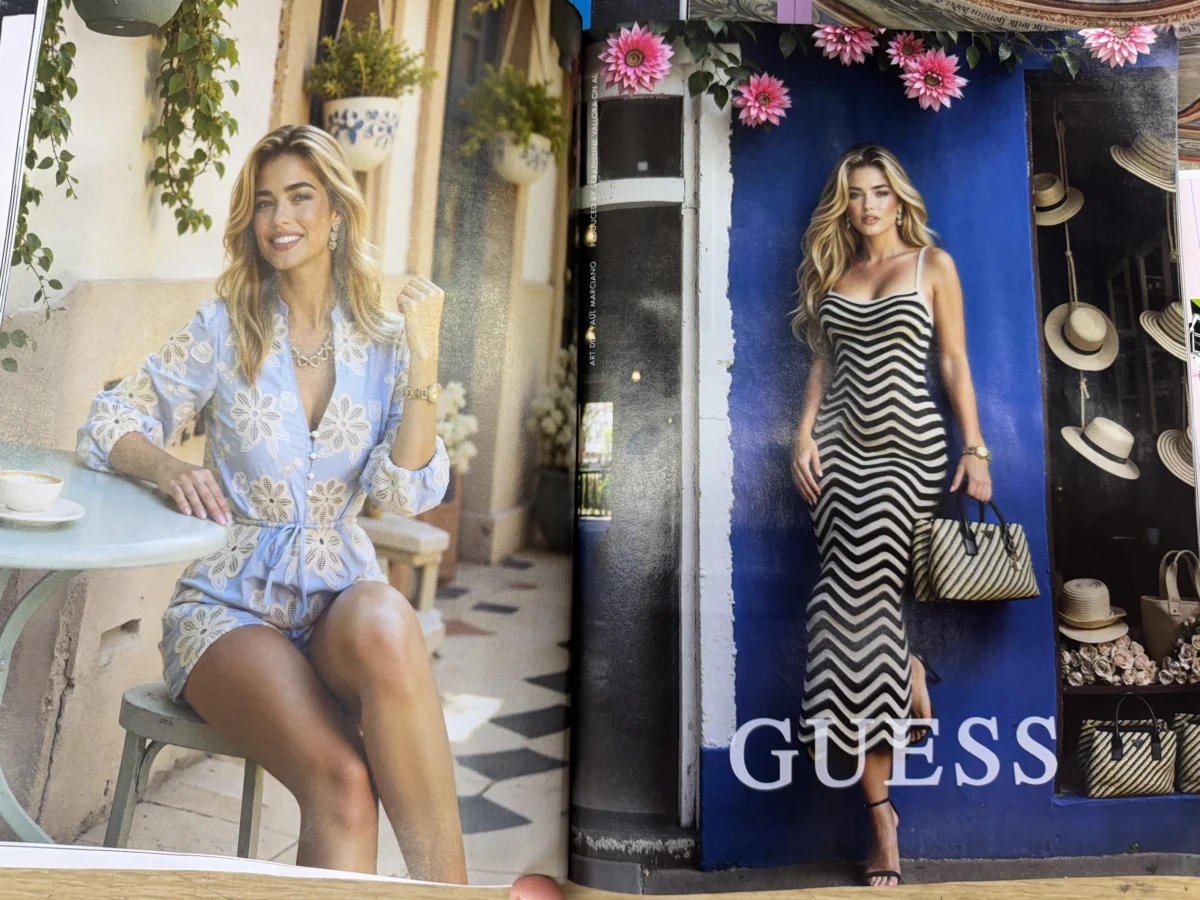
In the two years following the Levi’s announcement, the integration of AI has only accelerated. The most recent flashpoint occurred in the July print edition of Vogue, often considered the "fashion bible." An advertisement for the brand Guess featured a model possessing the classic North American aesthetic—glossy blonde hair, rose-colored lips, and a specific "voluptuous yet thin" physique. While the image appeared to be a standard high-budget photograph, it was entirely generated by AI. The placement of such an image in Vogue, even as an advertisement rather than an editorial, has been interpreted by many as a silent endorsement of the technology by the industry’s highest gatekeepers.

The Economic Imperative of Automation
The primary driver behind the adoption of AI models is a matter of pure economics. According to industry analysts, the cost of a traditional commercial photo shoot can range from tens of thousands to hundreds of thousands of dollars. These costs encompass not only the models’ fees but also photographers, stylists, hair and makeup artists, set designers, lighting technicians, and studio rentals.
Paul Mouginot, an art technologist with experience in the luxury sector, notes that AI allows brands to bypass these logistical hurdles. A brand can now take a "flat-lay" product shot—a photo of a garment lying on a surface—and use AI to "wear" that garment onto a photorealistic virtual model in a high-fashion setting. This process can be completed in a fraction of the time and at a nominal cost compared to traditional methods.
The pressure to automate is particularly high in the realm of e-commerce. PJ Pereira, co-founder of the AI advertising firm Silverside AI, explains that the traditional marketing model was designed for a world where a brand produced perhaps four major campaigns a year. In the age of social media and constant digital storefront updates, brands now require anywhere from 400 to 400,000 pieces of content annually.
"There is no way to scale from four to 400,000 with just process tweaks," Pereira says. "You need a new system." For small to mid-sized brands, AI is often the only way to remain competitive in a high-volume digital marketplace. While this efficiency benefits the corporate bottom line, it directly threatens the "bread and butter" income of professional models. E-commerce modeling, while less prestigious than runway or editorial work, provides the financial stability that allows models to sustain their careers.

A Chronology of Digital Integration in Fashion
The path to the current AI-dominated discourse has been paved over the last decade by several key technological milestones:
- 2013: The French retailer Veepee begins utilizing virtual mannequins to display clothing, marking an early shift toward 3D digital representation in e-commerce.
- 2018: The "world’s first digital supermodel," Shudu Gram, created by photographer Cameron-James Wilson, goes viral, sparking the first major debates regarding the ethics of digital personas and the displacement of Black models.
- 2019: High-fashion brands begin experimenting with CGI models in social media campaigns, with influencers like Lil Miquela securing major brand deals.
- March 2023: Levi’s faces significant public relations blowback after announcing its partnership with Lalaland.ai to increase "diversity" through synthetic models.
- July 2024/2025: Guess places a fully AI-generated advertisement in Vogue, signaling a transition from digital-only spaces to premium print media.
The Human Cost and the "Robot Cultural Appropriation"
Beyond the economic displacement, there is a growing concern regarding the ethical implications of synthetic diversity. Sinead Bovell, a model and founder of the WAYE organization, has coined the term "robot cultural appropriation" to describe the practice of brands generating diverse identities to tell a story without actually engaging with or compensating people from those backgrounds.
The concern is that AI could be used to fulfill "diversity quotas" in a way that is purely cosmetic. If a brand can generate a model of any ethnicity or body type with a few keystrokes, the incentive to dismantle the systemic barriers that have historically kept those groups out of the fashion industry is significantly diminished.
Furthermore, models are increasingly worried about the fine print in their contracts. Sarah Murray notes that many professionals are seeing new clauses that may allow brands to use their physical likeness to train future AI systems. This "digital twinning" could allow a brand to pay a model for a single shoot and then use their synthetic likeness for years afterward without further compensation.

Legislative Responses and the Fashion Workers Act
In response to these emerging threats, advocacy groups like the Model Alliance are pushing for legislative safeguards. Sara Ziff, founder of the Model Alliance, has been a vocal proponent of the Fashion Workers Act in New York. This proposed legislation seeks to regulate management agencies and provide basic labor protections for models and content creators.
A key component of the current legislative debate involves "digital replicas." If passed, the act would require brands to obtain clear, informed consent before creating or using a model’s digital twin and would mandate fair compensation for the use of such assets. This legal framework is seen as essential for preventing the wholesale exploitation of human likenesses in the age of generative AI.
The "AI Artisan" and the Search for Imperfection
While some brands are moving toward total automation, another sector of the industry is focusing on the "AI Artisan" approach. Sandrine Decorde, CEO and co-founder of the creative studio Artcare, argues that the most effective AI work still requires a human touch. Her team uses advanced tools to fine-tune AI models, intentionally adding the "human" imperfections—asymmetrical features, unique gazes, or slight skin variations—that make an image impactful.
Decorde also highlights an ethical use case for the technology: children’s fashion. The industry has long been criticized for the potential exploitation of child models. By using AI-generated children, brands can showcase their products without subjecting minors to the rigors and potential risks of a professional set.

However, even these "artisanal" AI models face criticism for their homogeneity. Many current AI generators default to a narrow standard of beauty, often producing models with identical jawlines, symmetrical lips, and "perfect" proportions. This reinforces the very beauty standards that many in the fashion industry have spent decades trying to broaden.
Future Implications: The Silent Majority and the Luxury Standard
The future of AI in fashion may ultimately be decided by consumer behavior rather than industry protests. PJ Pereira notes that while AI-generated content often receives negative comments on social media, the underlying data frequently tells a different story. In recent tests, AI-generated product videos saw significantly higher engagement and click-through rates than traditional content, leading to a steep hike in sales.
"If you look past the comments, you see that there’s a silent majority that vastly outnumbers the criticism," Pereira explains. This suggests that while vocal critics may decry the loss of human authenticity, the general public may be increasingly indifferent to whether the person wearing a dress in a digital ad is made of flesh or pixels.
For luxury heritage brands, the transition is likely to be slower. These brands trade on the "sensual reality" of their products and the human story behind the craftsmanship. However, experts like Amy Odell believe that once a publication like Vogue begins regularly featuring AI in its editorial spreads—not just its advertisements—the "stigma" will vanish. Odell compares the current resistance to AI to the initial industry backlash against reality stars like Kim Kardashian. Once Kardashian appeared on the cover of Vogue, she was fully integrated into the high-fashion ecosystem.

As the industry moves forward, the role of the human model is being redefined. Models are being encouraged to move beyond being just a "blank canvas" and to instead build personal brands and unique human narratives that AI cannot replicate. In an era where "perfection" is a commodity that can be generated in seconds, the value of the unique, the imperfect, and the authentically human may become the ultimate luxury.