







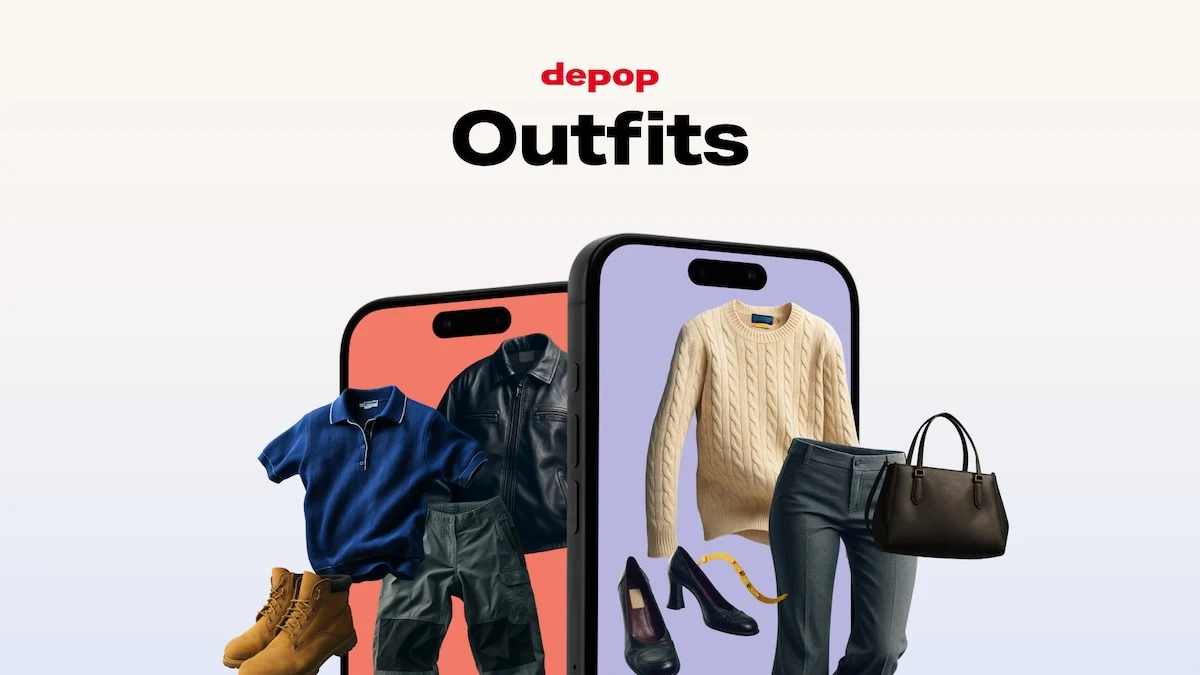
The fashion resale ecosystem underwent a significant shift on Wednesday as Depop, the London-based peer-to-peer marketplace, officially unveiled "Outfits," a sophisticated styling and collaging tool integrated directly into its mobile application. This new feature is designed to cater to a burgeoning demographic of digital natives who utilize fashion as a form of creative expression and social currency. By providing a dedicated interface for mood board creation, Depop aims to transform the traditional transactional nature of secondhand shopping into a highly curated, content-driven experience. The launch represents a strategic alignment with current social media trends, where visual storytelling and "outfit of the day" (OOTD) content drive significant consumer behavior.
Technical Functionality and User Interface Design
The "Outfits" tool introduces a suite of creative features intended to streamline the process of fashion curation. Users can initiate the styling process by selecting any item within the Depop marketplace—whether it is a piece they are currently selling, an item they have "liked," or a product found through the search function. Upon selecting an item, a scissors icon appears on the right side of the interface, serving as the gateway to the collaging suite.
Within the tool, users are granted access to a variety of customization options. These include the ability to remove backgrounds from product images, a feature that mimics high-end editorial layouts. Users can also select from a range of colorful background templates or utilize layout guides to ensure aesthetic consistency. The interface allows for the fluid adjustment of image sizing and placement, enabling the creation of complex, multi-layered visual compositions.
Crucially, the tool bridges the gap between inspiration and commerce. Every item featured within a collage remains shoppable. If a user views a curated outfit and decides to purchase a specific component, they can click through directly to the listing. To address the inherent challenge of the resale market—the one-of-a-kind nature of vintage stock—Depop has integrated an algorithmic recommendation engine. If a specific item featured in a collage sells out, the app automatically suggests similar alternatives from other sellers, ensuring that the "look" remains attainable even after individual pieces are no longer available.
Chronology of Development and Strategic Context
The introduction of "Outfits" is the culmination of a multi-year effort by Depop to solidify its position as the primary fashion destination for Gen Z. Since its acquisition by Etsy in 2021 for $1.62 billion, Depop has focused on enhancing its technological infrastructure to better compete with rivals like Vinted, Poshmark, and Mercari.
The timeline of this development reflects a broader industry move toward "Social Commerce." In 2022, Pinterest launched Shuffles, a standalone collage-making app that quickly gained viral status on TikTok. Recognizing the demand for these creative tools, Pinterest integrated Shuffles functionality into its main platform in late 2023. Depop’s decision to build a native collaging tool suggests a desire to keep users within its own ecosystem rather than having them export Depop imagery to third-party apps for curation.
By allowing users to share their static "Outfits" creations directly to Instagram Stories and Pinterest, Depop is effectively turning its user base into a decentralized marketing force. This strategy leverages the organic reach of user-generated content (UGC) to drive traffic back to the marketplace, reducing the company’s reliance on paid customer acquisition.
Financial Performance and Market Positioning
The launch of the "Outfits" tool comes at a period of robust financial health for the platform. In its Q2 2025 earnings report, parent company Etsy revealed that Depop’s Gross Merchandise Sales (GMS) increased by 34.7% year-over-year on a currency-neutral basis. This growth rate significantly outpaces many of its competitors in the broader e-commerce sector and puts Depop on a clear trajectory toward a $1 billion annual GMS run rate.
Comparatively, the resale market remains highly fragmented but competitive. Mercari, a major player in the Japanese and U.S. markets, reported a Gross Merchandise Value (GMV) of approximately $728 million for the fourth quarter of 2024. Depop’s ability to maintain high double-digit growth suggests that its focus on community and subculture-driven fashion is resonating more deeply with younger consumers than the generalist approach favored by some of its peers.

Market analysts suggest that the "Outfits" feature could further improve Depop’s "take rate" and user retention. By increasing the time spent in-app (dwell time) through creative tools, Depop increases the probability of impulse purchases and repeat visits. Furthermore, the tool provides sellers with a professional-grade marketing utility, allowing them to showcase how individual items fit into a broader wardrobe, which can justify higher price points for vintage or rare items.
Addressing the Gen Z Consumer and Circular Fashion Trends
Depop’s demographic is uniquely concentrated among Gen Z, a group that values both individual style and sustainability. According to recent consumer reports, nearly 60% of Gen Z consumers prefer to buy secondhand fashion over new clothing, citing environmental concerns and the desire for unique "one-off" pieces. However, the difficulty of navigating vast inventories of disorganized secondhand goods has often been a barrier to entry.
The "Outfits" tool addresses this by introducing a layer of curation. Rather than scrolling through an endless feed of disconnected items, users can engage with "looks" that are curated by influencers, professional sellers, or their peers. This mimics the experience of a digital fashion magazine where the content is entirely shoppable.
Furthermore, the feature supports the "circular economy" by encouraging users to re-style and re-sell. By visualizing how a single item can be paired in multiple ways, Depop is promoting a more thoughtful approach to consumption. The ability to share these styles on social media reinforces the idea that "re-wearing" and "re-styling" is a high-status activity, counteracting the fast-fashion narrative of single-use outfits.
Industry Implications and the Rise of the "Seller-Stylist"
The introduction of native styling tools signals a shift in the role of the online seller. On Depop, the most successful sellers have long functioned as de facto stylists and creative directors, using high-quality photography and specific "aesthetics" (such as Y2K, "Coquette," or "Gorpcore") to build a brand. The "Outfits" tool formalizes this role, providing them with the digital infrastructure to create editorial-style content without needing external design software like Adobe Photoshop or Canva.
This evolution from "seller" to "seller-stylist" has significant implications for the platform’s economics. Items that are featured in well-designed collages are likely to see higher engagement rates, potentially leading to faster turnover of inventory. It also creates a new form of "social proof" within the app; when a user sees an item styled effectively in multiple different collages, its perceived value increases.
From a competitive standpoint, Depop’s move puts pressure on other marketplaces to innovate beyond the simple "listing and search" model. As the lines between social media, creative tools, and marketplaces continue to blur, platforms that fail to offer a comprehensive "experience" risk losing the attention of younger audiences who view shopping as a form of entertainment.
Future Outlook and Technological Evolution
Looking ahead, the "Outfits" tool provides a foundation for further technological integration. Industry experts anticipate that Depop may eventually incorporate artificial intelligence (AI) to assist in the collaging process. This could include AI-generated background removals that are more precise, or "auto-styling" features where the app suggests complementary items based on color theory or current fashion trends.
There is also potential for Depop to monetize the feature through "sponsored outfits" or brand partnerships. While the platform currently focuses on peer-to-peer resale, the styling tool could eventually allow brands to showcase new sustainable collections alongside vintage pieces, creating a hybrid model of retail and resale.
In conclusion, the launch of "Outfits" is more than a simple feature update; it is a strategic maneuver designed to deepen user engagement and capitalize on the intersection of social media and e-commerce. By empowering its community with creative tools, Depop is not only facilitating transactions but is also fostering a digital culture where fashion is curated, shared, and democratized. As the platform nears the $1 billion GMS milestone, its focus on technical innovation and community-centric features will likely remain the primary drivers of its continued dominance in the global resale market.