


Russell & Bromley has dramatically increased clearance discounts to as much as 60% across a significant portion of its store portfolio facing imminent closure, as administrators intensify efforts to liquidate remaining stock following the luxury footwear and handbag retailer’s collapse and subsequent acquisition by retail giant Next PLC. The accelerated sale, a critical phase in the post-administration process, marks a pivotal moment for the venerable British brand, signalling the end of an era for numerous high street locations while simultaneously paving the way for its future under new ownership.
The Unfolding Crisis and Administration
Russell & Bromley, a name synonymous with premium footwear and accessories in the UK for generations, found itself grappling with mounting financial pressures that ultimately led to its downfall. Established in 1873, the brand had cultivated a reputation for quality craftsmanship, classic designs, and a distinguished presence on prime high street locations. However, the rapidly evolving retail landscape, characterised by relentless competition from agile online pure-plays, the rise of fast fashion, and the increasing penetration of luxury e-commerce platforms, proved challenging for the heritage brand to navigate.
Sources close to the company indicate that while Russell & Bromley maintained a loyal customer base, particularly for its formal wear and premium leather goods, it struggled to adapt swiftly enough to shifting consumer behaviours. High operational costs associated with its extensive network of physical stores, compounded by rising rents, business rates, and a general decline in footfall across many retail hubs, eroded profitability. Furthermore, analysts suggest that despite efforts, the brand’s digital transformation strategy may have lagged behind competitors, limiting its ability to capture the growing online market share effectively.
The first public signs of significant distress emerged in late 2025, with reports of tightening credit lines and delayed supplier payments. Despite attempts to secure additional funding or a rescue deal, the company was ultimately unable to stave off insolvency. On January 18, 2026, Russell & Bromley formally announced its entry into administration, appointing restructuring specialists Teneo as administrators. This announcement sent ripples through the retail sector, highlighting the continued vulnerability of even well-established brands to the prevailing economic headwinds and structural changes within the industry. Teneo immediately commenced an urgent review of the business operations, assessing assets, liabilities, and potential pathways forward, including a sale of the business and its assets.
Next PLC’s Strategic Acquisition: A New Chapter
The administration process culminated in a strategic acquisition by Next PLC, a prominent multi-channel retailer renowned for its robust online platform and a growing portfolio of acquired brands. On March 5, 2026, Next confirmed it had successfully acquired Russell & Bromley’s brand name, intellectual property, online operations, and a select number of its most profitable physical stores. The financial terms of the deal were not publicly disclosed, but industry insiders estimate the acquisition price to be in the region of £40-50 million, primarily reflecting the brand equity and digital infrastructure.
Next’s acquisition strategy is not new; the company has a proven track record of acquiring distressed but valuable brands, integrating them into its highly efficient "Total Platform" model. This model offers comprehensive logistics, warehousing, e-commerce, and customer service solutions, allowing acquired brands to leverage Next’s extensive infrastructure while maintaining their distinct brand identity. For Russell & Bromley, this acquisition represents a lifeline, offering the capital injection and operational expertise necessary to revitalise the brand and ensure its long-term viability in a digitally-driven market.
A spokesperson for Next PLC, in a statement released shortly after the acquisition, commented, "We are committed to preserving the heritage and quality that Russell & Bromley represents. Our plan is to integrate the brand into our Total Platform, enhancing its online presence and optimising its physical footprint to ensure a sustainable and profitable future. This acquisition aligns perfectly with our strategy of diversifying our brand portfolio and offering a broader range of premium products to our customers." The acquisition is expected to streamline Russell & Bromley’s operations, focusing on its core strengths and potentially expanding its reach through Next’s vast customer base.
The Clearance Sale: A Race Against Time
The current intensified clearance sale is a direct consequence of Next’s selective acquisition. While Next opted to retain approximately 25 of Russell & Bromley’s prime retail locations, primarily in key city centres and affluent market towns, the remaining 35 stores, deemed unviable under the new operational model, are slated for permanent closure. These closures necessitated the rapid liquidation of all remaining inventory to maximise recovery for creditors and facilitate the timely handover of properties.
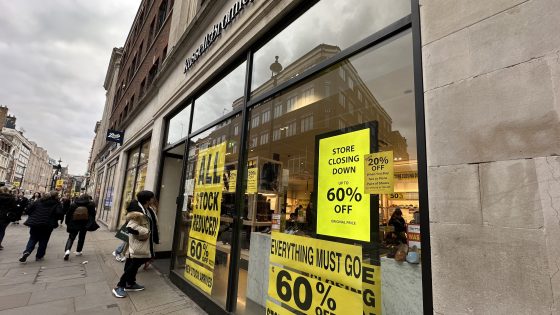
The discounts, now reaching up to 60%, encompass a wide array of products, from luxury leather boots and formal shoes to casual trainers, handbags, and small leather accessories. With the article dated April 2026, the sale likely includes a mix of remaining winter stock and early spring collections that need to be cleared before the final closure dates, which are anticipated by the end of April or early May. Photographs from affected stores in locations like Covent Garden and Manchester show significant markdowns advertised prominently, drawing considerable consumer interest. Shoppers, eager to secure premium items at substantially reduced prices, have been observed queuing outside stores, particularly during peak trading hours, leading to a rapid depletion of popular sizes and styles.
"Our primary objective during this phase is to ensure an orderly and efficient wind-down of the non-retained stores, maximising the return for creditors through the sale of remaining stock," stated a representative from Teneo Restructuring. "The increased discounts are a necessary measure to achieve this within the tight deadlines required for store closures. We appreciate the public’s response and the efforts of the dedicated staff involved in managing these sales." The logistical challenge of coordinating sales across dozens of locations simultaneously, while managing staff transitions and property exits, is considerable, underscoring the complexity of retail administration.
Timeline of Key Events
To provide a clearer picture of Russell & Bromley’s trajectory to this point, a brief chronology of key events is essential:
- Q3 2025 (July-September): Unconfirmed reports circulate within the retail industry regarding Russell & Bromley facing significant financial headwinds, attributed to declining sales and increasing operational costs. Early discussions with potential investors or lenders are rumoured.
- November 2025: Official profit warnings are issued by the company, citing challenging market conditions and a weaker-than-expected festive trading outlook. Stock value begins to decline significantly.
- January 18, 2026: Russell & Bromley formally announces its intention to appoint administrators. Teneo Restructuring is subsequently appointed to oversee the process. All trading operations continue under administration while a buyer is sought.
- February 2026: A bidding process for Russell & Bromley’s assets commences, attracting interest from several major retail groups and investment firms. Teneo evaluates proposals focusing on maximising creditor returns and preserving brand value where possible.
- March 5, 2026: Next PLC is confirmed as the successful bidder, acquiring the Russell & Bromley brand name, intellectual property, online business, and a selective portfolio of approximately 25 profitable physical stores. The remaining 35 stores are identified for closure.
- Mid-March 2026: Initial clearance sales begin in the stores earmarked for closure, with discounts typically ranging from 20-40%. Staff in affected stores are informed of potential redundancies.
- April 2, 2026 (Date of Article): Administrators escalate discounts to up to 60% in closing stores to expedite stock liquidation ahead of the final closure dates, expected by late April or early May.
Statements and Reactions
The developments at Russell & Bromley have elicited a range of reactions from various stakeholders:
From the Administrators (Teneo Restructuring): "Our priority throughout this process has been to secure the best possible outcome for Russell & Bromley’s creditors and stakeholders. The acquisition by Next PLC represents a positive resolution, ensuring the continuity of a beloved British brand while allowing for an orderly wind-down of the non-viable parts of the business. The current clearance sales are a critical step in fulfilling our duties to creditors by liquidating remaining assets efficiently."
From Next PLC: "We are excited to welcome Russell & Bromley into the Next family. This brand holds a special place in British retail, and we see immense potential to rejuvenate it through our proven ‘Total Platform’ model. Our focus will be on strengthening its online presence, optimising its product offering, and ensuring that the retained stores continue to deliver the exceptional customer experience Russell & Bromley is known for. We anticipate a seamless transition and look forward to a vibrant future for the brand."
Industry Analysts: Sarah Jenkins, a prominent retail analyst at Global Insights, offered her perspective: "The Russell & Bromley situation is a microcosm of the broader challenges facing the UK high street. Heritage brands, despite their strong legacy and brand equity, must innovate aggressively to compete. Next’s strategy of acquiring struggling brands and integrating them into its robust operational framework is proving highly effective. It allows these brands to shed their legacy cost structures and benefit from modern logistics and e-commerce capabilities. However, the challenge for Next will be to maintain Russell & Bromley’s luxury perception while integrating it into a more mass-market infrastructure. This is a delicate balancing act, but one that Next has largely mastered with other acquisitions."
Consumer Sentiment: Reactions among consumers have been mixed. Many expressed sadness at the closure of familiar high street stores, viewing it as another loss for the traditional retail landscape. "It’s a shame to see another classic brand struggle," commented one shopper outside a closing store in Birmingham. "I’ve bought shoes from Russell & Bromley for years. But I suppose if it means I can grab a bargain now, I will." Others expressed optimism about the brand’s future under Next, hoping for a renewed focus on design and digital accessibility.
Broader Implications for the High Street and Retail Sector
The Russell & Bromley case serves as a stark reminder of the ongoing transformation of the UK retail sector. It underscores several critical implications:
- The Consolidation Trend: Next PLC’s continued expansion through acquisitions highlights a growing trend of consolidation in retail. Larger, well-capitalised groups are strategically absorbing struggling brands, leveraging economies of scale and advanced digital infrastructure to create more resilient, multi-brand portfolios. This reshapes the competitive landscape, potentially leading to fewer independent players but stronger, more diversified conglomerates.
- The Hybrid Retail Model: The retention of a select number of physical stores alongside a strong online presence reinforces the importance of a hybrid retail model. For premium brands like Russell & Bromley, a physical footprint remains crucial for brand experience, customer service, and showcasing high-value products, even as the bulk of sales may shift online.
- The ‘Phoenix from the Ashes’ Strategy: Next’s ability to revive brands from administration offers a lifeline to heritage names that might otherwise disappear. However, it also raises questions about brand authenticity and whether these brands can maintain their unique identity and market positioning when integrated into a larger, more standardised platform.
- Impact on High Street Vacancy Rates: The closure of 35 Russell & Bromley stores, while a necessary step for the brand’s survival, will contribute to increasing vacancy rates on high streets already struggling with empty units. This places further pressure on landlords and local authorities to find new tenants and revitalise shopping districts.
- Evolving Consumer Expectations: The incident reflects changing consumer expectations for value, convenience, and seamless multi-channel experiences. Retailers that fail to meet these evolving demands, particularly in digital engagement and efficient supply chains, risk obsolescence.
In conclusion, the intensified clearance sale at Russell & Bromley’s closing stores marks both an ending and a beginning. It signifies the difficult but necessary process of liquidating assets from a bygone era of retail, while simultaneously heralding a new chapter for the brand under the strategic stewardship of Next PLC. As the retail landscape continues its relentless evolution, the story of Russell & Bromley will undoubtedly serve as a key case study in adaptation, consolidation, and the enduring challenges faced by even the most established names in British commerce.