











SARASOTA, FL.—In the contemporary industrial landscape, where the dual pressures of lean performance and environmental stewardship dictate operational success, manufacturers are increasingly identifying moisture content as a pivotal variable with disproportionate influence over the production chain. On March 30, 2026, MoistTech Corp., a leader in moisture measurement technology, released a comprehensive analysis highlighting how moisture control has evolved from a routine quality check into a strategic lever for operational excellence. While moisture is often viewed through the narrow lens of downstream compliance, it is, in fact, a central process variable that dictates energy consumption, material yield, product stability, and overall environmental footprint.
Across a diverse spectrum of industries—including food processing, pulp and paper, ceramics, engineered wood, biomass, and chemical manufacturing—the transition toward precise, real-time moisture management is becoming a cornerstone of modern industrial strategy. Manufacturers are recognizing that operational control is the essential foundation for both lean manufacturing and sustainability performance. By managing moisture with high-precision technology, companies can significantly reduce waste, improve first-pass yield, and support the data-driven requirements of continuous improvement initiatives.
The Intersection of Lean Efficiency and Sustainability
The fundamental tenets of lean manufacturing posit that variation is the primary enemy of process stability. Concurrently, global sustainability initiatives emphasize that every unit of resource consumed carries an inherent environmental and economic cost. Moisture content sits at the critical intersection of these two philosophies. It is a physical property that directly dictates product weight, structural integrity, texture, strength, adhesion, and combustion efficiency. Furthermore, in many industrial processes, moisture levels determine the duration of drying cycles, the required heat input, and the necessary airflow—parameters that collectively define the energy intensity of a production line.
In many manufacturing sectors, the drying phase is the single most energy-intensive step in the production cycle. From a lean perspective, uncontrolled moisture introduces volatility that leads to a cascade of "wastes," including defects, rework, downtime, and over-processing. From a sustainability perspective, excess moisture translates directly into a higher carbon footprint. Every additional pound of water that must be removed requires a corresponding increase in thermal energy and electricity, leading to higher emissions and resource depletion.
When manufacturers achieve precise moisture control, they gain the ability to operate within much tighter specifications. This precision allows facilities to avoid the twin pitfalls of over-drying and under-drying. The result is a stabilized process that maximizes material utilization and energy efficiency, transforming moisture from a hidden liability into a controllable asset that enhances the bottom line.
A Chronology of Moisture Measurement Technology
The history of moisture measurement in manufacturing has followed a trajectory from manual, reactive methods toward automated, proactive systems. Understanding this evolution is key to appreciating the current shift toward real-time sensing.
- The Laboratory Era (Pre-1980s): For decades, moisture measurement relied almost exclusively on "loss-on-drying" methods. Operators would take a physical sample from the line, transport it to a lab, weigh it, dry it in an oven for several hours, and weigh it again. While accurate, the data was historical by the time it reached the floor, meaning entire batches of sub-standard product could be produced before a correction was made.
- The Offline/At-Line Transition (1990s–2000s): Rapid moisture analyzers and handheld sensors began to appear, allowing for faster checks near the production line. While this shortened the feedback loop, it still required manual intervention and provided only a "snapshot" of a process that is often dynamic and fluctuating.
- The Integration of Online Near-Infrared (NIR) Sensing (2010s–Present): The current standard involves non-contact, online sensors that use near-infrared light to measure moisture instantaneously. These systems allow for continuous monitoring without stopping the production line or touching the product.
- The Industry 4.0 Paradigm (2025 and Beyond): We are now entering an era where moisture data is integrated directly into Programmable Logic Controllers (PLCs) and SCADA systems for closed-loop automated control. This allows the machinery to adjust itself in real-time based on the moisture data, fulfilling the ultimate goal of the "Smart Factory."
The Hidden Economic Costs of Uncontrolled Moisture
The financial implications of moisture variability are often underestimated because they are distributed across various departmental budgets, from energy procurement to waste management. When moisture levels drift outside the target range, the operational impact is immediate. Over-drying, for instance, can lead to product brittleness, cracking, or warping. In the ceramics and building materials industries, this results in catastrophic structural failure. In paper production, over-drying compromises sheet strength and reduces the final weight of the product, essentially meaning the manufacturer is selling less material for more effort.
Conversely, under-drying poses risks related to product safety and longevity. In food processing, excess moisture can lead to microbial growth, reduced shelf life, and compromised sensory qualities. In chemicals and minerals, it can cause clumping, poor adhesion, or incomplete curing.
Perhaps the most significant hidden cost is the "safety margin" approach to drying. To compensate for inconsistent moisture levels, operators frequently run dryers at higher temperatures or for longer durations than necessary to ensure every part of the batch meets the minimum dryness standard. This practice consumes excessive fuel and electricity, accelerates the wear and tear on industrial burners and insulation, and increases the facility’s overall carbon intensity. In lean terms, this is the definition of over-processing—a waste that adds no value to the customer but adds significant cost to the producer.

Quantifying Sustainability Gains Through Real-Time Data
For organizations pursuing Environmental, Social, and Governance (ESG) targets, moisture control provides a rare opportunity for a high-ROI intervention. Because drying is so energy-intensive, even a 1% or 2% reduction in drying time can lead to a substantial decrease in annual energy consumption. For high-volume operations, such as biomass or large-scale food production, these savings can equate to thousands of metric tons of CO2 emissions avoided per year.
Furthermore, improved moisture control directly reduces scrap and rework. Every rejected batch represents not just a loss of raw material, but a loss of the "embodied energy" used to harvest, transport, and process that material. By ensuring the product is right the first time, manufacturers minimize their total resource consumption. This creates a direct, traceable link between process optimization and environmental responsibility, allowing sustainability officers to report concrete data on waste reduction.
Industry Responses and Expert Analysis
Industry analysts suggest that the move toward automated moisture control is no longer optional for companies operating in high-cost energy markets. "The volatility of energy prices has made the ‘safety margin’ approach to drying economically unsustainable," says Marcus Thorne, a senior manufacturing consultant. "Companies that can control their moisture within a 0.1% tolerance are seeing payback periods for sensor technology in as little as six months."
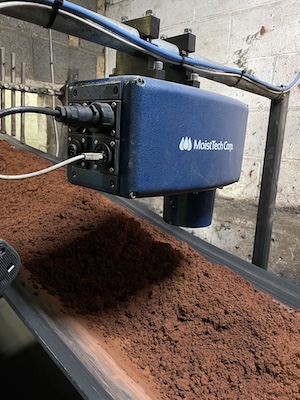
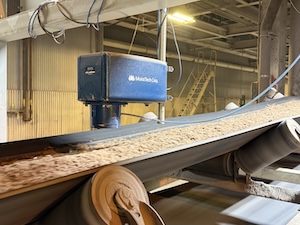
MoistTech Corp. has observed that the integration of non-contact infrared sensors is becoming a standard requirement for new production lines. These sensors mount above conveyors, scanning the product continuously. Because they require no consumables and minimal maintenance, they provide a low-friction path to high-level data acquisition. This data can then be fed into Six Sigma initiatives and energy management programs, providing the objective verification required for continuous improvement.
Strategic Implications for the Future of Manufacturing
The strategic importance of moisture control extends beyond the immediate production line. It is a fundamental component of a broader smart manufacturing strategy. As AI and machine learning become more prevalent in industrial settings, these algorithms require high-quality, real-time data to function. Moisture sensors provide the "eyes" for these systems, allowing for predictive modeling of how changes in ambient humidity or raw material quality will affect the final output.
Furthermore, moisture trends can serve as early warning indicators for equipment health. For example, an unexpected spike in product moisture might indicate an airflow blockage in a dryer or a failing burner, allowing maintenance teams to intervene before a total breakdown occurs. This shift from reactive to predictive maintenance is a key goal of Industry 4.0.
In conclusion, moisture content is a variable that dictates the efficiency, quality, and sustainability of modern manufacturing. Lean manufacturing and environmental responsibility are not competing priorities; they are aligned goals that both rely on disciplined resource management. By leveraging advanced sensing technologies, manufacturers can transform moisture from a source of variation into a strategic lever for cost efficiency. As the global industrial sector continues to face pressure to reduce its carbon footprint while maintaining profitability, the precision of moisture control will remain a defining characteristic of market leaders.