




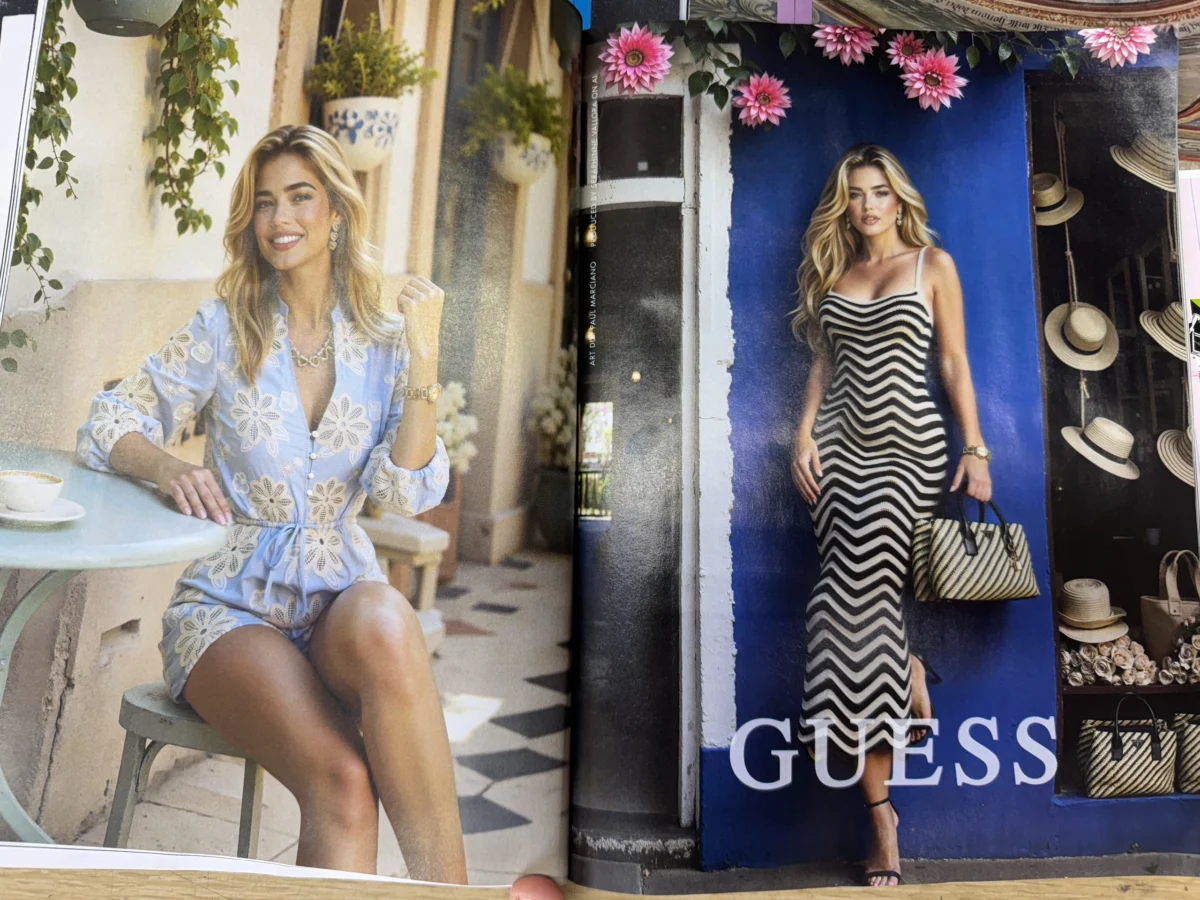
The fashion industry is currently navigating a transformative and controversial era as generative artificial intelligence begins to replace human subjects in high-profile advertisements. In the July print edition of Vogue, an advertisement for the clothing brand Guess featured a model who embodied the quintessential North American beauty standard: blonde, sun-kissed, and possessing a symmetrical, pouty aesthetic. However, the model was not a human being; she was an entirely AI-generated construct. The appearance of this digital entity in what is often considered the "fashion bible" has ignited a fierce debate among models, photographers, and technologists regarding the ethics of "artificial diversity," the erosion of creative jobs, and the future of human authenticity in a digital-first economy.
For commercial models like Sarah Murray, the rise of AI-generated talent represents a compounding threat that began to materialize in 2023. Murray recalls her initial encounter with the technology when Levi’s collaborated with the AI studio Lalaland.ai to create "diverse" digital models. The initiative, framed by the denim giant as a way to increase inclusivity, was met with immediate criticism. Critics, including Murray and various industry observers, labeled the move "artificial diversity," arguing that the company was using algorithms to simulate inclusion rather than hiring actual people of color who have historically been marginalized by the industry. Two years later, the Guess advertisement in Vogue suggests that the technology has moved from a niche experimental tool to a mainstream standard, signaling a systemic shift in how fashion imagery is produced and consumed.

The Economic Imperative: Cost, Scale, and Content Demands
The primary driver behind the adoption of AI models is a fundamental shift in the volume of content required by modern brands. PJ Pereira, co-founder of the AI advertising firm Silverside AI, notes that the traditional marketing model was designed for an era where a brand might produce four major campaigns per year. In the age of social media, e-commerce, and hyper-targeted digital advertising, that demand has exploded. Small and large brands alike now find themselves needing anywhere from 400 to 400,000 individual pieces of content annually to remain relevant on platforms like TikTok and Instagram.
The financial disparity between a human photo shoot and an AI-generated campaign is stark. A traditional shoot involves significant overhead, including model day rates, travel expenses, hair and makeup artists, stylists, photographers, set designers, and post-production editors. Art technologist Paul Mouginot explains that AI allows brands to take a simple "flat-lay" photo of a garment and project it onto a photorealistic virtual model in any setting imaginable. This process eliminates the need for physical logistics and reduces the cost of content production by several orders of magnitude.
For brands like H&M, Mango, and Calvin Klein, the transition to AI is not merely about innovation but about fiscal survival in a high-velocity market. Amy Odell, a prominent fashion journalist and biographer, suggests that if brands can save money on a print ad or a social media feed by utilizing digital avatars, they will inevitably do so to satisfy shareholders and maintain competitive pricing.

A Timeline of Virtual Integration in Fashion
While the Guess controversy is the most recent flashpoint, the integration of virtual entities into fashion has a decade-long history:
- 2013: French retailer Veepee began utilizing virtual mannequins to display clothing, marking an early pivot toward digital-only product visualization.
- 2018: The emergence of Shudu Gram, the world’s first "digital supermodel," showcased the potential for high-fashion CGI entities to gain social media influence.
- 2023: Levi’s partnership with Lalaland.ai brought the conversation regarding "artificial diversity" to the forefront, sparking a backlash over the displacement of diverse human talent.
- 2024-2025: Major labels such as Mango and Guess began placing AI-generated models in mainstream publications and large-scale digital campaigns, moving beyond experimental social media posts.
- 2026 (Projected): Industry experts anticipate that AI policies will become standardized, with luxury heritage brands potentially serving as the final holdouts for human-only editorials.
The Displacement of the "Bread and Butter" Model
The rise of automation in fashion does not affect all models equally. Sinead Bovell, a model and founder of the WAYE organization, argues that e-commerce models are the most vulnerable to this technological shift. While high-fashion "supermodels" may retain their positions due to their personal brands and the prestige they bring to runways, e-commerce models—who provide the images for online shopping catalogs—are being rapidly replaced by digital counterparts.
Bovell emphasizes that e-commerce is where the vast majority of working models find financial security. It is the steady, reliable work that sustains a career between high-profile editorial shoots. As brands automate these roles, the path to a sustainable career in modeling becomes increasingly narrow. This has led to a growing entrepreneurial pressure on human models; they are now encouraged to build "personal brands" and move into podcasting or brand endorsements to differentiate themselves from digital avatars that lack a "unique human story."

Ethical Concerns and "Robot Cultural Appropriation"
One of the most significant criticisms of the AI shift is what Bovell terms "robot cultural appropriation." This occurs when a brand generates a model of a specific ethnicity or identity to project an image of diversity without actually engaging with or compensating individuals from that community. The Levi’s case highlighted a paradox: the industry claimed to use AI to solve a lack of diversity, yet the very act of using AI deprived diverse human models of employment opportunities.
Furthermore, there are growing concerns regarding the "digital likeness" of human models. Sarah Murray and other industry professionals have noted the appearance of new, predatory clauses in contracts. These terms often require models to sign away their rights, allowing brands to use their facial features and body measurements to train future AI systems. Once a brand has captured a model’s digital essence, they may no longer need to hire that model for future shoots, effectively using the model’s own likeness to render them obsolete.
Legislative Responses and the Search for Imperfection
In response to these threats, advocacy groups are seeking legal protections. Sara Ziff, founder of the Model Alliance, is currently championing the Fashion Workers Act in New York. This legislation would mandate that brands obtain clear, written consent and provide fair compensation whenever they use a model’s digital replica. Proponents argue that this could create a new revenue stream for sought-after models, allowing them to "attend" multiple shoots simultaneously through their avatars. However, critics warn that this still results in a net loss of human labor on set, affecting hair stylists, caterers, and lighting technicians.

Simultaneously, a new sector of "AI artisans" is emerging. Sandrine Decorde, CEO of Artcare, represents a creative studio that fine-tunes AI models to include human-like imperfections. Decorde argues that many current AI models are too homogenous, featuring symmetrical lips and identical jawlines that feel "uncanny" or "hollow." By injecting "distinctive traits"—such as slightly irregular teeth or a specific gaze—these artisans aim to maintain the "human connection" that consumers crave.
Decorde also points to an ethical use case for generative AI: children’s fashion. The fashion industry has a long history of child labor exploitation and grueling hours for minors. By using AI-generated babies and children, brands can fulfill market demand for children’s apparel imagery without subjecting real minors to the stresses of a professional photo shoot.
Future Implications: The "Vogue Stamp of Approval"
The inclusion of an AI-generated advertisement in Vogue serves as a powerful signal to the rest of the industry. Historically, Vogue has acted as a gatekeeper of cultural acceptability. Amy Odell draws a parallel to the industry’s initial resistance to reality stars like Kim Kardashian; once they were featured in Vogue, the "prestige" barrier was broken, and they became a standard fixture of high fashion.

The current data suggests a divided future. While a "silent majority" of consumers may engage with AI-generated content—as evidenced by high click-through rates and sales spikes reported by firms like Silverside AI—a vocal segment of the creative community remains in staunch opposition. Luxury heritage brands, which rely on the "sensual reality" of craftsmanship and human touch, are expected to remain the final frontier for human-centric storytelling.
As the technology continues to evolve, the fashion industry faces a fundamental question: Is fashion a reflection of the human experience, or is it merely a high-efficiency delivery system for aesthetic data? While AI models offer undeniable benefits in terms of cost and scale, the cost to the human creative ecosystem remains a subject of intense scrutiny. The "digital standards of perfection" now competing with human talent may permanently alter the definition of beauty, favoring algorithmic symmetry over the charming imperfections that have defined fashion icons for decades.