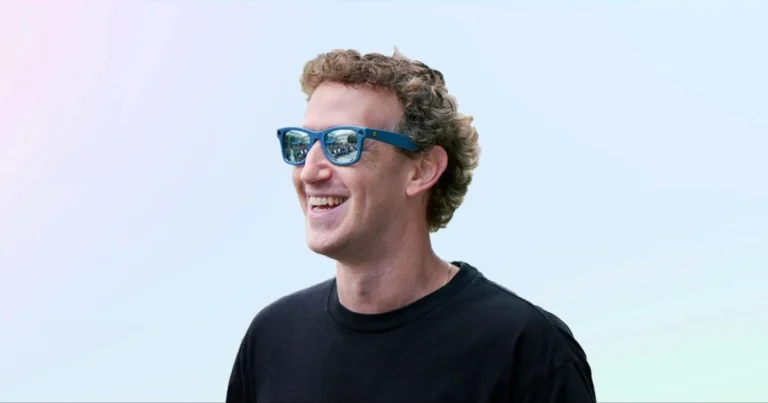







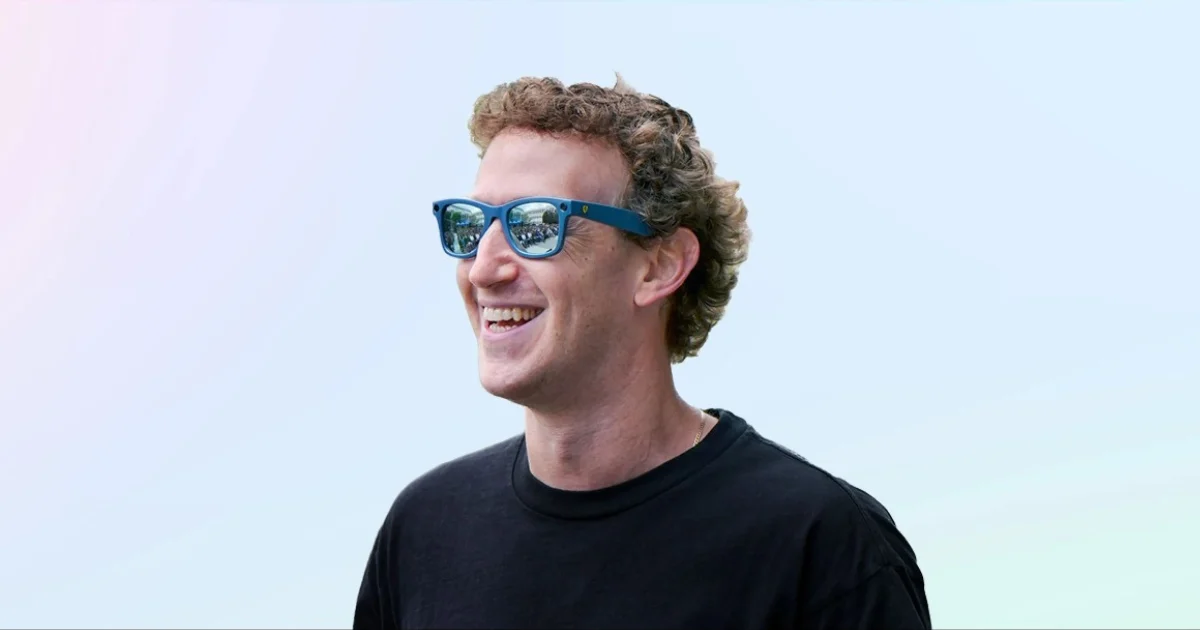
The intersection of Silicon Valley technology and Milanese high fashion reached a new milestone on Thursday as Meta Platforms Inc. Chief Executive Officer Mark Zuckerberg and his wife, Priscilla Chan, took prominent front-row seats at Prada’s Fall/Winter 2026 Fashion Week show. The appearance, which immediately ignited global speculation regarding a high-end hardware collaboration, saw Zuckerberg engaged in deep conversation with Lorenzo Bertelli, Prada Group’s Chief Merchandising Officer and the son of lead designer Miuccia Prada. While ostensibly a social visit coinciding with Zuckerberg’s public image rebranding, industry analysts suggest the meeting underscores a strategic move to integrate Meta’s artificial intelligence technology into the luxury eyewear market.
The Strategic Convergence of Fashion and Technology
The presence of the Meta CEO at one of the world’s most prestigious fashion events follows a series of reports indicating that Meta is actively diversifying its wearable technology portfolio. In the summer of 2025, reports surfaced that Meta was in the development phase of AI-integrated smart glasses under the Prada brand. This development represents a significant pivot for Meta, which has historically focused on the mass-market appeal of its Ray-Ban and Oakley collaborations. By partnering with Prada, Meta aims to capture the "ultra-luxury" demographic, a segment that has remained largely untouched by the current wave of wearable tech.
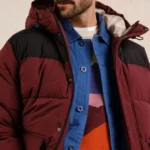
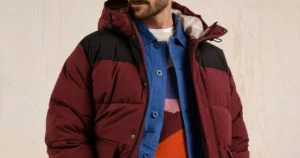
Zuckerberg’s recent personal transformation—shifting from his signature grey t-shirts and hoodies to custom-designed luxury apparel—is viewed by many as a calculated effort to align his personal brand with the premium nature of Meta’s upcoming hardware. The transition from a "tech-first" to a "lifestyle-first" marketing strategy is essential for the adoption of smart glasses, which must overcome the hurdle of being viewed as intrusive or socially awkward gadgets.
A Timeline of Meta’s Wearable Evolution
To understand the potential Prada partnership, one must examine the trajectory of Meta’s collaboration with EssilorLuxottica, the French-Italian conglomerate that dominates the global eyewear market.
- September 2021: Meta (then Facebook) launches "Ray-Ban Stories." These first-generation glasses featured dual cameras and audio but lacked integrated AI and heads-up displays. While a modest success, they were primarily viewed as a niche tool for content creators.
- October 2023: The launch of the Ray-Ban Meta Smart Glasses marked a turning point. These devices introduced Meta AI, allowing users to interact with a voice assistant and utilize multimodal AI to "see" and identify objects in their field of vision.
- June 2025: Reports confirm that Meta is expanding its partnership with EssilorLuxottica to include the Oakley brand. The Oakley Meta glasses were designed specifically for the athletic and outdoor markets, focusing on durability and performance tracking.
- February 2026: Mark Zuckerberg’s attendance at the Prada show in Milan serves as the strongest visual confirmation to date that the next phase of the collaboration will involve high-fashion integration.
Analyzing the Sales Trajectory and Market Data
Data released earlier this month by EssilorLuxottica highlights a surging demand for AI-integrated eyewear. The company reported sales of over 7 million units of Meta-powered glasses in 2025, a dramatic increase from the 2 million units sold in 2024. This 250% year-over-year growth suggests that the "smart glasses" category is finally moving into the mainstream, moving past the failures of previous attempts like Google Glass.
The financial underpinnings of a Prada deal are already in place. Prada and EssilorLuxottica recently renewed their licensing agreement for the Prada and Miu Miu brands for another decade. The current contract, which was set to expire at the end of 2025, has been extended through December 31, 2030, with a provision for a further renewal until 2035. This long-term stability provides the necessary runway for the complex research and development required to embed Meta’s sophisticated AI sensors into Prada’s high-fashion frames without compromising their aesthetic integrity.
The Role of EssilorLuxottica as the Bridge
EssilorLuxottica serves as the critical intermediary in this partnership. As the manufacturer for both Ray-Ban and Prada, the conglomerate possesses the manufacturing infrastructure to scale production while maintaining the quality standards expected by luxury consumers. For Meta, the partnership provides access to a global retail network of thousands of optical boutiques, allowing the company to bypass the traditional hurdles of consumer electronics distribution.
For Prada, the integration of AI represents a way to remain relevant in a digital-first economy. As luxury consumers increasingly seek "experience-based" products, smart glasses offer a unique value proposition: a functional fashion accessory that enhances the user’s daily life through real-time translation, navigation, and information retrieval.
Privacy Concerns and the Growing Consumer Backlash
Despite the commercial success of the Meta-Ray-Ban line, the expansion into the luxury market comes at a time of heightened public sensitivity regarding surveillance. The "surveillance fatigue" phenomenon has manifested in several recent high-profile incidents. In early 2026, reports emerged of consumers in major metropolitan areas actively dismantling smart home devices, including Ring doorbells and Flock surveillance cameras, citing concerns over data privacy and the erosion of public anonymity.
Meta’s potential inclusion of facial recognition technology in its smart glasses has become a lightning rod for criticism. A recent investigative report by The New York Times suggested that Meta is testing facial recognition features that could allow users to identify individuals in real-time. While Meta has not officially confirmed the rollout of such features for the public, the mere possibility has sparked a defensive technological response. One software developer recently released a mobile application designed to detect the Bluetooth and Wi-Fi signals emitted by AI glasses, warning the user if someone wearing the device is in their immediate vicinity.
The challenge for a Prada-branded device will be to balance its "status symbol" appeal with the potential social stigma of being a surveillance tool. If the Prada AI glasses are perceived as a tool for "elites" to monitor others, the brand could face significant reputational risk.
Official Responses and Industry Speculation
As of late February 2026, Meta has declined to provide an official comment on the nature of Zuckerberg’s visit to Milan or the status of the Prada collaboration. Similarly, representatives for the Prada Group have remained tight-lipped, focusing their public statements on the creative direction of the Fall/Winter 2026 collection rather than technological partnerships.
However, industry insiders at the Milan event noted that the level of access granted to Zuckerberg—including private meetings with the Bertelli family—goes beyond the typical courtesy extended to celebrity guests. "This is not about a CEO buying a new suit," said one luxury market analyst. "This is about the architectural integration of two very different worlds. Prada provides the cultural capital, and Meta provides the cognitive engine."
Broader Impact on the Wearables Market
The success or failure of a Prada-Meta collaboration will likely determine the future of the "Ambient Computing" era. If Meta can successfully launch a product that is perceived primarily as a fashion statement and secondarily as a computer, it will have solved the problem that has plagued the tech industry for over a decade.
The implications for competitors are significant. Apple Inc., which recently entered the spatial computing market with its Vision Pro headset, is rumored to be exploring its own "smart glass" form factor. However, Apple lacks the established partnerships with legacy eyewear manufacturers that Meta has secured through EssilorLuxottica. If Meta can lock in the world’s most desirable fashion brands, it may create a "moat" that is difficult for traditional tech companies to cross.
Furthermore, the move into luxury could stabilize Meta’s Reality Labs division. Despite multi-billion dollar losses in its quest to build the "metaverse," the tangible success of AI glasses provides a clear path to profitability. A Prada version of the glasses would likely command a price point three to four times higher than the Ray-Ban version, significantly increasing profit margins.
Conclusion: The New Frontier of Intellectual Luxury
As Milan Fashion Week concludes, the tech and fashion industries are left to contemplate a future where the distinction between a fashion accessory and a supercomputer becomes invisible. The potential Prada AI glasses represent a bold bet on the idea that consumers are ready to wear AI on their faces, provided it comes with the prestige of a luxury label.
Whether Meta can navigate the treacherous waters of privacy concerns and surveillance backlash remains to be seen. However, the image of Mark Zuckerberg sitting at the heart of the fashion world suggests that the company is no longer content with being just a software giant. Meta is positioning itself to be the fabric of everyday life, woven into the very frames through which we see the world.