










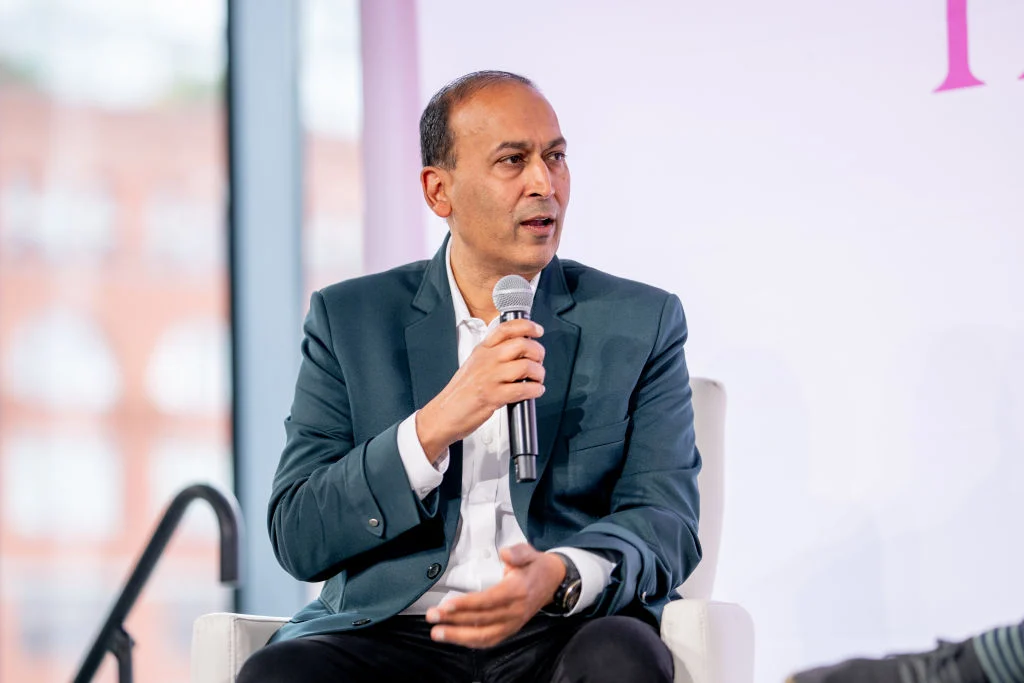
The fashion resale landscape underwent a significant leadership transformation on Monday as Poshmark, a pioneer in social commerce, announced that its founder and long-time Chief Executive Officer, Manish Chandra, will step down from his role. In a planned transition that marks the end of an era for the Silicon Valley-born marketplace, Namsun Kim, who has served as Poshmark’s executive chairman since April and holds the position of president of investments at Naver, has been appointed as the new CEO. Chandra, who led the company through its founding, public offering, and eventual acquisition by South Korean tech giant Naver, will remain closely tied to the organization as a member of the board of directors.
The leadership change comes at a pivotal moment for Poshmark, which has grown from a fledgling startup operated out of a garage into a global powerhouse with a community of over 150 million users. The transition reflects a broader strategic integration with its parent company, Naver, which acquired Poshmark in 2022 for approximately $1.2 billion. By elevating Kim, a key architect of Naver’s investment strategy, the company appears poised to deepen its technological capabilities and expand its footprint in the increasingly competitive international resale market.
The Genesis of a Social Commerce Giant
To understand the weight of this leadership transition, one must look back to 2011, when Manish Chandra co-founded Poshmark alongside Gautam Golwala, Chetan Pungaliya, and Tracy Sun. At the time, the concept of "social commerce"—combining the connectivity of social media with the functionality of an e-commerce platform—was in its infancy. Chandra’s vision was built on the premise that shopping is inherently social. He sought to create a platform where users didn’t just buy and sell clothes, but followed each other, "shared" listings to virtual parties, and built personal brands.
Operating initially out of a garage in Menlo Park, California, the founders focused on a mobile-first experience long before many traditional retailers had optimized their digital presence. This focus on the smartphone experience allowed Poshmark to capture a younger demographic, particularly Millennials and Gen Z, who were beginning to prioritize sustainability and unique, secondhand finds over traditional fast fashion.
Under Chandra’s decade-plus tenure, Poshmark successfully navigated several rounds of venture capital funding, raising hundreds of millions of dollars from prominent firms such as Mayfield Fund, Menlo Ventures, and Inventus Capital Partners. These infusions of capital allowed the platform to scale its logistics, introduce "Posh Authenticate" for luxury goods, and expand its categories beyond women’s fashion into menswear, children’s clothing, home goods, and pets.
The Path to Public Markets and the Naver Acquisition
Poshmark’s growth trajectory reached a fever pitch during the COVID-19 pandemic, as lockdowns accelerated the shift toward e-commerce and prompted millions of consumers to clean out their closets for extra income. This momentum culminated in the company’s initial public offering (IPO) in January 2021. On its first day of trading on the Nasdaq, Poshmark’s shares surged, valuing the company at over $7 billion at its peak.
However, the post-pandemic economic environment presented new challenges. Rising inflation, shifts in consumer spending, and increased competition from platforms like Depop, Vinted, and the growing resale arms of traditional retailers put pressure on Poshmark’s stock price. In October 2022, the company announced it had entered into a definitive agreement to be acquired by Naver, South Korea’s leading internet search and e-commerce provider.
The acquisition was seen as a strategic masterstroke for Naver, providing it with a significant foothold in the U.S. consumer market. For Poshmark, the deal offered access to Naver’s advanced image recognition technology, artificial intelligence search algorithms, and deep pockets to fund international expansion. Since the acquisition, Poshmark has operated as a standalone subsidiary of Naver, maintaining its brand identity while slowly integrating back-end technological improvements.
Profiling the New Leadership: Namsun Kim
Namsun Kim enters the CEO role with a formidable background in finance and strategic investments. As the president of investments at Naver, Kim played a central role in the acquisition of Poshmark and has been a key liaison between the two companies for nearly three years. His appointment as executive chairman in April 2024 served as a precursor to this week’s announcement, allowing him to immerse himself in the day-to-day operations and culture of the California-based team.
Chandra noted in his communication to employees and users that he and Kim have been working closely since the beginning of 2025 to ensure a "seamless and productive" handover. Kim’s expertise is expected to be particularly valuable as Poshmark seeks to leverage Naver’s "Smart Lens" deep learning technology, which can identify fashion items from photos, and its "Live Commerce" tools, which align with Poshmark’s own "Posh Shows" live-streaming feature.
A Legacy of Community and Empowerment
In an emotional farewell email sent to the Poshmark community, Manish Chandra emphasized that the platform’s success was never just about the technology, but about the "Poshers" who use it. "Leading this company has been the greatest honor of my professional life," Chandra wrote. "Every success we’ve achieved, every challenge we’ve overcome, has been because of you."
Chandra’s leadership was characterized by a hands-on approach to community building. He was a frequent fixture at "PoshFest," the company’s annual two-day fashion conference where sellers from across the country gather to network and learn business strategies. This community-centric model turned thousands of casual sellers into full-time entrepreneurs, some of whom have moved millions of dollars in merchandise through the app.
The transition to the board of directors suggests that while Chandra is stepping away from the daily grind of executive management, he will continue to influence the company’s long-term vision. His presence on the board ensures that the "soul" of Poshmark—its community-first ethos—remains a priority even as the company becomes more deeply integrated into Naver’s corporate structure.
Market Context and Industry Implications
The leadership change at Poshmark arrives as the global secondhand apparel market is projected to reach $350 billion by 2028, according to industry reports from ThredUp and GlobalData. The sector is currently growing three times faster than the overall global apparel market. This growth is driven by two primary factors: the pursuit of value in an inflationary environment and a growing consciousness regarding the environmental impact of the fashion industry.
However, the "re-commerce" space is becoming increasingly crowded. Poshmark faces stiff competition from:
- Vinted: Which dominates the European market and has recently reached profitability.
- Depop: Owned by Etsy, which holds a strong grip on the "Gen Z" aesthetic and streetwear market.
- The RealReal and Vestiaire Collective: Which compete in the high-end luxury authentication space.
- eBay: Which has reinvested heavily in its fashion and sneaker verticals to reclaim market share.
For Namsun Kim, the challenge will be to maintain Poshmark’s market share while improving operational efficiency. One of the primary criticisms of social resale platforms has been the high cost of customer acquisition and the logistical complexities of peer-to-peer shipping. Under Kim’s leadership, Poshmark is expected to focus on "AI-powered discovery," making it easier for buyers to find specific items among the hundreds of millions of listings, thereby increasing conversion rates and platform loyalty.
Looking Ahead: The Future of Poshmark under Naver
Industry analysts suggest that the appointment of a Naver veteran as CEO signals a shift toward a more data-driven and technologically integrated future for Poshmark. We are likely to see a heavier emphasis on "Posh Shows," the platform’s live-streaming commerce feature. Live shopping is already a massive industry in Asia—a market Naver understands intimately—and Poshmark has been aggressive in trying to replicate that success in North America.
Furthermore, Kim’s background in global investments may hint at further international expansion. While Poshmark currently operates in the United States, Canada, and Australia, there are significant untapped markets in Asia and South America where Naver’s existing infrastructure could provide a competitive advantage.
The transition also marks a broader trend in the tech industry where founders of acquired companies eventually move into advisory roles, handing over the reins to executives from the parent organization to drive "Phase 2" of the company’s evolution. For Poshmark, Phase 1 was about proving that social commerce could work; Phase 2 will be about proving it can be a highly profitable, AI-driven global standard.
As Namsun Kim takes the helm, the fashion world will be watching closely to see if he can preserve the vibrant, entrepreneurial spirit that Manish Chandra cultivated in a Silicon Valley garage 14 years ago, while steering the company through the complexities of a new era in global digital trade. For the 150 million users who call Poshmark their digital home, the hope is that the platform continues to be a place where creativity and commerce meet, even as the corporate nameplate on the CEO’s door changes.