










The international textile community is preparing for one of the most significant trade events of the year as Barmag, a leading name in chemical fiber equipment, prepares to exhibit alongside its new parent company, Rieter, at the ITM 2026 exhibition in Istanbul. Scheduled to take place from June 9 to 13 at the Tüyap Fair Convention and Congress Center, the joint appearance marks a pivotal milestone in the integration of Barmag into the Rieter Group. Occupying Hall 7, Booth 702B, the two entities will present a unified front, showcasing a comprehensive portfolio that spans filament yarn, staple fiber, nonwoven production, and sophisticated digital solutions for the modern, networked textile factory.
The 2026 iteration of ITM arrives at a critical juncture for the global textile industry, particularly in Turkey, which serves as a vital bridge between the manufacturing hubs of Asia and the consumer markets of Europe. As manufacturers face mounting pressure to balance high-speed production with environmental sustainability and labor efficiency, the technological advancements presented by Barmag and Rieter are expected to set the benchmark for the next decade of synthetic fiber production.
The Strategic Integration of Barmag and Rieter
The collaboration at ITM 2026 represents the first major public platform for Barmag since its acquisition by the Rieter Group. Historically, Rieter has been synonymous with short-staple fiber spinning, while Barmag has dominated the man-made fiber (MMF) machinery sector. By bringing these competencies under one roof, the group aims to offer a holistic approach to the textile value chain. This integration allows for cross-pollination of technologies, such as applying automation concepts from filament spinning to staple fiber processes, and leveraging Rieter’s extensive global service network to support Barmag’s specialized equipment.
Industry analysts suggest that this partnership is a direct response to the "One-Stop-Shop" trend in industrial procurement. Large-scale textile conglomerates are increasingly seeking integrated technology partners who can provide end-to-end solutions, from raw material processing to the finished yarn. The Istanbul showcase is designed to demonstrate how the combined expertise of both companies can optimize capital expenditure and operational efficiency for global yarn producers.
Revolutionizing Filament Spinning with POY 2.0
At the heart of Barmag’s presentation is the POY 2.0 concept, a technological suite that garnered significant attention during its limited preview at ITMA Asia + CITME 2025 in Singapore. For the first time, the general public in Istanbul will witness the full capabilities of the WINGS POY 2.0 winder. The centerpiece of this system is the newly developed semi-automated winding machine, which addresses one of the most persistent bottlenecks in the spinning process: the string-up phase.
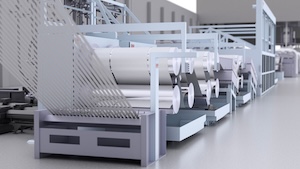
The WINGS POY 2.0 features an innovative automatic string-up function, a breakthrough that the market has anticipated for years. In traditional setups, string-up is a manual, labor-intensive process prone to human error and inconsistent timing, leading to excessive waste and downtime. By automating this function, Barmag ensures that string-up times remain consistently short, regardless of operator skill level. This advancement is particularly relevant given the global shortage of skilled labor in the textile sector; by reducing the staffing requirements at the winding level, mills can maintain high productivity with a smaller, less specialized workforce.
Furthermore, the POY 2.0 concept introduces significant optimizations in energy efficiency and material consumption. Preliminary data suggests that the refined airflow and winding mechanics can reduce waste production by up to 15% compared to previous generations, while simultaneously improving the uniformity and dye-uptake quality of the yarn.
Energy Efficiency and the eFK EvoSmart Texturing Solution
Sustainability is no longer a peripheral concern in textile manufacturing; it is a core operational requirement. Barmag’s eFK EvoSmart manual texturing machine is designed to address this reality by focusing on energy-optimized process control. In an industry where energy costs can account for a substantial portion of total production expenses, the eFK EvoSmart offers a compelling value proposition.
The machine incorporates several innovative components, including the "EvoHeater" and "Smart Godets." The EvoHeater is engineered for superior heat transfer efficiency, ensuring that the yarn reaches the required temperature for texturing with minimal heat loss. When paired with the Smart Godets—which utilize advanced drive technology to reduce mechanical friction—the system achieves a potential reduction in specific energy consumption of up to 25% per kilogram of yarn.
Beyond energy savings, the eFK EvoSmart addresses the total cost of ownership through reduced maintenance. The integration of more durable components and self-diagnostic sensors allows for maintenance intervals to be extended, resulting in a reported 50% reduction in routine maintenance requirements. This allows spinning mills to maximize uptime and improve their overall equipment effectiveness (OEE).
Advancing Staple Fiber Production: The Neumag EvoSteam Process
The Neumag brand, also under the Rieter/Barmag umbrella, is set to debut enhancements to its EvoSteam process, focusing on the staple fiber segment. Two new developments, EvoDuct and EvE-2, represent the pinnacle of current airflow engineering in fiber production.

- EvoDuct: This component optimizes the distribution of airflow within the air jet. By minimizing pressure drops and ensuring a more uniform flow, EvoDuct enhances the consistency of the fiber quality. Uniform airflow is critical in staple fiber production to ensure that the physical properties of the fibers remain constant across the entire production run, which is essential for downstream spinning and knitting processes.
- EvE-2: This system focuses on the extraction of monomers and hot air. During the spinning of synthetic fibers, monomers can evaporate and condense on machinery parts, leading to frequent cleaning stops. The EvE-2 nozzles minimize air turbulence and improve cooling uniformity. Crucially, the monomer extraction system is now accessible from the outside, facilitating easier maintenance and significantly boosting overall spinning performance.
In a cross-divisional technological transfer, the EvoSteam process now incorporates a "wiping robot." Originally developed for Barmag’s filament spinning mills, this robot automates the cleaning of spinnerets. The benefits include consistent wiping quality, longer cleaning intervals, and the ability to synchronize cleaning cycles with can changes, thereby reducing labor costs and the use of consumables.
Setting New Benchmarks in BCF Yarn and Carpet Performance
The carpet industry remains a high-volume consumer of synthetic fibers, and Neumag’s BICO BCF (Bulk Continuous Filament) technology is designed to redefine performance standards in this sector. The BICO process allows for the production of yarns with superior bulk and recovery properties.
According to technical specifications released ahead of the ITM event, the BICO BCF technology enables the production of carpets that maintain high-quality aesthetics and durability while using approximately 20% less pile yarn. This reduction in material consumption represents a massive cost saving for carpet manufacturers without sacrificing the "hand-feel" or resilience of the finished product.
To complement this hardware, Neumag is introducing FiberGuard BCF. This intelligent monitoring system uses a combination of high-precision sensors and proprietary software to measure yarn tension in real-time between the twisting and winding stages. If the system detects a deviation from the set parameters, the software automatically adjusts the process to correct it. This closed-loop control system is compatible with all current BCF machines and can be retrofitted onto existing BCF S8 units, offering an accessible path to digitalization for established factories.
Digitalization and the atmos.io Operating System
The transition toward "Industry 4.0" is embodied in atmos.io, the digital operating system for intelligent yarn production. Barmag and Neumag are positioning atmos.io as the "digital core" of the smart factory. The platform is designed to handle everything from small pilot plants to massive industrial complexes with hundreds of spinning positions.
Atmos.io provides a centralized data infrastructure that digitizes the entire material flow. Each bobbin produced is tracked with its own unique data set, from the initial melt stage to the final warehouse storage. This level of traceability allows manufacturers to identify the root cause of quality issues instantly and intervene in production with surgical precision.
The system features an integrated app store, allowing yarn manufacturers to customize their digital environment according to their specific needs. Importantly, in an era of increasing industrial espionage and cyber threats, atmos.io is built on a secure infrastructure that meets the highest standards of cybersecurity, ensuring that sensitive production data remains protected while remaining accessible for real-time decision-making.
Market Outlook and Chronology of Innovation
The presentation at ITM 2026 is the culmination of a strategic timeline that began with the reorganization of Barmag under Rieter’s leadership in the mid-2020s. Following the soft launch of many of these technologies at ITMA Asia 2025, the Istanbul event serves as the official global rollout.
- 2024-2025: Development and field testing of the POY 2.0 and EvoSteam enhancements.
- Late 2025: Limited preview at ITMA Asia + CITME in Singapore.
- March 2026: Official announcement of the joint Barmag/Rieter exhibit for ITM Istanbul.
- June 2026: Public debut and live demonstrations of the WINGS POY 2.0 and atmos.io platform.
Turkey’s role as a host is significant. The country’s textile sector has seen a shift toward high-value synthetic fibers as it moves away from basic commodity production to compete with high-end European manufacturers. By providing technologies that reduce energy consumption by 25% and material waste by 20%, Barmag and Rieter are positioning themselves as essential partners for the Turkish textile industry’s modernization.
Broader Industry Implications
The innovations showcased at ITM 2026 signal a broader shift in the textile machinery industry toward "intelligent efficiency." As global regulations regarding carbon footprints and energy usage become more stringent, the ability of a machine to perform with lower specific energy consumption becomes as important as its maximum speed.
Furthermore, the integration of automation (such as the wiping robot and automatic string-up) and digitalization (atmos.io) suggests a future where the "lights-out" textile factory—one that requires minimal human intervention—is becoming a reality. For yarn manufacturers, these advancements offer a path to maintain profitability in an environment of rising raw material costs and fluctuating energy prices.
As Barmag and Rieter welcome visitors to Booth 702B this June, the focus will not just be on individual machines, but on a holistic, data-driven ecosystem that promises to make synthetic fiber production more sustainable, more automated, and more profitable for the global market.