







Stäubli, a premier global supplier of high-performance weaving technologies, has officially announced its participation in the upcoming Techtextil 2026 exhibition. Scheduled to take place in Frankfurt, Germany, from April 21 to 24, 2026, Techtextil stands as the preeminent international trade fair for technical textiles and nonwovens. Stäubli will be a central fixture of the Swiss Pavilion, located at Booth B01.6 in Hall 12.0, where the company plans to unveil a suite of innovative solutions designed to address the increasingly complex demands of the global textile manufacturing sector.
The 2026 edition of Techtextil arrives at a critical juncture for the industry. As technical textiles continue their rapid expansion into high-stakes markets—including defense, mobility, aerospace, construction, and renewable energy—the requirement for precision engineering and versatile machinery has never been greater. Stäubli’s presence at the fair underscores its commitment to empowering textile mills with the tools necessary to produce the next generation of advanced, high-value fabrics.
The Accelerating Market for High-Performance Technical Textiles
The global landscape for technical textiles is undergoing a period of unprecedented transformation. Market analysts project that the technical textiles sector will continue to outpace traditional apparel textiles in terms of compound annual growth rate (CAGR) through the end of the decade. This growth is driven by the rising demand for reinforcement fabrics, complex multilayer structures, and 3D composites. These materials are no longer niche products; they are essential components in modern infrastructure, lightweight automotive design, and life-saving medical devices.

In this high-performance environment, the margin for error is virtually nonexistent. Weaving mills are increasingly seeking equipment that offers not only high-speed production but also extreme flexibility and material-handling precision. Stäubli, with its decades of expertise in technical weaving, is positioning itself as a strategic partner for mills navigating this transition. The company’s systems are currently utilized in the production of some of the world’s most demanding fabrics, ranging from One-Piece Woven (OPW) airbags and lightweight reinforcement materials to high-density filtration fabrics and specialized industrial textiles.
The shift toward "Industry 4.0" in textile manufacturing also plays a significant role in Stäubli’s development strategy. By integrating advanced electronic controls and data-driven mechanical engineering, the company ensures that its weaving systems provide the stable performance and fabric quality required for high-value applications.
Spotlight on Innovation: The MAGMA Warp Knotting Machine
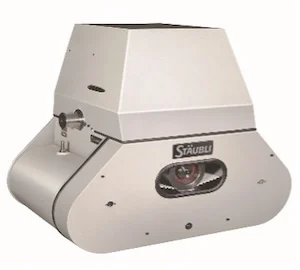
A centerpiece of Stäubli’s exhibit at Techtextil 2026 will be the MAGMA tying machine. In the realm of technical textiles, the diversity of yarns presents a significant challenge for traditional warp-tying processes. Manufacturers often work with difficult materials such as polypropylene (PP) tapes, coarse monofilaments, and various high-tenacity filament structures.
The MAGMA machine is engineered specifically to handle these demanding yarns with high efficiency. One of its primary advantages is the reduction of downtime during warp changes. In an industry where specialized materials can be prohibitively expensive, the ability to maintain consistent tying quality and minimize waste is a major operational benefit. The MAGMA’s robust design allows it to operate reliably in the rigorous environments often found in industrial weaving mills, ensuring that the transition between warps is seamless and the resulting knots are secure enough to withstand high-tension weaving.

Engineering the Future: The TF Series for 3D and Multilayer Fabrics
As industries like aerospace and automotive seek to reduce weight without compromising strength, the demand for 3D and multilayer fabrics has surged. Stäubli’s TF series of weaving machines is designed to meet this specific need. These systems are engineered to process high-performance fibers such as carbon, glass, and aramid—materials that are notoriously difficult to weave due to their rigidity and abrasive nature.
The TF series allows for the creation of complex structures that provide superior structural integrity for composite materials. By precisely controlling the placement of yarns in three dimensions, these machines enable the production of preforms that can be infused with resin to create lightweight, ultra-strong parts. At Techtextil 2026, Stäubli will demonstrate how the TF series provides the flexibility required for rapid prototyping and the scalability needed for full-scale industrial production.
Unparalleled Precision: The UNIVAL 100 and LX 2494 Jacquard Machines
For mills focused on sophisticated technical fabrics with intricate patterns or variable structures, Stäubli’s Jacquard solutions remain the industry benchmark. The UNIVAL 100 electronic Jacquard machine offers a level of flexibility that was previously unattainable. Unlike traditional systems, the UNIVAL 100 features individually controlled harness cords powered by independent servomotors. This allows for exceptional motion precision and the ability to vary the shed opening for every single warp thread.
This level of control is particularly advantageous for 3D weaving and the processing of delicate or demanding materials like glass and carbon fibers. By eliminating the mechanical constraints of traditional Jacquard drives, the UNIVAL 100 opens new avenues for fabric design and functional integration.

Complementing the UNIVAL is the LX 2494 Jacquard machine. Designed for heavy-duty applications, the LX 2494 is built to withstand the high tensions associated with weaving industrial textiles. It is a robust, wear-resistant machine intended for years of continuous operation with minimal maintenance requirements. A key feature of the LX 2494 is the Stäubli M6T 3-position module principle. This design makes the machine remarkably compact while maximizing its performance potential, allowing mills to produce heavy fabrics without sacrificing speed or precision.
Power and Stability: High-Performance Dobby Systems
In addition to its Jacquard and tying solutions, Stäubli will showcase its heavy-duty dobby systems, which are essential for producing high-tension structures. The S2688 open-shed rotary dobby is specifically tailored for technical fabrics, including forming fabrics used in paper manufacturing. It provides the power and shedding accuracy required to manage the high warp loads typical of these industrial applications.
Furthermore, the S4080 closed-shed dobby will be highlighted for its role in producing wet felts and dryer fabrics. These specialized materials require a high degree of mechanical reliability and stable high-speed performance. Stäubli’s dobby systems are designed to ensure that even the most complex weaving sheds are formed with absolute consistency, reducing the risk of fabric defects and ensuring the longevity of the machinery.
Chronology of Participation and Global Context
Stäubli’s appearance at Techtextil 2026 is part of a long-term strategic engagement with the technical textile community. The company has a history of using the Frankfurt fair as a platform for major product launches.

- 2022-2024: Stäubli focused on the integration of digital monitoring systems across its weaving range, responding to the need for better data transparency in European and Asian mills.
- 2025: The company expanded its service network in North America and Southeast Asia to support the growing number of technical textile startups in those regions.
- April 2026: The showcase at Techtextil 2026 represents the culmination of several years of R&D focused on sustainable manufacturing and the processing of recycled high-performance fibers.
The event itself, Techtextil, is expected to host over 1,600 exhibitors from around the world. It is co-located with Texprocess, the leading trade fair for the garment and textile processing industry. This synergy allows visitors to see the entire value chain, from raw fiber and weaving machinery to finished technical products and automated assembly.
Analysis: Implications for the Global Textile Industry
The technologies Stäubli is presenting in 2026 reflect broader trends in the global manufacturing sector. The emphasis on "technical" over "traditional" textiles is a survival strategy for many high-cost manufacturing regions. By investing in machines like the TF series or the UNIVAL 100, mills in Europe and North America can compete on complexity and quality rather than just price.
Furthermore, the focus on materials like carbon and aramid aligns with the global push for decarbonization. In the mobility sector, every gram of weight saved in a vehicle’s structure leads to lower fuel consumption or longer battery range for electric vehicles. Stäubli’s machines are the "enablers" of this transition, providing the means to produce the lightweight materials that make sustainable transport possible.
Industry analysts also point to the importance of maintenance and longevity. As capital expenditure (CAPEX) for high-tech weaving increases, mills require machines that can operate for decades. Stäubli’s reputation for long-term customer support and the robust mechanical design of its Jacquard and dobby systems are critical factors in its market leadership.

Conclusion and Official Outlook
As the industry prepares for Techtextil 2026, the sentiment among textile machinery manufacturers is one of cautious optimism. While global economic fluctuations remain a factor, the fundamental demand for technical textiles shows no signs of waning. Stäubli’s proactive approach in developing specialized solutions for 3D weaving, warp knotting, and high-tension fabrics positions the company to capture a significant share of this expanding market.
Visitors to the Swiss Pavilion Booth B01.6 in Hall 12.0 will have the opportunity to engage with Stäubli’s experts and explore how these technologies can be integrated into existing mill workflows. By focusing on the intersection of mechanical excellence and electronic control, Stäubli continues to define the standards for performance in the technical textile industry.