







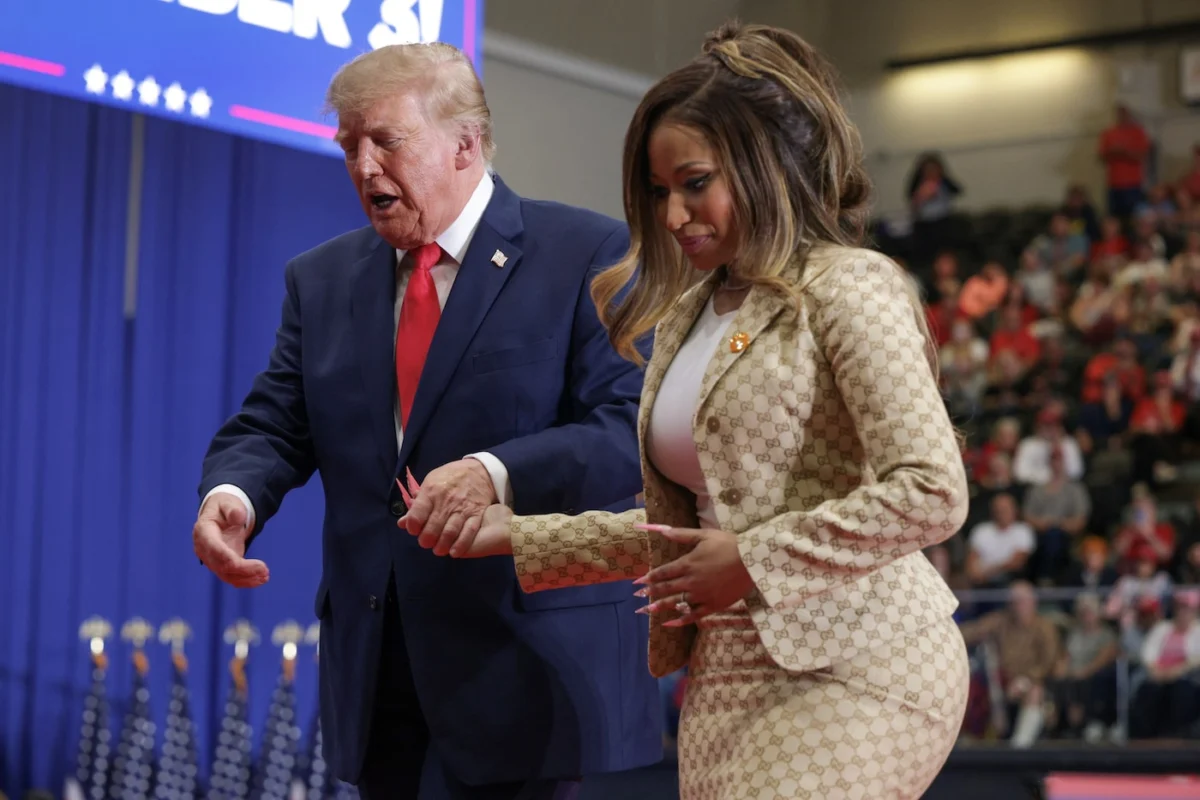
The public scrutiny surrounding high-profile political alignments and their accompanying aesthetic shifts has once again taken center stage, sparking intense cultural debates across social media platforms and mainstream commentary outlets. This discourse gained renewed momentum following rapper Nicki Minaj’s recent high-profile appearances at right-wing political events, most notably her participation in Donald Trump’s administrative and political summits in Washington, D.C. Observers, beauty critics, and cultural analysts quickly fixated not merely on her policy stances or ideological alignment, but on a distinct transformation in her personal presentation. The conversation has amplified a broader, recurring internet phenomenon: the tendency of the public to equate superficial aesthetics with moral character, cementing the concept of a so-called Republican makeover into contemporary cultural vernacular.
Evolution of the Aesthetic Paradigm
The conversation surrounding conservative aesthetics is not entirely new, but it has evolved into a formalized internet trope. Over the past year, platforms like TikTok and X have seen creators and commentators map out what they describe as "Republican makeup." This look is frequently characterized by specific stylistic choices: flat, matte foundations that often contrast with an individual’s natural skin tone, overdrawn and heavy-handed eyebrows, stark contouring, and a general lack of the nuanced skincare preparation or creative flair associated with contemporary high-fashion or avant-garde beauty trends.
Cultural commentators have drawn parallels between this emerging aesthetic standard and the public presentations of several prominent women within conservative political spheres, including Homeland Security official Kristi Noem and political spokesperson Karoline Leavitt. Commentators on social media have frequently described this uniform presentation as devoid of individual artistic expression. The public reaction often frames these aesthetic choices as visual indicators of ideological conformity, raising critical questions about how society perceives the outward presentation of those who hold polarizing political views.
Chronology of Public Discontent and Political Alignment
The intersection of celebrity culture, political registration, and public aesthetic evaluation has intensified over recent years. The chronology of these public reckonings highlights a growing impatience among consumers and fans regarding the political affiliations of cultural icons.
- August 2025: Actress Sydney Sweeney faced intense public scrutiny and a wave of online backlash following promotional campaigns and subsequent media commentary, compounded by public records confirming her registration as a Republican voter in Florida. Observers quickly connected her changing public reception to broader discussions about aesthetic alignment.
- November 2025: Political rhetoric surrounding physical appearance re-entered mainstream political discourse when former President Donald Trump publicly insulted New York Times reporter Katie Rogers regarding her appearance following critical coverage of his administration, echoing a long-standing pattern of utilizing aesthetic commentary as a political tool.
- February 2026: Nicki Minaj shared imagery on social media featuring a toned-down, matte aesthetic that social media users immediately dubbed "Republican makeup," setting off a viral wave of analysis regarding the stylistic choices of newly conservative cultural figures.
- October 2026: Renewed public interest in Minaj’s political trajectory brought these aesthetic debates back into the news cycle, prompting cultural critics to re-examine the psychological urge to conflate physical attractiveness and styling choices with internal morality.
Data and Cultural Implications
To understand why audiences react so strongly to these transformations, sociologists and beauty industry analysts point to historical precedents. Consumer research consistently shows that public figures rely heavily on curated personas to maintain audience loyalty. When a public figure dramatically shifts their aesthetic—often toward a more subdued, homogenized, or conventional look that aligns with traditional or conservative values—fans who feel ideologically betrayed often weaponize that aesthetic shift.
However, media theorists warn against the dangers of this analytical framework. Conflating physical attractiveness or "good taste" with moral rectitude simplifies complex socio-political realities into binary good-versus-evil paradigms. Critics of this trend argue that evaluating political figures or celebrities based on whether their makeup is deemed "good" or "ugly" trivializes the tangible harm caused by their political actions and rhetoric.
Furthermore, beauty critics emphasize that the very standards defining "good" or "bad" makeup are often rooted in exclusionary societal constructs, including Eurocentric beauty standards, classism, and colorism. When internet users mock a political figure’s appearance under the guise of critiquing their politics, they frequently reinforce the very superficiality they claim to oppose.
Responses and Analytical Perspectives
Reactions from cultural critics, psychologists, and media personalities highlight a deep tension in how society processes celebrity politics. Many commentators argue that the swift aesthetic dismissal of figures like Minaj and Sweeney reflects a collective grief or betrayal felt by fan bases who previously associated these artists with progressive or counter-cultural artistic expression.
Conversely, media analysts caution that focusing on appearance plays directly into the playbook of populist politics. Leaders and figures within the modern conservative movement frequently weaponize appearance-based insults themselves, using superficial metrics to deflect from substantive policy debates. By engaging in tit-for-tat critiques of wardrobe choices, hair styling, and cosmetic application, public discourse risks descending into superficial mudslinging rather than addressing the core systemic impacts of political alignments.
Broader Societal Impact
The ongoing obsession with the "Republican makeover" underscores a profound anxiety within digital culture: the desire for visual certainty in a morally ambiguous world. Audiences yearn for a world where harmful ideologies are visually obvious—where internal corruption is outwardly marked by unappealing aesthetics.
As media literacy evolves, cultural analysts stress the importance of separating a public figure’s aesthetic presentation from their political accountability. True civic engagement requires focusing scrutiny on voting records, policy advocacy, and public rhetoric rather than retreating to superficial judgments about cosmetics and styling. Until public discourse moves past the lazy shorthand of equating beauty with morality, both celebrity culture and political commentary will remain trapped in a superficial loop that ultimately serves neither progress nor accountability.