










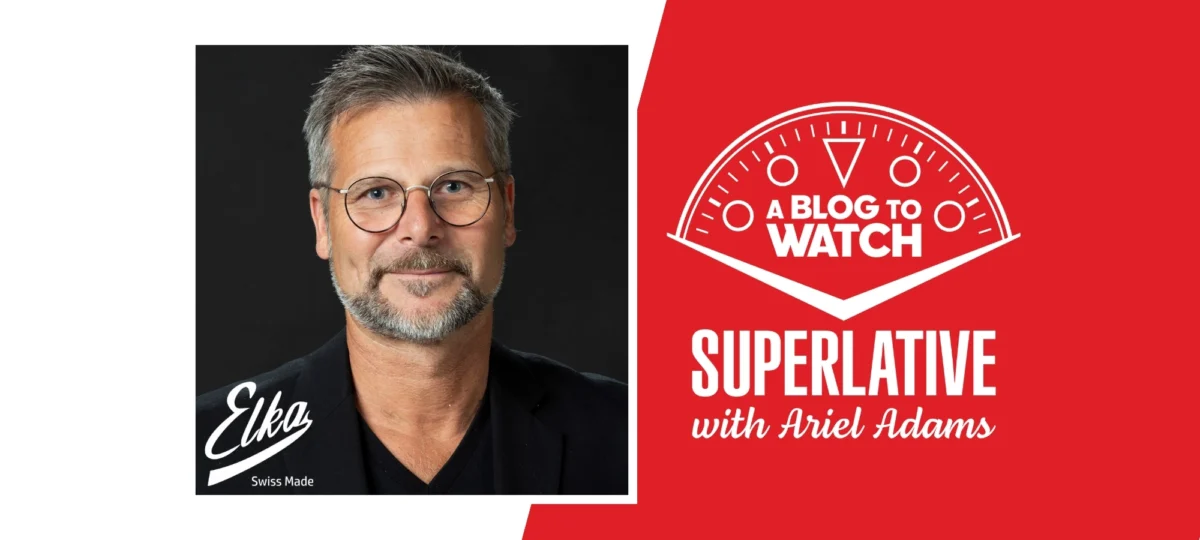
The landscape of modern Swiss watchmaking is currently undergoing a structural transformation, defined by a shift from legacy brand dominance toward the nimble, narrative-driven models of independent watchmakers. This week on the Superlative podcast, aBlogtoWatch founder Ariel Adams sat down with Hakim El Kadiri, the founder of ELKA Watch Co., to dissect the intersection of heritage, emotional resonance, and the evolving retail environment. The discussion serves as a lens through which the broader challenges of the contemporary horological industry can be viewed, particularly as independent entities seek to carve out space in a market traditionally saturated by high-volume conglomerates.
The Evolution of the ELKA Watch Co. Brand Identity
ELKA Watch Co. occupies a distinct niche within the Swiss watch industry. Founded by El Kadiri, the company draws upon a rich, albeit dormant, history. The brand name itself is a historical reference to the original ELKA (Edouard Kummer, Altdorf) watch company, which was established in the late 19th century and ceased operations in the mid-20th century. By reviving the name, El Kadiri has positioned his brand as a bridge between the classic design language of the mid-century era and the manufacturing expectations of the 21st-century collector.
During the interview, El Kadiri emphasized that his design philosophy is not merely about aesthetic reproduction but about "meaningful storytelling." In an era where consumers are increasingly fatigued by mass-produced luxury, ELKA’s approach focuses on intentionality. The upcoming collaboration with aBlogtoWatch—designed to commemorate the platform’s 20th anniversary—is a primary example of this synthesis. The centerpiece of this collaboration is a watch featuring a "tree-ring" dial, a design choice intended to symbolize longevity, growth, and the cyclical nature of time. This choice is deeply rooted in Swiss watchmaking lore, where wood and natural materials were often used in historical decorative arts, though rarely with the modern technical execution El Kadiri has employed for this project.
Chronology of the Modern Independent Watch Movement
The rise of independent watchmakers like ELKA follows a decade of significant volatility in the Swiss watch market. To understand the current climate, one must look at the timeline of the industry’s recent shifts:
- 2015–2018: The "Smartwatch Disruption" era. Traditional Swiss manufacturers faced an existential threat from tech giants, leading many to double down on "brand prestige" and high-entry pricing to insulate themselves from the entry-level market.
- 2019–2021: The "Secondary Market Surge." Fueled by low interest rates and increased digital visibility, prices for marquee watches skyrocketed, alienating many traditional collectors and creating a "gap" in the market for accessible, high-quality mechanical timepieces.
- 2022–Present: The "Independent Renaissance." As consumers moved away from hyper-inflated retail prices for mass-luxury goods, interest shifted toward boutique brands that offer transparency, direct access to founders, and unique, limited-production runs.
El Kadiri’s entry into the market during the latter phase of this timeline is representative of a broader strategy employed by emerging independent founders: leveraging niche heritage and high-touch customer engagement to bypass the traditional retail bottleneck.
Supporting Data and Market Trends
The success of boutique brands like ELKA is supported by shifting consumer demographics. According to recent industry reports from the Federation of the Swiss Watch Industry (FH), while the total export value of Swiss watches continues to hit record highs—often driven by the top 5% of brands—the volume of units exported has remained relatively stagnant. This indicates that the growth of the industry is primarily price-driven, not volume-driven.
This environment has created a unique opportunity for independent players. By focusing on production runs that are inherently limited (often under 500 units per reference), brands like ELKA mitigate the inventory risks that plague larger manufacturers. Furthermore, data suggests that the average age of the "watch enthusiast" has decreased, with a growing cohort of buyers in the 25–40 demographic prioritizing design provenance and creator transparency over the resale value or brand recognition that defined the market for the previous generation of collectors.
Official Perspectives and Industry Philosophy
In his conversation with Adams, El Kadiri articulated a core belief: that emotional connection is the only sustainable competitive advantage in a world of infinite options. He argued that when a collector purchases a watch, they are purchasing a piece of the founder’s ethos.

"We are not competing with the heritage houses," El Kadiri noted during the podcast. "We are offering an alternative to the industrialization of luxury."
This sentiment is echoed by many in the independent sector who suggest that the future of Swiss watchmaking lies in the "Human-Centric Model." This model prioritizes:
- Direct-to-Consumer (DTC) Channels: Reducing the reliance on third-party retailers to maintain margin integrity and foster closer relationships with owners.
- Radical Transparency: Providing full visibility into the supply chain, including the sourcing of movements and components, which is a significant departure from the opaque branding typical of legacy houses.
- Community Building: Utilizing platforms like aBlogtoWatch to engage in ongoing, two-way conversations with the audience rather than broadcasting marketing messages from a top-down corporate hierarchy.
Broader Impact and Implications for the Swiss Watch Industry
The emergence of brands like ELKA and the collaborative projects they undertake with media outlets represent a systemic change in how the industry operates. The traditional "Swiss Made" label, once considered a monolith of quality, is now being segmented. Consumers are increasingly distinguishing between "corporate Swiss" and "boutique Swiss."
The implications for the industry are three-fold:
First, there is a mounting pressure on legacy brands to justify their price increases. As independent makers demonstrate that high-quality, Swiss-made watches can be produced at more accessible price points through leaner distribution models, the "prestige tax" of the major conglomerates is facing increased scrutiny from collectors.
Second, the retail landscape is permanently altered. The "authorized dealer" model, which relied heavily on physical foot traffic and the prestige of store locations, is being challenged by digital-first strategies. El Kadiri’s discussion highlights that the future of retail is not necessarily "online versus offline," but rather "community versus transaction." Brands that cultivate a community—as ELKA does through its social media engagement and collaborative anniversary pieces—are far more resilient than those relying on traditional retail placement.
Third, the importance of "storytelling" has reached a level of unprecedented necessity. In a market where technical specs are increasingly homogenized (as many brands use the same base movements from suppliers like Sellita or La Joux-Perret), the differentiator is the narrative. Whether it is the tree-ring dial design of the upcoming aBlogtoWatch collaboration or the historical revival of the ELKA name, the story is what transforms a functional instrument into an object of lasting cultural value.
Conclusion: The Future of Independent Horology
The conversation between Ariel Adams and Hakim El Kadiri provides a roadmap for what the next decade of horology might look like. It is a future that favors the agile, the transparent, and the personal. While the massive conglomerates will undoubtedly continue to dominate the global export statistics, the cultural narrative of watchmaking is increasingly being written by those who, like El Kadiri, operate on a smaller, more intimate scale.
For collectors, this represents a golden age of choice. The barriers to entry for high-quality, thoughtful design have never been lower, and the ability for a consumer to influence the direction of a brand through direct engagement is unprecedented. As ELKA Watch Co. continues to navigate this landscape, its focus on historical continuity combined with modern, design-forward thinking serves as a case study for how independent watchmakers can survive and thrive in an increasingly crowded, high-stakes market. Whether the "tree-ring" collaboration becomes a seminal piece in the history of aBlogtoWatch or merely another chapter in the story of independent horology, it is clear that the industry’s center of gravity is shifting toward those who prioritize the craft—and the conversation—above all else.