






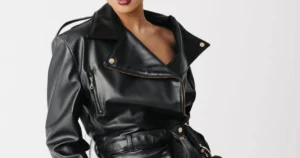



The classic leather jacket has remained an enduring symbol of rebellion, timeless style, and effortless cool for nearly a century. Popularized in the post-war era of the 1950s—most notably cemented in pop culture by cinematic icons donning heavy biker silhouettes—the traditional garment has long relied on animal hides to achieve its distinct weight, texture, and durability. However, as contemporary consumers become increasingly conscious of the ecological and ethical footprints of their wardrobes, the conventional methods of producing leather are facing intense public scrutiny. Today, a growing segment of the fashion industry is pivoting away from animal skins, fostering a massive market for vegan leather alternatives that promise the same aesthetic appeal without the associated cruelty.
The shift toward animal-free outerwear is not merely a passing trend, but a calculated response to mounting data highlighting the environmental degradation tied to traditional livestock farming and leather tanning. As pioneers like Will’s Vegan Store, Stella McCartney, and emerging Dutch label CAES demonstrate, the market is actively redefining luxury and casual wear through cruelty-free innovation. This transition forces a critical examination of how clothes are manufactured, what materials are utilized, and what the future holds for a multi-billion-dollar global apparel sector striving to meet sustainability targets.
Understanding the Hidden Costs of Traditional Leather Production
To fully grasp the momentum behind the vegan leather movement, one must examine the complex realities of conventional leather manufacturing. For decades, the industry has operated behind opaque supply chains. According to international trade data, the vast majority of the world’s leather remains largely untraceable from farm to final retail rack. This lack of transparency makes it exceptionally difficult for brands—let alone everyday shoppers—to verify animal welfare standards, ensuring that sentient beings are treated humanely throughout their lives.
Beyond the ethical dilemmas concerning animal rights, the environmental toll of traditional leather processing is severe. Animal agriculture is a leading driver of global deforestation, particularly in regions like the Amazon rainforest, where vast tracts of land are cleared for cattle ranching. Furthermore, once hides are harvested, they undergo a rigorous tanning process. The majority of global leather production relies on chromium tanning, a chemical-heavy method that utilizes heavy metals and toxic agents to preserve the hide and prevent decay.
When improperly managed, wastewater from tanneries containing hexavalent chromium—a known carcinogen—frequently contaminates local water supplies in manufacturing hubs across developing nations. This poses acute health hazards to factory workers and surrounding communities, exposing populations to respiratory issues, skin necrosis, and elevated cancer risks. Animal rights advocates and environmental scientists have repeatedly emphasized that the glamour of a retail leather jacket starkly contrasts with the grim realities of its production cycle. Consequently, consumers are increasingly seeking alternatives that align with modern ecological and ethical frameworks.
Navigating the Complexities of Vegan Leather Alternatives
The market for vegan leather has expanded dramatically over the past two decades, evolving far beyond early iterations of petroleum-based plastics. Historically, the phrase "vegan leather" was synonymous with synthetic materials such as Polyvinyl Chloride (PVC) and Polyurethane (PU). While these plastics successfully avoided the exploitation of animals, they presented their own environmental challenges. PVC, in particular, is notorious for releasing toxic dioxins during its production and disposal phases, and neither material readily biodegrades, contributing to the mounting global crisis of microplastic pollution in oceans and landfills.
In response to consumer demand for genuinely eco-friendly materials, material scientists and forward-thinking designers have pioneered a new wave of plant-based and recycled leather alternatives. Innovations now include textiles derived from agricultural byproducts and rapidly renewable sources:
- Cactus Leather: Utilizing mature nopal cactus leaves, brands like Desserto create supple, durable materials that require minimal water and zero irrigation, relying entirely on natural rainfall while sequestering carbon dioxide.
- Apple Peel Leather: A byproduct of the juice and compote industry, industrial apple waste is pulverized and blended with polyurethane or bio-resins to create a versatile, leather-like fabric.
- Recycled Rubber and Tencel Lyocell: Forward-thinking labels incorporate post-consumer industrial rubber and sustainably harvested wood pulp fibers to construct structural elements and linings without depleting virgin natural resources.
Despite these breakthroughs, industry analysts caution that no material option is entirely without compromise. Many innovative plant-based leathers still require thin polymer coatings or binding agents—such as polyurethane or polyester—to ensure structural strength, color fastness, waterproofing, and longevity. Consequently, while these garments successfully eliminate animal components, some may still lack complete biodegradability. Consumers are therefore encouraged to weigh the lifecycle impacts of each fabric against their personal ethical priorities. Moreover, sustainability experts consistently emphasize that acquiring secondhand garments—whether constructed from animal hide or synthetic alternatives—remains the single most effective way to minimize an individual’s fashion footprint.
Chronology of a Movement: Milestones in Cruelty-Free Outerwear
The journey of vegan leather from a marginal niche to a high-fashion runway staple spans several decades of technological development and cultural shifting:
- The 1990s: Early animal rights movements and the rising popularity of vegetarianism prompted initial commercial experiments with synthetic plastics to mimic leather jackets, though quality and breathability remained poor.
- The 2000s: Luxury designer Stella McCartney launched her eponymous luxury brand committed entirely to avoiding leather, fur, and feathers, proving that high-end fashion could achieve commercial success without animal materials.
- The 2010s: Direct-to-consumer digital brands such as Will’s Vegan Store entered the market, optimizing supply chain transparency and offering durable, ethically produced footwear and outerwear tailored specifically to conscious consumers.
- The 2020s: Agricultural innovations yielded scalable bio-based textiles, including cactus, mushroom, and apple leather. Independent European labels began integrating these next-generation materials into minimalist, seasonless collections.
- October 2026: Comprehensive global industry indexes, such as those maintained by rating platforms like Good On You, continuously audit thousands of apparel brands, demanding verified traceability and ethical codes of conduct to combat greenwashing.
Industry Responses and Brand Accountability
As consumer awareness intensifies, fashion brands face unprecedented pressure to substantiate their sustainability claims. Regulatory bodies in the European Union and the United States have begun cracking down on vague marketing terms like "eco-friendly" and "sustainable," demanding rigorous life-cycle assessments (LCAs) to back up product descriptions.
In response, modern labels are restructuring their operations. Brands such as CAES, a Dutch contemporary label, champion a slow-fashion philosophy centered on the premise that clothing should transcend seasonal trends. By utilizing certified lower-impact materials—including Desserto cactus leather, recycled cotton, and Tencel Lyocell—the brand aims to dismantle the rapid consumption cycles traditionally associated with outerwear trends. Furthermore, companies are increasingly adopting formal codes of conduct aligned with International Labour Organization (ILO) standards to ensure fair wages and safe working conditions across their manufacturing tiers.
However, industry watchdogs stress that transparency remains uneven. While pioneering independent designers readily disclose their material sourcing and factory partners, many mainstream conglomerates continue to rely on greenwashed marketing, highlighting minor sustainable capsule collections while maintaining high-volume production of environmentally taxing goods. Independent rating platforms play a crucial role in bridging this information gap, assessing brands across three core pillars: impact on people, impact on the planet, and impact on animals.
Broader Economic and Environmental Implications
The transition toward cruelty-free outerwear carries profound implications for the global textile economy. Economically, the market for vegan leather goods is projected to expand significantly over the next decade, driven by Gen Z and Millennial demographic shifts that prioritize ethical consumption. This growth is attracting substantial venture capital investments into biotech startups specializing in lab-grown mycelium, agricultural waste conversion, and advanced recycling technologies.
Environmentally, widespread adoption of next-generation bio-leathers could substantially reduce the agricultural land footprint required for livestock, mitigating greenhouse gas emissions associated with enteric fermentation and deforestation. However, scaling these technologies without inadvertently shifting environmental burdens—such as excessive energy consumption during bio-fabrication—remains a primary engineering challenge for the sector.
Ultimately, the evolving landscape of the vegan leather jacket reflects a broader philosophical maturation within modern society. As science expands the boundaries of material engineering and consumers demand greater accountability from the companies they support, the traditional compromise between personal style and ethical integrity is dissolving. Whether through innovative plant-based textiles, recycled synthetics, or the timeless practice of buying vintage, the modern wardrobe is proving that looking cool no longer requires compromising the health of the planet or its inhabitants.