






The modern landscape of men’s grooming has experienced a significant paradigm shift over the past decade, moving away from overly stylized, high-maintenance hair regimens toward refined, utilitarian classics. Among the various cuts dominating barber chairs globally, the medium crew cut has firmly established itself as the ultimate benchmark of functional sophistication. According to recent industry analytics from men’s style publications and grooming product manufacturers, short-to-medium hairstyles have seen a 35% increase in consumer preference since 2021, driven largely by professionals seeking versatile aesthetics that transition seamlessly from corporate boardrooms to casual weekend environments. This enduring haircut—defined by closely cropped or faded sides coupled with a slightly longer, manageable length on top—offers an optimal balance between architectural structure and effortless maintenance. As contemporary style continues to favor practicality without sacrificing elegance, dissecting the various iterations of the medium crew cut provides valuable insight into modern personal presentation.

The Evolution and Historical Context of the Crew Cut
To understand the current resurgence of the medium crew cut, one must examine its origins in mid-20th-century Anglo-American culture. Originally popularized in the Ivy League universities of the 1930s and 1940s as a practical alternative to longer, greased styles, the traditional crew cut quickly permeated military branches due to its hygienic benefits and neat appearance. Over successive decades, the cut shed its strictly utilitarian image, being adopted by Hollywood icons, athletes, and working professionals alike.
In recent years, master barbers and stylists have re-engineered the classic silhouette, introducing modern texturizing techniques, precision skin fades, and customized proportions that accommodate a broader spectrum of hair types and facial structures. Industry trend reports indicate that the modern iteration relies heavily on bespoke tailoring. Rather than utilizing a uniform clipper guard across the entire head, today’s barbers analyze crown density, hair grain, and skull geometry to customize the medium crew cut, ensuring it reads as both contemporary and timeless.

Deconstructing the 10 Definitive Medium Crew Cut Variations
Navigating the nuances of men’s haircuts requires clear communication between the client and the barber. To assist in achieving optimal results, industry experts have categorized the ten primary variations of the medium crew cut, outlining their structural characteristics, ideal candidates, and maintenance protocols.
1. The Standard Medium Crew Cut
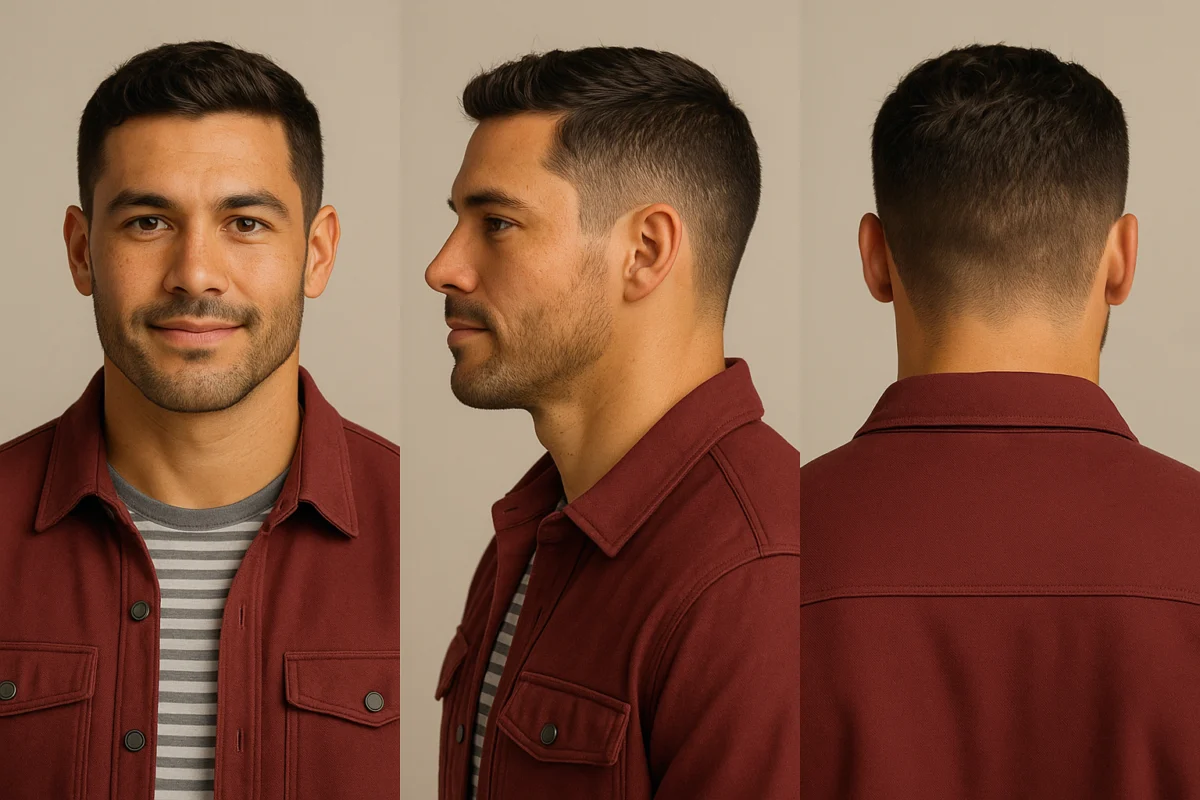
The foundational style features hair trimmed short along the sides and back, transitioning smoothly into a medium length on top. This clean, sharp aesthetic flatters oval, square, and oblong face shapes with straight to slightly wavy hair. When visiting the barber, clients should request a medium length on top accompanied by a gradual taper on the sides, specifying the desired height of the fade. Maintenance requires routine trims every four to six weeks, paired with a lightweight styling cream to maintain a natural finish.

2. The Textured Crew Cut
Elevating the traditional framework, the textured crew cut introduces strategic layering and varied scissor lengths to the top section. This approach introduces multidimensional movement and volume, making it exceptionally well-suited for men with thick, wavy, or curly hair textures. Ideal for round or rectangular face shapes, this style thrives when styled with a matte clay, which enhances definition while offering a firm, natural hold. Individuals can personalize the look by altering fringe lengths or introducing subtle part lines.
3. The Faded Crew Cut
Blending sharp architectural lines with contemporary edge, the faded crew cut merges a medium-length top with precision-faded sides—ranging from low and mid to high skin fades. This variant emphasizes cleanliness and geometric precision. While highly versatile in professional environments, it demands rigorous upkeep, requiring barber visits every three to four weeks to preserve the crispness of the fade and prevent a disconnected top from disrupting the silhouette.

4. The Slicked Back Crew Cut
Combining the structural integrity of a crew cut with the suave finishing of a classic pompadour, the slicked-back variant utilizes high-shine pomades or gels to comb the top section neatly backward. Particularly flattering for oval or diamond face shapes paired with straight hair types, this style accentuates strong jawlines and well-groomed facial hair. Daily styling requires approximately five to ten minutes of application to ensure a smooth, secure finish.
5. The Curly Crew Cut
Rather than fighting natural curl patterns, the curly crew cut embraces them, leaving enough length on top to showcase natural volume and texture while keeping the perimeter neatly tapered or faded. This style provides an accessible entry point for men with curly or coily hair who desire sophistication without excessive daily manipulation. When consulting a barber, clients should request a defined top structure with tightly managed sides, allowing personal flair to shine through tailored line-ups.

6. The Side Part Crew Cut
Introducing a hard or soft part into the classic medium crew cut adds immediate visual structure and formality. This variation is particularly popular among corporate professionals and individuals seeking a refined, heritage-inspired aesthetic. Best suited for straight or wavy hair types, the side part requires minimal intervention—typically a small amount of styling mousse or pomade applied daily—alongside regular upkeep to keep the parting line sharp and defined.
7. The Disconnected Crew Cut
For those favoring a bolder, more avant-garde presentation, the disconnected crew cut delivers a stark contrast between a significantly lengthened top section and tightly buzzed or undercut sides. Favored by fashion-forward individuals and modern influencers, this cut merges traditional proportions with rebellious design elements. Maintenance involves regular adjustments to the length contrast and coordination with existing facial hair elements, such as full beards or stylized mustaches.

8. The Tapered Crew Cut
Offering a softer, more continuous transition of lengths, the tapered crew cut avoids harsh lines in favor of a gradual graduation from the top down to the neckline. Its understated, conservative nature makes it a staple for corporate professionals who require adaptability across various social settings. Styling is straightforward, often enhanced by a lightweight volumizing mousse to preserve fullness on top.
9. The Classic Crew Cut with Beard
Recognizing the symbiotic relationship between head hair and facial hair, this combination pairs a clean medium crew cut with a meticulously shaped beard. The juxtaposition creates vertical facial balance, softening overly angular jawlines or adding necessary structure to rounder face shapes. Achieving this look requires synchronized scheduling, with regular barber visits dedicated to maintaining the symmetry and cleanliness of both the haircut and the beard.

10. The Medium Crew Cut with Fringe
Incorporating a forward-facing fringe transforms the standard crew cut into a dynamic, youthful style that cleverly frames the face. This variation is especially advantageous for individuals with finer hair types seeking the illusion of greater density and volume. By adjusting the length and texture of the fringe, wearers can easily transition between casual, tousled appearances and polished, structured presentations.
Barber Communication and Professional Insights
Achieving a successful medium crew cut hinges heavily on precise dialogue during the consultation phase. Master barbers emphasize that clients should bring visual references rather than relying solely on descriptive terminology, as terms like "fade" or "medium length" can vary significantly between practitioners. Furthermore, understanding one’s hair density, growth patterns (such as cowlicks), and scalp condition remains paramount in selecting the appropriate sub-variation.

Industry data compiled by men’s grooming associations highlights a growing consumer demand for sustainable, high-performance styling products. Traditional alcohol-based gels that dry out the hair shaft are increasingly being replaced by water-soluble pomades, natural clays, and nourishing styling creams that protect hair health while delivering targeted hold. Barbers universally advise investing in professional-grade hair care products tailored to specific hair textures to prolong the lifespan of the haircut between appointments.
Broader Economic and Cultural Implications
The enduring popularity of the medium crew cut extends beyond mere aesthetics, reflecting broader shifts in consumer spending and lifestyle habits within the men’s wellness sector. Market research indicates that global expenditures on men’s grooming and hair care products have expanded steadily, driven by an increasingly image-conscious demographic that views personal maintenance as an essential component of self-care and professional branding.

The medium crew cut occupies a unique intersection within this economic framework: it requires minimal daily intervention, thereby appealing to time-poor professionals, yet demands regular professional maintenance, ensuring consistent patronage for the barbering industry. This symbiotic relationship between consumer convenience and service-sector reliance underscores the cut’s economic viability and cultural permanence.
Ultimately, the medium crew cut transcends fleeting micro-trends through its intelligent architecture, adaptability, and inherent dignity. Whether executed as a sharp faded variant or a textured, casual crop, it remains an indispensable tool in the modern man’s grooming repertoire, proving that true style is found where timeless design meets contemporary execution.