




Paris Fashion Week reached its grand finale on the evening of October 6, 2026, as Louis Vuitton hosted its highly anticipated Spring/Summer 2027 runway presentation at the historic Cour Carrée of the Louvre. Against the backdrop of classical French architecture, creative director Nicolas Ghesquière delivered a collection that bridged futuristic design concepts with ergonomic functionality. The event drew an elite gathering of global brand ambassadors, Hollywood actors, and K-pop icons, cementing the maison’s status at the intersection of high fashion, cinema, and pop culture.
The convergence of global talent at the Louvre underscored the strategic influence luxury fashion houses wield through celebrity partnerships. As the final major event on the official Paris Fashion Week calendar, the Louis Vuitton presentation served as both a commercial showcase and a cultural touchstone for the upcoming season, drawing international media attention and extensive digital engagement across global markets.
Chronology of the Evening and Front Row Arrivals
The proceedings commenced in the early evening as guests arrived at the Cour Carrée, navigating the iconic cobblestones leading to the Louvre. The front row featured a curated lineup of Louis Vuitton’s most prominent ambassadors and emerging talents.
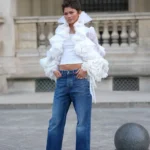
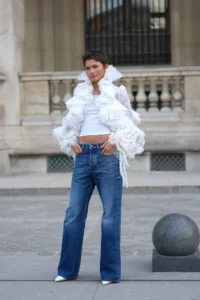
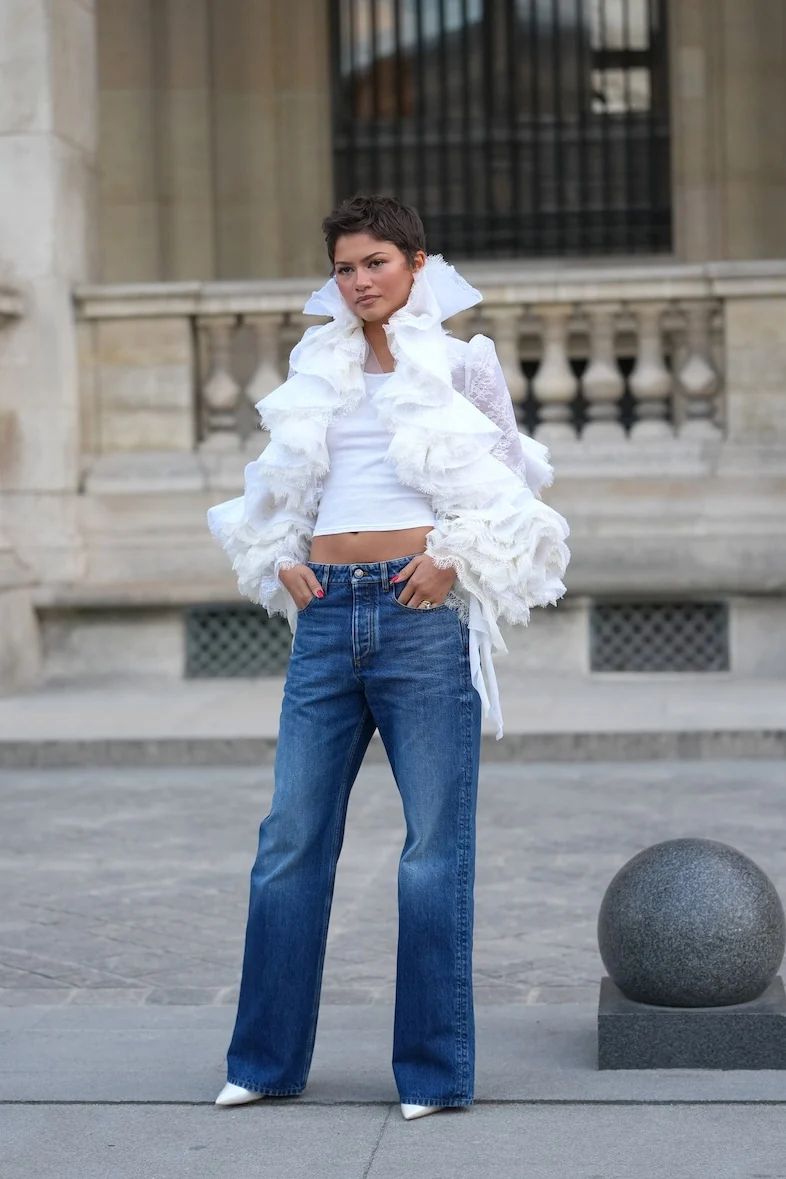
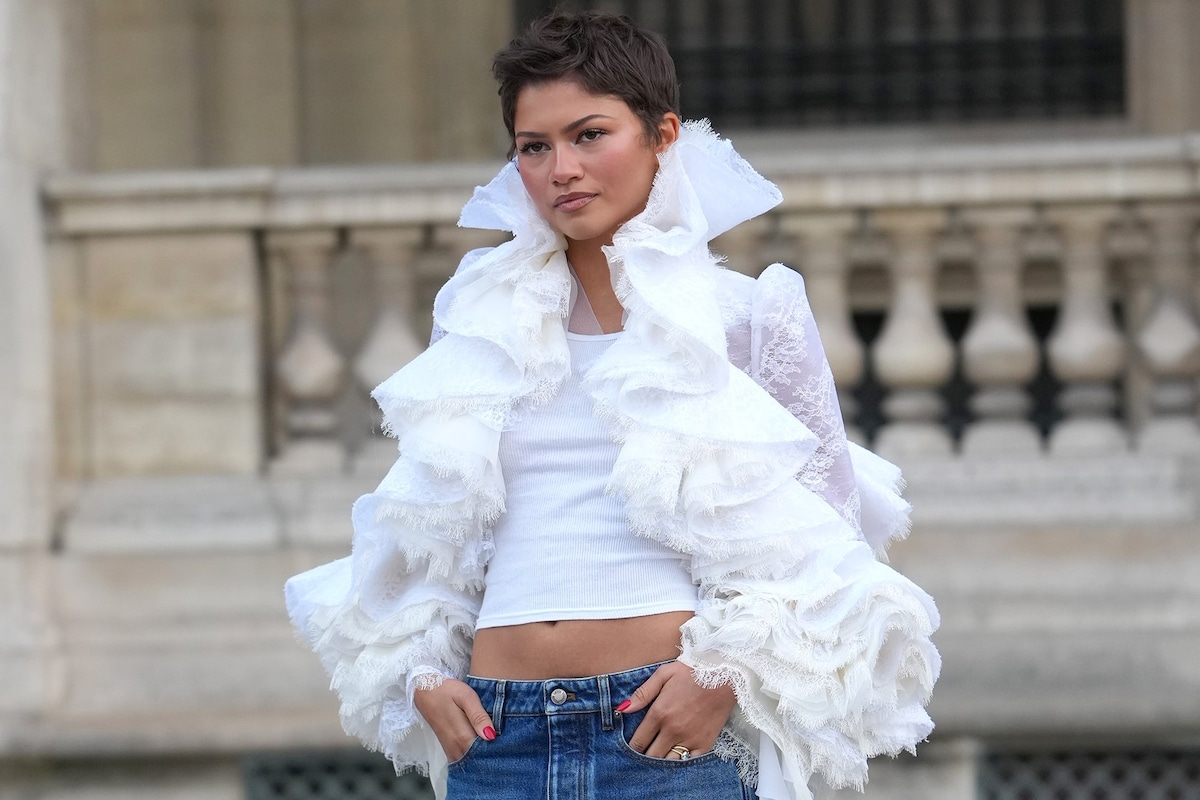
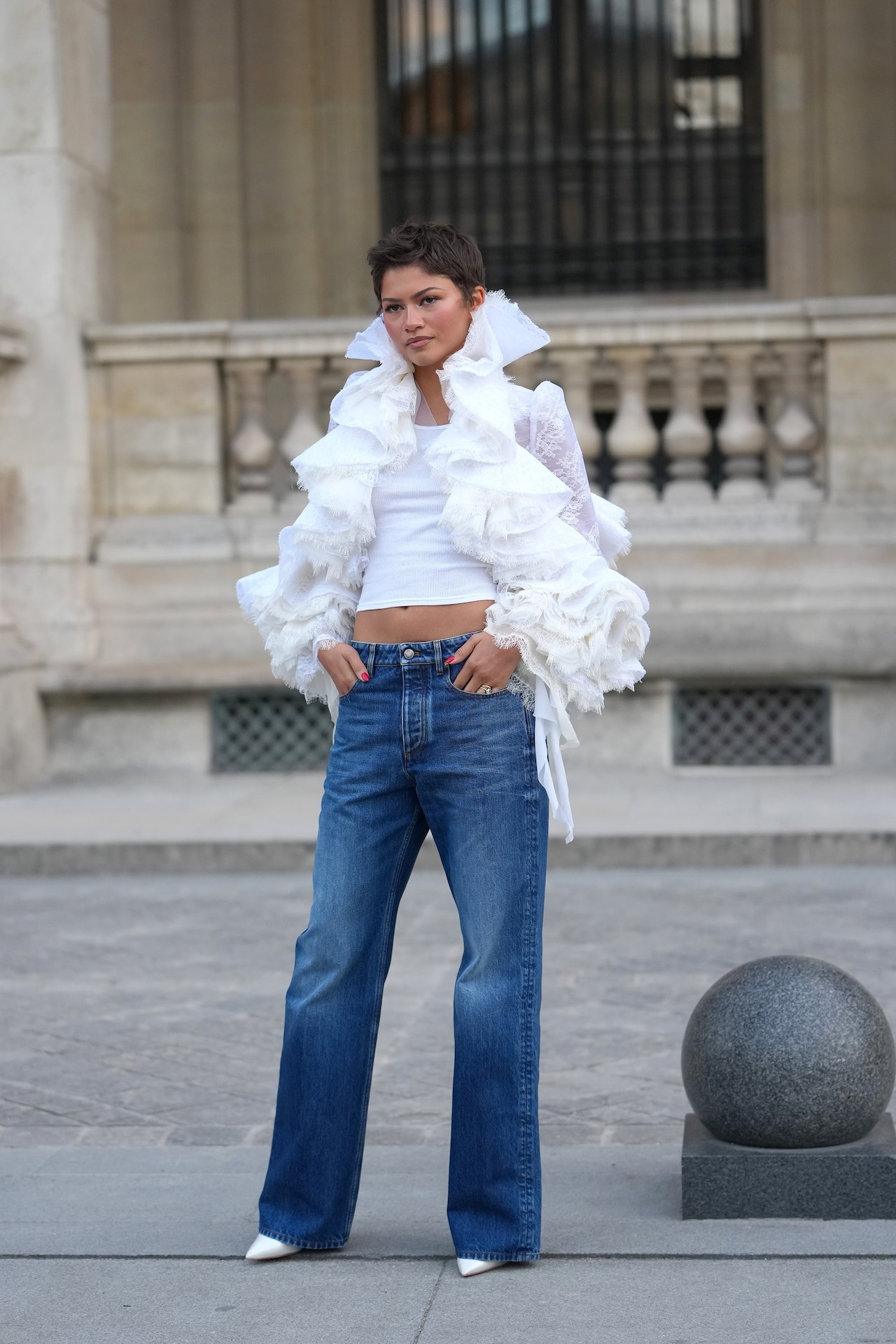
Zendaya made a notable entrance, drawing immediate attention from fashion critics and photographers by demonstrating sustainable styling within high fashion. Rather than opting for an entirely new, single-use custom ensemble, the actor repurposed a key element from her recent press tour for The Odyssey: an intricate white lace bolero jacket featuring dramatic, Elizabethan ruff-style folded lapels. She paired the archival statement piece with a classic combination of blue jeans and a white vest, offering a masterclass in high-low styling and resourceful wardrobe curation.
Fellow house ambassador Emma Stone arrived in a minimalist yet polished cobalt blazer and matching shorts combination. She was joined by actor Saoirse Ronan, who showcased a striking beauty look featuring blunt baby bangs paired with color-blocked knitwear. K-pop sensation Lisa of BLACKPINK captured significant audience attention in a voluminous textured top and leather miniskirt.
The front row also welcomed notable debuts and rising stars. Adults actor Owen Thiele made his official Louis Vuitton front row debut, while Sinners actress Wunmi Mosaku wore an elegant camel cape. Actresses Sophie Turner and Sophie Thatcher reinforced their status as muses for Ghesquière, and French cinematic icon Catherine Deneuve provided a touch of timeless Parisian elegance.
Rounding out the celebrity attendance were Yoonchae Jeung and Daniela Avanzini of the global pop group Katseye, marking their debut appearance at a Louis Vuitton presentation. Their attendance followed a strategic division within the group; bandmates Lara Raj and Megan Skiendiel were spotted at the Loewe show earlier in the weekend. The coordinated appearances across multiple marquee brands highlighted the deliberate cross-pollination between luxury fashion houses and modern pop music demographics.
The Louis Vuitton SS27 Runway: Design Philosophy and Aesthetics
On the runway, Nicolas Ghesquière shifted away from the rugged, earth-bound motifs of previous seasons toward a lighter, more fluid design language. Post-show design notes emphasized the concept of "the ergonomic"—a foundational principle defined by the house as a notion of design fundamentally shaped by the conditions, capabilities, and movement of the human body.
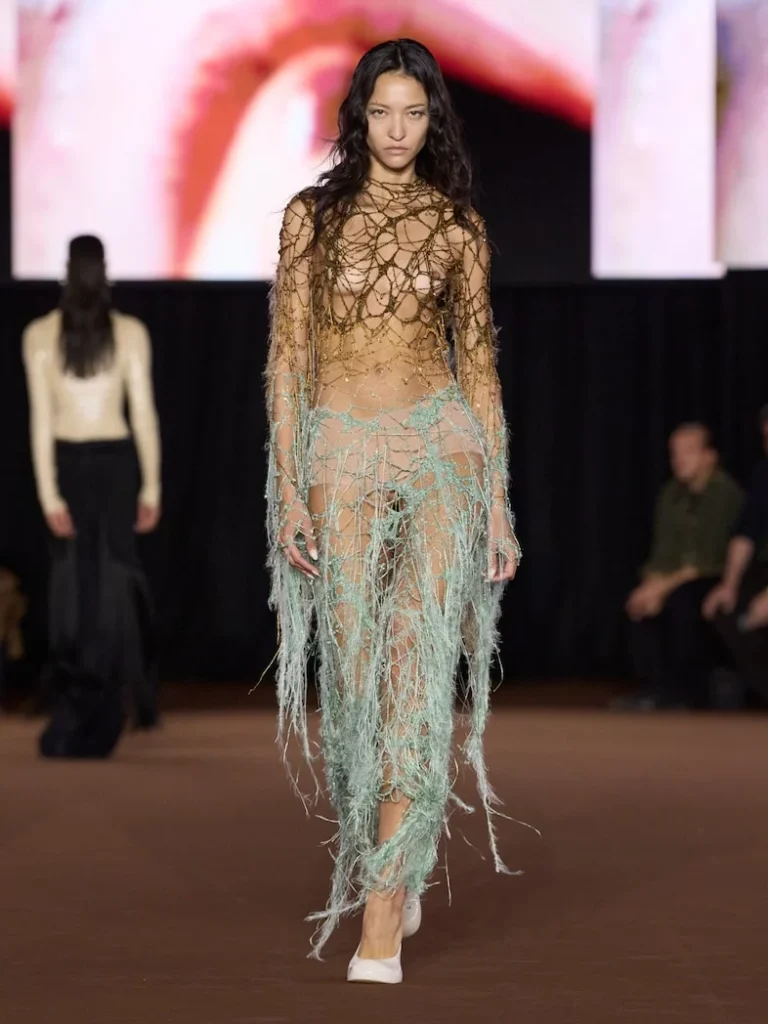
The presentation opened with a sequence of gossamer garments, including dresses, skirts, and lightweight shirts engineered to capture and move with the Parisian evening breeze. This ethereal start gradually transitioned into Ghesquière’s signature exploration of futurism and space-age aesthetics.
The collection featured streamlined space-age suits, reflective eyewear, and shift dresses inlaid with silver lamé foil. Structural elements included elaborately ruffled, tentacle-like accents on outerwear that nodded toward speculative extraterrestrial concepts, alongside layered diamond-patterned fabrics and beaded fringe headpieces that evoked a retro-futuristic vision of decades past.
Set Design and the Art of Travel
The runway set itself served as a narrative framework for the collection. Models walked across an installation engineered to resemble a modern highway. Suspended above the tarmac at varying heights on metal stilts were geometric, conceptual vehicles modeled after the house’s iconic Damier Check pattern.
According to official statements released by Louis Vuitton, the immersive environment was designed to challenge conventional perspectives on mobility.
"Louis Vuitton imagines a surreal runway punctuated by suspended concept cars—an invitation to consider travel beyond the paths already taken," the house described in press materials. "At the crossroads of classical architecture and an imagined future, [the set] offers a surreal evocation of Louis Vuitton’s Art of Travel."
This juxtaposition of centuries-old stone facades with floating, geometric concept vehicles reinforced the brand’s ongoing dialogue between heritage craftsmanship and forward-looking innovation.
Industry Implications and Market Analysis
The conclusion of Paris Fashion Week with the Louis Vuitton SS27 showcase highlights several shifting paradigms within the luxury retail and marketing sectors.
First, the deliberate reuse of high-profile red carpet and press tour garments—exemplified by Zendaya’s integration of her Odyssey lace bolero into a casual runway look—reflects a growing industry awareness around sustainability and wardrobe longevity. As consumers and critics increasingly scrutinize the environmental impact of fashion production and single-use celebrity styling, high-profile demonstrations of garment recycling help modernize luxury messaging.
Second, the strategic deployment of diverse global talent—spanning Hollywood cinema, European arthouse film, British television, and international K-pop and pop groups—illustrates the modern mechanics of brand equity. By engaging demographics across North America, Europe, and East Asia simultaneously, luxury conglomerates continue to maximize digital reach and ensure high conversion metrics across diverse consumer segments.
Finally, Ghesquière’s emphasis on ergonomic design and functional fluidity indicates a broader consumer shift within ready-to-wear markets. As the boundary between formalwear, leisurewear, and technical apparel continues to dissolve, luxury houses are prioritizing garments that offer tactile comfort and physiological adaptability without sacrificing avant-garde visual impact.
As buyers and editors digest the final collections from Paris, the SS27 season will be remembered as a moment where heritage houses successfully balanced surrealist theatricality with practical, human-centric design principles, setting the commercial and aesthetic tone for the global fashion market in the years ahead.