








Stone has long served as the fundamental lexicon of Rick Owens’ design universe. It manifests physically in his craggy, geological silhouettes and a monochromatic palette dominated by chalk, dust, and coal. It is embedded in the hulking, brutalist architecture of his showrooms and the stark concrete courtyard of the Palais de Tokyo, which has regularly played host to his grand theatrical presentations. For his Spring/Summer 2027 womenswear collection, simply titled Stone, Owens returned directly to these bedrock foundations, excavating the raw material at the core of his creative identity to examine its physical, metaphorical, and societal dimensions.
Staging his presentation yesterday afternoon at the Palais de Tokyo, Owens utilized the runway not merely as a platform for apparel, but as an exploratory site for examining the symbolic weight of the word itself. According to show notes and background materials provided by the house, the collection drew upon three distinct, contrasting interpretations of stone. The first was the elegant stoicism of the geological material—its enduring strength and unyielding nature. The second referenced the stone rolled away during the resurrection of Christ, which Owens framed as a profound metaphor for spiritual release following immense sacrifice. The third interpretation addressed what the designer described as "all-too-common stone throwing," a phenomenon of modern hostility and societal fracture that he stated has become his modest life’s mission to oppose.
This multifaceted conceptual framework set the stage for an intense physical and visual exhibition. As models navigated the grated metal runway, an abrasive and industrial soundtrack produced by Sissymisfit reverberated through the space, establishing an atmosphere of uncompromising raw power.
Industrial Hardness and Architectural Silhouettes
Structured, monolithic shapes dominated the opening sequence of the collection. Models appeared in rigid ivory column gowns constructed from industrial nylon webbing—material typically utilized to secure heavy shipping crates—intricately woven together with double-duchesse satin. Owens described these striking garments in his show notes as slabs of rigid fabric crossed with girdered lines, evoking the structural integrity of brutalist architecture and civil engineering frameworks.
This industrial hardness cascaded throughout the opening looks, manifesting via enormous geometric collars that framed the face like architectural buttresses, exaggerated fishtail skirts that pooled heavily on the runway, and sharp, angular bustles jutting aggressively from the bodies of the models. The garments defied traditional notions of soft draping, opting instead for a formidable skeletal scaffolding that mirrored the designer’s longstanding fascination with monumental form and spatial dominance.
As the collection progressed, the pristine rigidity of the stone motif began to weather and fracture, mimicking the natural erosion of geological formations over time. Sheer dresses split open dramatically across the body, revealing glimpses of skin beneath white fabric cocoons that wrapped tightly around the torso. Sulphur-dyed Japanese denim was subjected to rigorous bleaching techniques, resulting in mottled, organic gradients across flowing trousers, microjackets, and distressed tunics that suggested prolonged exposure to the elements.
Tensegrity and Structural Innovation
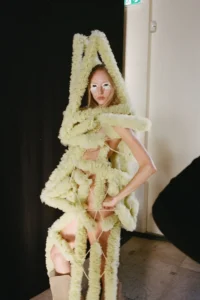
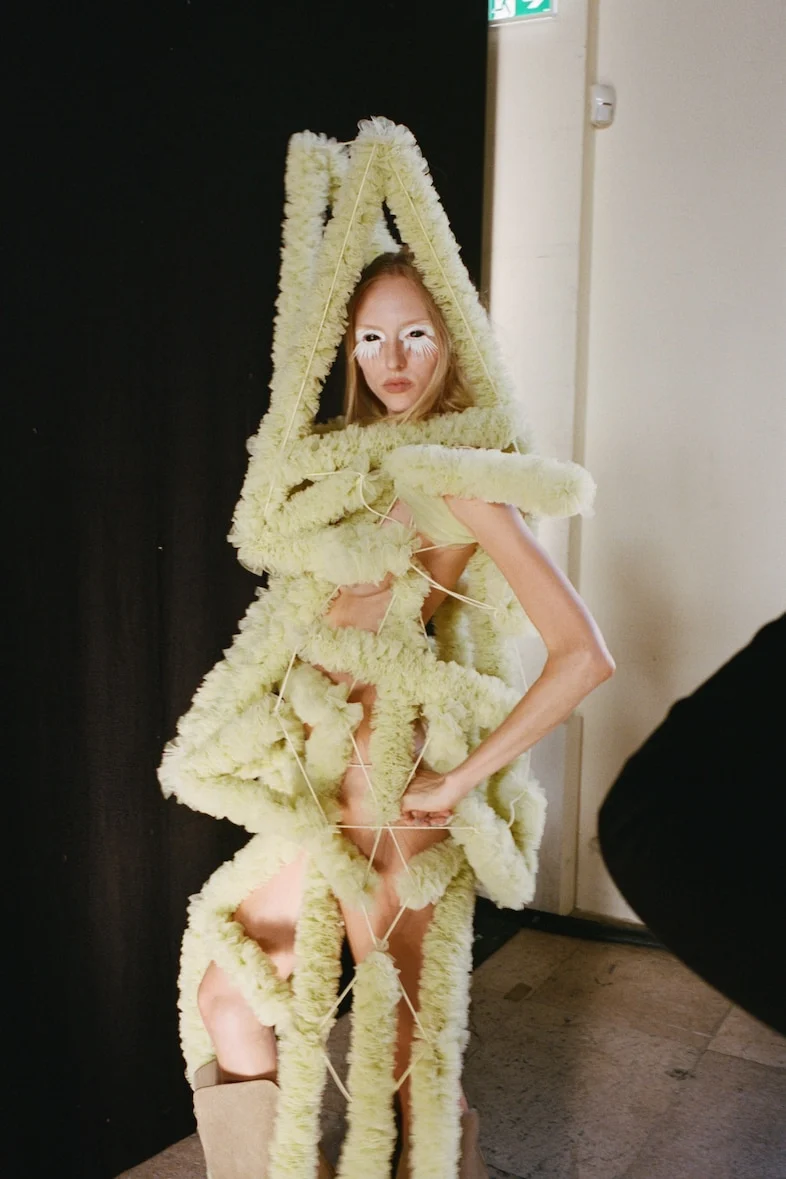
A notable highlight of the presentation was Owens’ continuation of the tensegrity constructions first introduced during his recent menswear showcase. While the previous men’s collection relied primarily on latex tubes and leather to create lattice-like frameworks held together by a network of continuous tension, the womenswear adaptation pivoted toward a softer, more unsettling textural contrast.
For the SS27 women’s show, Owens replaced the heavier materials with what he termed "frothy tulle négligées." However, the delicate nature of the fabric did little to soften the overall impact; instead, the layered, writhing forms evoked unsettling imagery of organic life—specifically, worms shifting beneath a freshly lifted rock. This juxtaposition of delicate textiles with structural tension highlighted Owens’ ongoing exploration of structural physics and organic decay.
Anchoring these looks were footwear designs that functioned as sculptural cages. Models’ feet were tightly strapped and bound into jewelled, cage-like shoes, featuring skeletal frameworks that closely resembled the twisted metal structures left standing after a building undergoes catastrophic collapse. Up top, the styling adhered strictly to the established Rick Owens uniform: reflective visor sunglasses that obscured the eyes, enormous feathered eyelashes placed deliberately and jarringly off-centre, and severe Chelsea cuts—often referred to as reverse mullets—that reinforced an aesthetic of calculated isolation and architectural rigor.
Background Context and Chronology
The staging at the Palais de Tokyo continues a long-standing relationship between Rick Owens and the iconic Parisian art institution. Over the past decade, the venue has served as the canvas for some of the designer’s most ambitious and politically charged presentations, often incorporating public access, fire performers, smoke machines, and monumental architectural installations.
The chronology of the SS27 season follows a rigorous development cycle that began immediately following the conclusion of the menswear presentations earlier in the year. During that window, Owens and his Paris-based studio refined the technical execution of industrial materials, collaborating closely with textile manufacturers to adapt commercial-grade webbing and heavy-duty hardware into couture-level garments. The integration of tensegrity engineering—a structural principle originating in sculpture and architecture where structural shape is guaranteed by the continuous tension of components rather than continuous compression—underscores the brand’s deep-seated commitment to pushing the boundaries of garment construction beyond conventional tailoring.
Industry Implications and Critical Analysis
Fashion critics and industry analysts observing the Palais de Tokyo presentation noted that the collection successfully bridged the gap between wearable art and industrial design. By treating fabric as a structural material akin to concrete or steel, Owens reinforced his position as one of the few contemporary designers consistently operating at the intersection of fashion, architecture, and philosophical discourse.
Market analysts following the presentation suggest that while the sculptural pieces—such as the nylon webbing column gowns and the cage-like jewelled footwear—will primarily serve as runway statements and museum-caliber acquisitions, the bleached sulphur denim and distressed tunics are expected to perform robustly within the luxury retail market. The brand’s ability to translate high-concept runway themes into commercially viable footwear and casualwear remains a cornerstone of its sustained financial resilience within the independent luxury sector.
Furthermore, Owens’ explicit commentary regarding societal hostility and the metaphor of stone throwing resonated deeply within the current cultural climate. By framing his garments as both armor against external aggression and monuments to resilience, the designer transformed a seasonal fashion presentation into a broader commentary on endurance, creative opposition, and the enduring strength of the human spirit in an increasingly fractured world.