



As anxieties surrounding artificial intelligence, automation, and the intensifying climate crisis reach a fever pitch across global populations, modern society is increasingly turning toward the natural world as a vital source of psychological resilience. This cultural pivot away from hyper-digital saturation has manifested in diverse ways, ranging from the widespread resurgence of urban guerrilla gardening spearheaded by community-led organisations like Grow to Know, to the viral popularity of social media trends where individuals fashion temporary DIY "natural tattoos" by pressing ferns onto their skin or tote bags. Yet, this profound affinity for the natural environment has now transitioned from fleeting digital content into permanent bodily modification, giving rise to a distinct and rapidly expanding tattooing aesthetic: biomorphic body art.
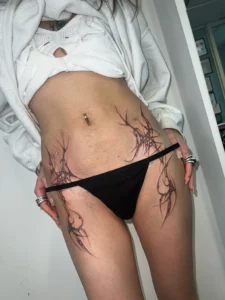
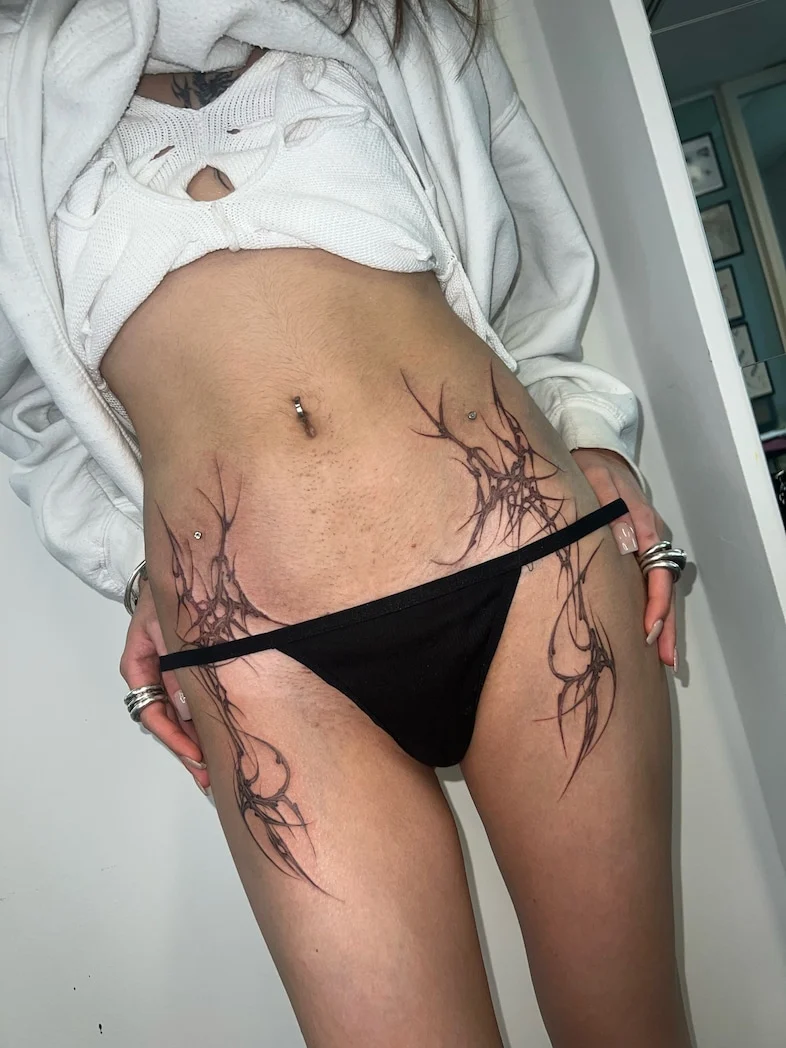
Rooted heavily in the avant-garde biomorphism art movement of the 20th century—which championed abstract forms and patterns inspired by or reminiscent of living organisms—these intricate, botanical abstractions are increasingly dominating digital feeds, curated Instagram carousels, and independent studios worldwide. Characterized by fine-line etchings of organic structures, biomorphic tattoos frequently draw upon microscopic and macroscopic natural elements. As noted by art critic Jennifer Higgie in her examinations of the original artistic movement, these designs take natural phenomena—such as the precise spiral of a snail’s shell or the fluid, shifting shape of a microscopic amoeba—and reconfigure them into novel, highly abstract compositions. While human adornment featuring plant life can be historically traced across centuries-old cultural traditions, from South Asian Mehndi rituals to the proliferation of botanical motifs in late 19th-century Western European tattooing, this contemporary iteration feels fundamentally distinct. Rather than replicating literal, easily identifiable flora like roses or cherry blossoms, modern biomorphic tattoos mirror the complex, microscopic structures of biological cells, mycelial networks, and primordial organisms.
The Shift From Cyber-Sigilism to Organic Abstraction
The transition from rigid, manufactured aesthetics to fluid, organic forms has not gone unnoticed by practitioners within the tattooing industry. Goldensu, an East London-based tattoo artist operating out of Mercury Design Studio, has observed a marked evolution in client preferences over recent years.
"A few years ago, styles like Cybersigilism and mechanical geometry were incredibly popular," Goldensu explains. "While those aesthetics still have their place, I’ve personally felt a noticeable shift in what my clients seek."
This aesthetic evolution reflects a broader cultural resistance to artificial structures, automated labor, and algorithmic oversight, pushing individuals to seek out primordial, organic forms for inspiration. Goldensu directly links this phenomenon to technology’s increasingly dominant and inescapable role in daily human life.
"As AI and screen-based activities continue to dominate our routines, people seem to be looking for something contrasting on their bodies, forms that are raw and deeply organic," she notes.
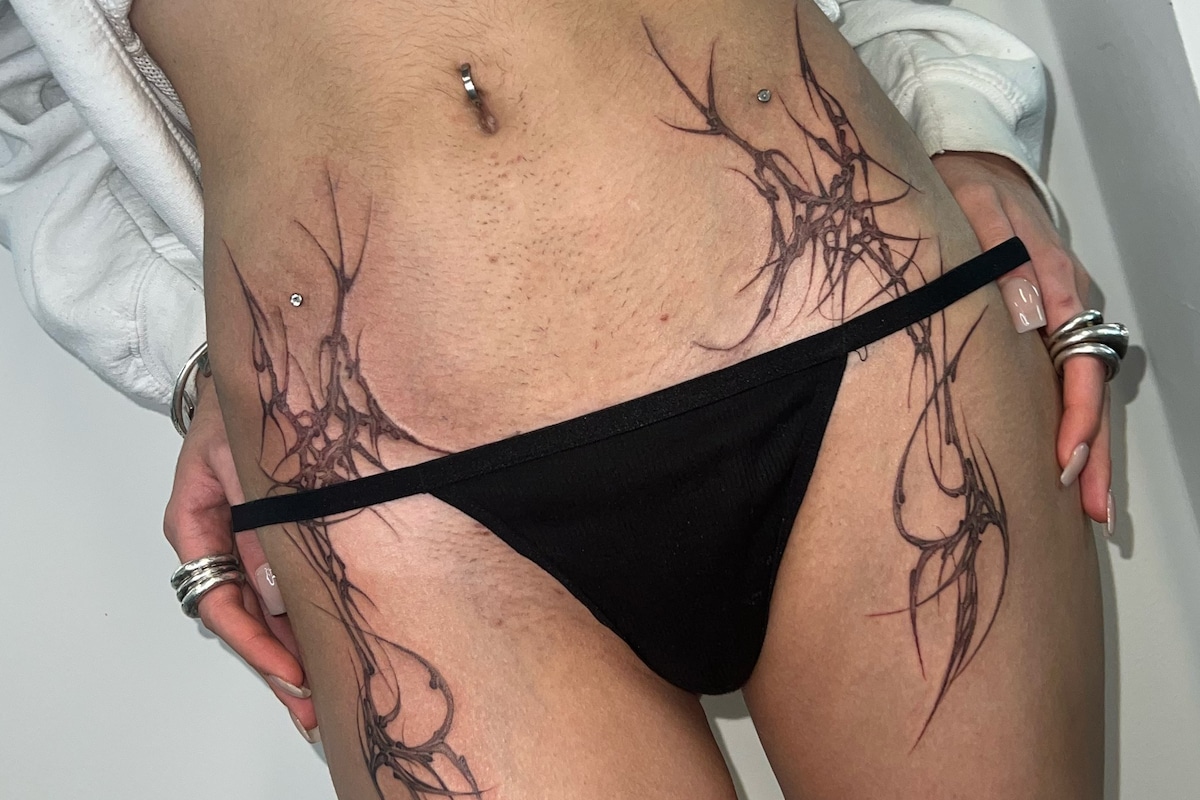
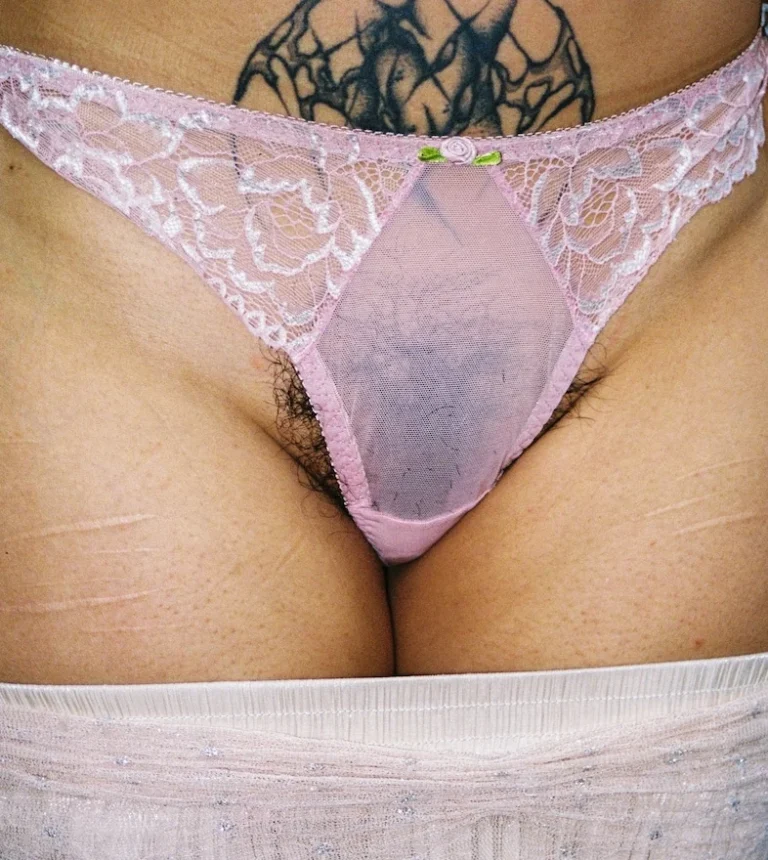
Operating at the intersection of experimental graphic design and naturalism, Goldensu’s work often relies on freehand application. This technique imparts a natural fluidity that complements both the abstract subject matter and the innate contours of the human body, resulting in compositions like vine-like tendrils that sprout over a collarbone and trail delicately down an arm. In other instances, she utilizes negative space and precise light diffusion to craft the illusion of a relief sculpture depicting an indeterminate climbing plant.
Beyond purely aesthetic considerations, these biomorphic designs frequently serve as profound symbols of personal transformation and self-reclamation. Goldensu observes that her clients often seek out botanical and organic tattoos during major life transitions, periods of intense personal healing, or while navigating recovery. These intricate pieces are frequently utilized not only to aesthetically conceal physical scars but to fundamentally alter how an individual perceives and relates to areas of their body with which they may have previously struggled.
Historical Roots and Modern Identity
The intersection of botany, the human form, and identity is deeply historically grounded. Throughout history, the natural world has served as an expansive lexicon of symbols for marginalized communities, particularly within queer and gender-fluid populations. This connection spans from the literal—such as the vast array of plant species in the natural world that are capable of changing sex—to the deeply metaphorical. Referencing the lyrical works of the ancient Greek poet Sappho, cultural symbols such as sprigs of lavender and carefully arranged bunches of violets have long been utilized as subtle, coded tattoos for queer individuals seeking recognition and community without exposing themselves to societal hostility.
In the contemporary context, the psychological benefits of engaging with nature are increasingly backed by empirical research. Studies highlighted by mental health organizations, such as the UK-based charity Mind, consistently suggest that regular immersion in or proximity to natural environments can significantly enhance psychological well-being and aid individuals in coping with eco-anxiety and systemic fears regarding climate change. By permanently etching these organic motifs onto the skin, wearers are effectively utilizing their own bodies as portable landscapes, drawing continuous psychological sustenance and resilience from these positive reminders while navigating a rapidly evolving, uncertain world.
Biopunk, Xenobiology, and the Digital-Nature Convergence
While mainstream discourse surrounding the internet remains largely saturated with apocalyptic anxieties concerning generative artificial intelligence and dystopian futures, visionary tattoo artists are utilizing the medium to propose alternative paradigms. Sofia, a Belgrade, Serbia-based tattoo artist widely known by her digital moniker Pale.vine, envisions a future grounded not in mutual destruction, but in nature’s infinite capacity for biological evolution and adaptation. For Sofia, biomorphic tattooing functions as a visual medium to explore what a harmonious, symbiotic relationship between advanced technology and the natural world might actually look like.
Sofia characterizes her specific tattooing style as "biopunk," a specialized offshoot of the broader xenobiology aesthetic that manipulates organic structures through a speculative, science-fiction lens. By experimenting radically with scale, her drawn compositions are often magnified to macroscopic proportions until they appear to creep across the human anatomy like sophisticated, futuristic organisms or synthetic parasites.
"What I find especially interesting is that nature and technology no longer exist as two completely separate worlds," Sofia states. "Through my designs, I’m not imagining nature in direct opposition to a technological future, but creating one where it has already inspired the foundations."
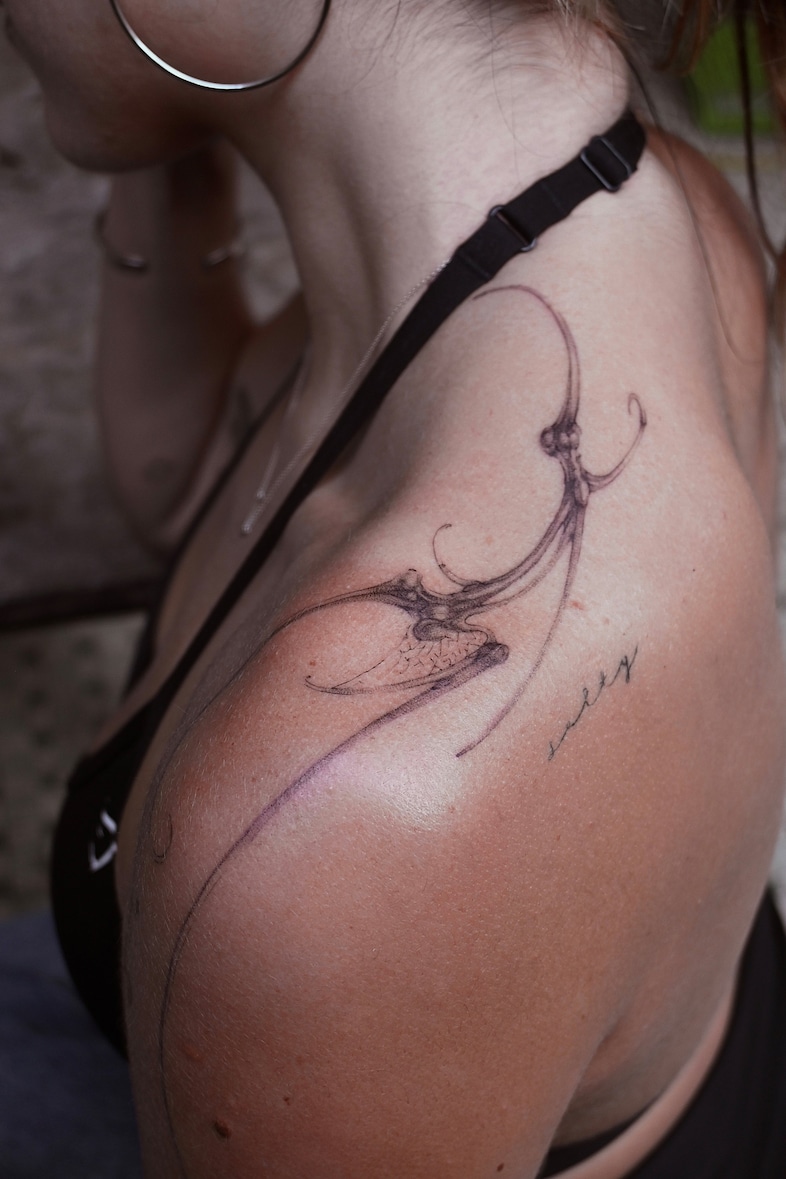
Sofia’s expansive catalog of artistic influences bridges disparate cultural domains, ranging from the structurally complex, biomimetic haute couture of Dutch fashion designer Iris van Herpen and the immersive, ecologically minded installations of artist Pierre Huyghe, to her own meticulously curated Instagram archives. Her digital mood boards frequently feature striking visual documentation of ermine moth cobwebs, shed snakeskins, and microscopic photography of otherworldly plant cellular structures.
Interestingly, Sofia notes that her clientele often experience an instinctive, pre-rational pull toward her designs, frequently arriving at her studio without a definitive intellectual explanation for their attraction.
"Sometimes people simply see my work and say, ‘I don’t really know what it is, but I want something like that on my body,’" she reflects. "And I love that reaction. I don’t think we always need to be able to rationally explain why we are drawn to a certain form."
Chronology of the Trend
The emergence and acceleration of biomorphic tattooing as a recognized cultural movement can be traced across several distinct phases over the past century:
- 1930s–1950s: The genesis of the Biomorphism art movement, pioneered by modernist painters and sculptors who rejected rigid geometric abstraction in favor of amorphous, living shapes derived from nature.
- Late 19th Century to Late 20th Century: The historical proliferation of traditional botanical tattoos in Western Europe and various cultural traditions, primarily focusing on literal representations of flora, fauna, and cultural iconography.
- Early 2020s: The dominance of hyper-digital and industrial tattoo aesthetics, notably Cybersigilism, minimalist line work, and mechanical geometry, which mirrored society’s initial embrace of hyper-connectivity and screen-based culture.
- 2023–2024: A measurable cultural pivot toward ecological awareness and wellness, sparked by escalating climate concerns and widespread fatigue from algorithmic saturation and generative AI integration.
- 2025–Present: The contemporary maturation of the biomorphic tattoo movement, characterized by freehand organic abstractions, biopunk aesthetics, and a surge in demand for cellular, microscopic, and indeterminate plant-inspired body art across global urban centers.
Sociological Implications in a Data-Driven Society
The rapid growth of the biomorphic tattoo trend offers a compelling sociological case study in modern human behavior. In a contemporary society increasingly governed by quantitative metrics, continuous data collection, hyper-individualized health-tracking wearables, and social media key performance indicators (KPIs), human existence is frequently subjected to rigid categorization and algorithmic optimization.
Against this backdrop of relentless quantification, the embrace of a fluid, indeterminate, and scientifically unclassifiable tattoo style represents a subtle form of cultural resistance. By opting for amorphous cellular structures, vine-like tendrils, and biopunk abstractions that resist easy definition, individuals are reclaiming bodily autonomy through ambiguity.
As technology continues to reshape the boundaries of human identity and daily labor, the human impulse to mark the skin with reminders of the natural world points toward a collective desire for grounding. Whether viewed through the lens of psychological resilience against eco-anxiety, historical continuity with botanical symbolism, or an avant-garde speculation on human-nature-technology integration, biomorphic tattoos have secured their place as a defining aesthetic movement of the hyper-digital age.