








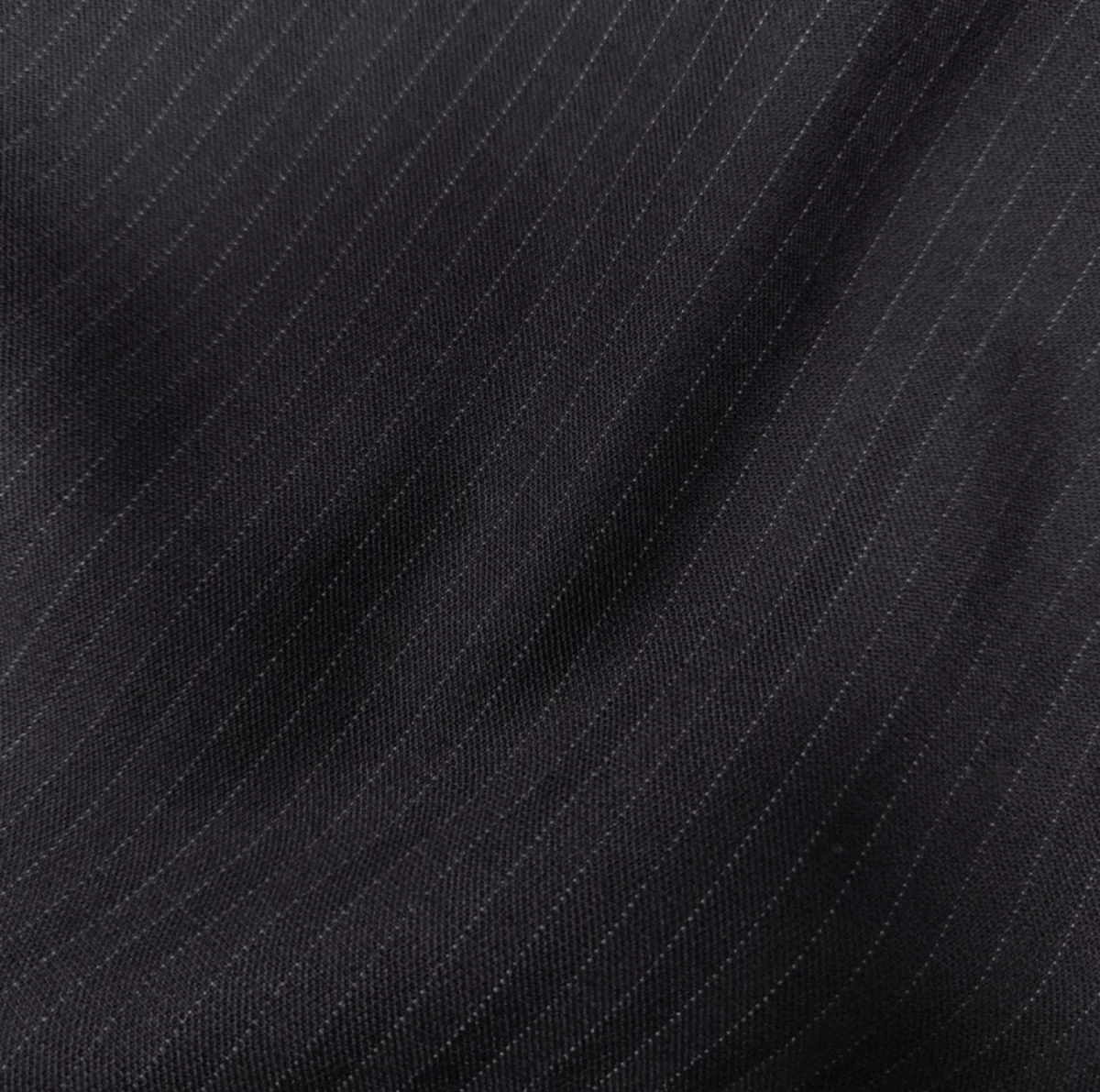
The pinstripe suit occupies a uniquely polarized space in the history of men’s fashion, oscillating between an emblem of corporate authority and an expressive canvas for sartorial rebellion. To understand why certain iterations of the pinstripe project timeless elegance while others instantly evoke the excess of a bygone era requires examining over a century of tailoring evolution, shifting cultural connotations, and changing psychological associations with power dressing.

Historically, the pattern originated in the mid-19th century within the banking corridors of Victorian London. Far from being designed as a statement of opulence, early pinstripes served a utilitarian corporate function. Individual financial institutions developed distinct variations in stripe width, weight, and spacing to visually identify institutional affiliation among employees. It was an exercise in corporate conformity, intended to help clerks and bankers blend seamlessly into the bustling financial district rather than stand out.

The dynamic shifted dramatically at the turn of the 20th century. In 1907, the Chicago Cubs baseball team adopted pinstripes for their uniforms, a design choice quickly co-opted by their fiercer rivals, the New York Yankees. This athletic transition injected a populist, maverick energy into a previously rigid British invention. Across the Atlantic, American gangsters of the Prohibition era embraced the full pinstripe suit as a visible defiance against federal authorities, a style soon popularized by Hollywood leading men such as Clark Gable who sought to cultivate a rugged, anti-establishment aesthetic.

By the late 20th century, however, the pinstripe underwent its most polarizing transformation. The 1980s heralded the era of the hyper-masculine "power suit," immortalized in popular culture by cinematic depictions of Wall Street excess, corporate avarice, and unchecked ambition. Amplified by broad, structured shoulders, double-breasted cuts, contrasting collars, and flamboyant accessories like red braces and oversized silk ties, the pinstripe became synonymous with aggressive wealth and self-aggrandizement. For decades, it functioned as cinematic shorthand for corporate ruthlessness, appearing in films ranging from Wall Street and American Psycho to The Wolf of Wall Street.

The turning point for this traditional aesthetic arrived with the global financial crisis of 2008. As banking institutions faced widespread public backlash and economic collapse, the cultural appetite for the aggressive power suit vanished overnight. Wearing a traditional, heavily padded pinstripe suddenly carried the unintended connotation of financial irresponsibility and corporate malfeasance. Consequently, demand plummeted, forcing designers and tailors to completely reevaluate how the pattern was constructed, styled, and perceived.
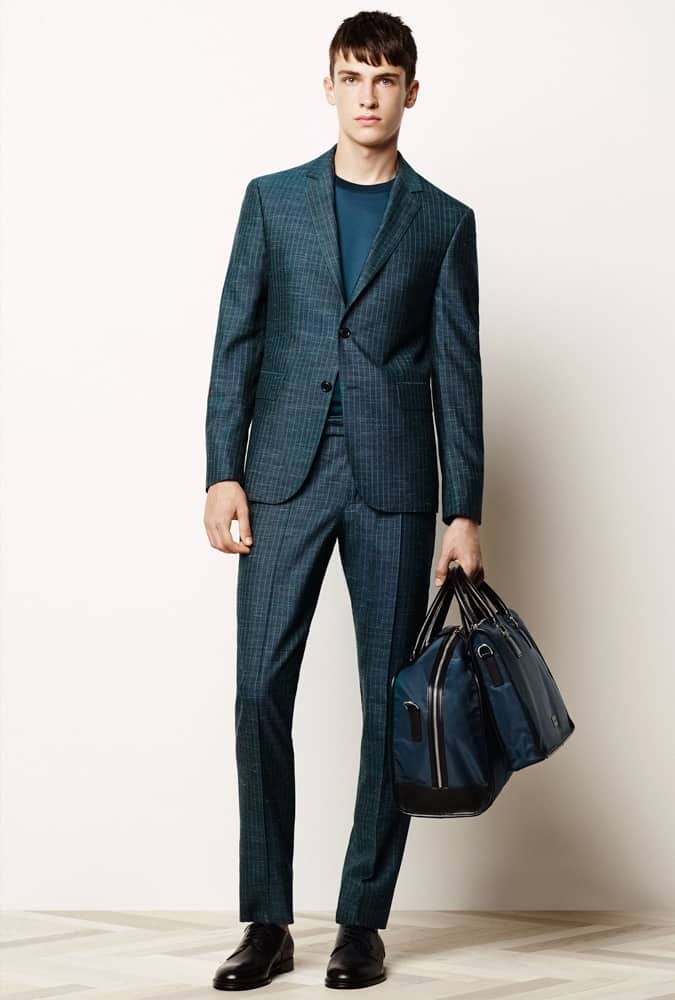
In the decade following the financial crash, contemporary designers abandoned rigid traditional tailoring norms to treat pinstripes as versatile graphic patterns rather than strict corporate uniforms. The pattern migrated from heavy wool suits onto overcoats, casual separates, knitwear, and even everyday streetwear. Menswear movements championed deconstructed silhouettes, softer Italian shoulders, and relaxed styling that stripped away the intimidation factor historically attached to the fabric.

Industry experts emphasize that the modern viability of a pinstripe suit relies entirely on fit, proportion, and contextual styling. According to contemporary fashion analysis, breaking away from the rigid proportions of the 1980s is essential. While historical power suits favored exaggerated chest dimensions and pinched waists, modern styling leans toward unstructured Italian-style jackets, lightweight fabrics, and unexpected pairings—such as wearing pinstripe trousers with clean white trainers, fine-gauge knitwear, or casual overshirts.

Proportion and body type also play a critical role in successfully executing the look. Tailoring professionals note that vertical pinstripes inherently elongate the silhouette, making them advantageous for shorter individuals looking to add visual height. Conversely, individuals with extremely slender frames risk appearing overly elongated, while wider chalkstripes can add visual breadth. As a general rule of thumb, a well-proportioned pinstripe should complement the wearer’s natural frame rather than overwhelm it; if the visual spacing of the stripes exceeds the width of the wearer’s shoulders, the garment risks appearing excessively loud or dated.

Stylistic adaptations have further fractured the monolithic image of the pinstripe. Today’s market broadly divides into distinct styling approaches, ranging from casual hybrids to elevated heritage dressing. The modern hybrid approach involves breaking up the suit entirely—pairing pinstripe trousers with solid-color blazers or discarding the jacket in favor of knit polos and minimalist footwear. Conversely, the traditionalist approach focuses on executing classic navy or charcoal pinstripes with refined restraint, substituting stiff Oxford shoes with loafers or monk straps and minimizing excessive accessories to maintain an air of understated sophistication.
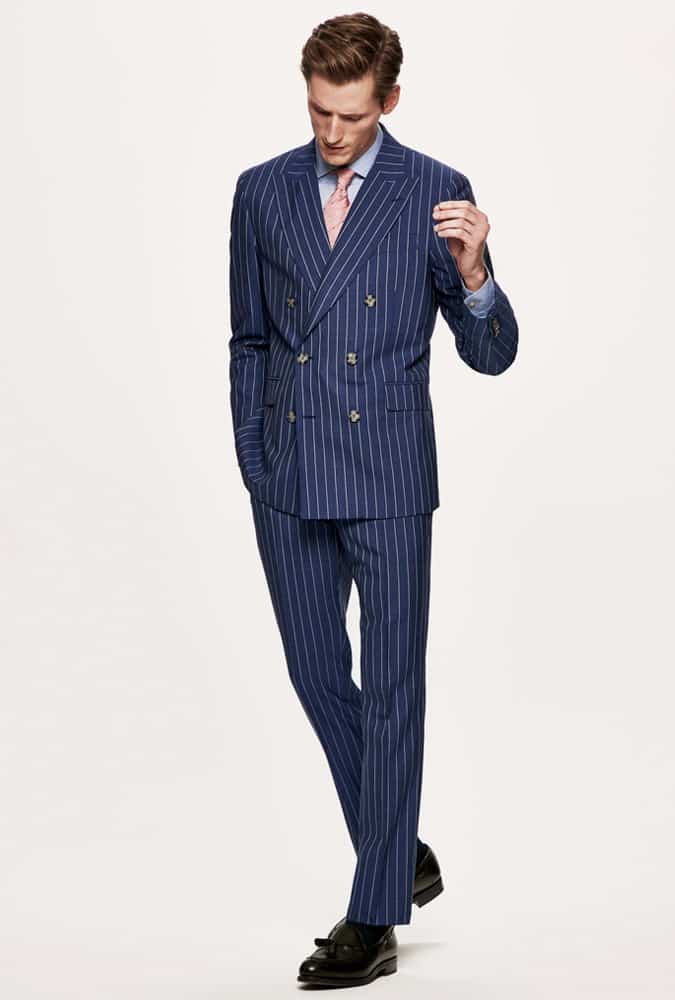
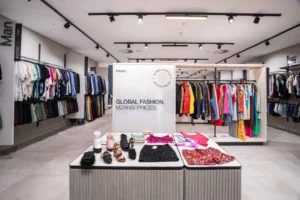
For consumers navigating the current retail landscape, major tailoring houses and contemporary brands offer vastly different interpretations of the pattern. Traditional American institutions like Brooks Brothers and Ralph Lauren continue to provide high-end, meticulously constructed wool suits with subtle, narrow striping that nods to heritage craftsmanship without crossing into pastiche. On the other end of the spectrum, European and contemporary labels such as Suitsupply, Lardini, and Mango emphasize softer, unstructured tailoring, utilizing materials like linen, alpaca, and cashmere to create relaxed, breathable garments suited for modern professional and social environments. Meanwhile, fast-fashion and directional design arms like Topman experiment with bold color palettes, metallic yarns, and exaggerated proportions, catering to an audience seeking avant-garde interpretations of classic menswear.

Ultimately, the pinstripe suit’s enduring presence in modern wardrobes depends on intentionality. When approached with a focus on modern proportions, softer construction, and thoughtful pairing, the pattern transcends its turbulent history as a symbol of corporate excess. By shedding the rigid, hyper-masculine baggage of the past century, contemporary menswear has successfully reclaimed the pinstripe as a sophisticated, adaptable classic capable of shifting seamlessly between formal elegance and relaxed modern style.