










Global fashion retail is currently navigating an unprecedented structural paradox. While major apparel brands grapple with billions of dollars worth of unsold inventory sitting idle in warehouses across Europe and North America, emerging markets are drowning in the environmental fallout of poorly managed secondhand clothing imports. Industry estimates indicate that developed economies discard, burn, or quietly warehouse massive surpluses of new inventory to protect core brand equity and prevent market cannibalization. Conversely, traditional export pathways to developing nations often result in 30% to 40% of shipped garments being deemed completely unusable upon arrival, compounding localized ecological degradation through unmanaged textile waste.
This systemic inefficiency highlights a glaring disconnect in the global supply chain, yet it has simultaneously unlocked a lucrative frontier for the emerging recommerce sector. Projected to reach a staggering $350 billion by 2027, the global resale and recommerce market is attracting a new wave of technology-driven startups. Among them is FARO, a South African retail-tech upstart that launched with an ambitious vision: to bridge the gap between Western inventory oversupply and the surging demand for authentic, affordable fashion in emerging economies, all while drastically reducing textile waste. Backed by a recent $6 million funding round, the company is positioning itself as a pioneer in physical off-price retail automation and circular fashion logistics.
The Mechanics of Off-Price Arbitrage in Emerging Markets
The economic realities of emerging markets present a distinct challenge for luxury and fast-fashion giants alike. Average consumer disposable incomes in many African, South Asian, and Latin American nations cannot sustain traditional, full-price retail footprints for international labels such as Calvin Klein, Tommy Hilfiger, Levi’s, and Zara. Nevertheless, consumer aspirations for authentic branded goods remain remarkably high. FARO bridges this divide by redirecting excess stock, overproduction, and customer returns directly to high-demand physical storefronts in regions like South Africa, generating mutual value for brands and local consumers alike.
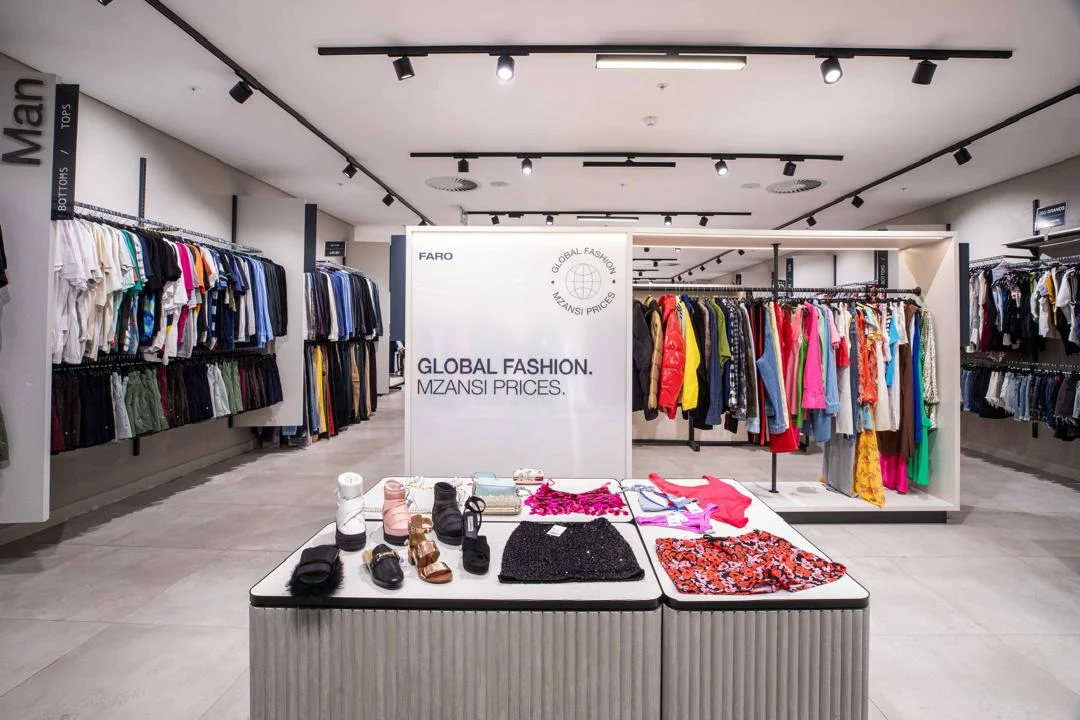
The startup’s operating model focuses heavily on consumer returns and minor-defect inventory that traditional brands typically write off, discard, or incinerate due to the prohibitive labor costs associated with manual sorting. FARO acquires these goods at ultra-low wholesale prices—sometimes as low as £1 per item—and processes them through specialized reconditioning facilities. Equipped with industrial laundries, specialized steam tunnels, and cost-effective labor forces, these hubs restore garments to pristine condition.
According to co-founder and co-CEO David Torr, the business operates on a strict fixed-margin model designed to target a 45% profit margin after accounting for all operational expenditures, including processing and swing tags. Crucially, rather than pocketing excess windfalls when margins exceed targets, FARO channels those efficiencies directly back into lowering retail prices for its customer base. The company’s current inventory mix comprises approximately 40% reconditioned customer returns and 60% brand-new overstock items, sourced through direct partnerships with prominent global labels including ASOS, Boohoo, G-Star, Jack & Jones, and Levi’s. These items are ultimately sold at discounts reaching up to 70% off standard retail prices.
From a Single Pop-Up to a Rapid Expansion Timeline
FARO’s ascent within the retail sector has been exceptionally rapid since its inception. The enterprise began operations in early 2023 with an experimental pop-up retail installation in South Africa. The initial test proved unexpectedly lucrative, generating $100,000 in revenue within its first month of trading.
Traditional retail benchmarks initially led company leadership to project a requirement of at least seven operational stores to achieve an annual revenue milestone of $2 million. However, driven by strong consumer uptake in formal retail spaces, urban hubs, and mid-market shopping centers, FARO surpassed expectations. The company closed out its inaugural operational period with $2.3 million in revenue derived from just four physical storefronts, translating to a remarkable twentyfold year-over-year revenue growth.
Buoyed by this momentum, FARO secured a $6 million investment round to fuel its aggressive long-term roadmap. The round was led by JP Zammitt, president of Bloomberg, with participation from a robust syndicate of international venture capital firms and strategic angel investors. Notable institutional backers include Presight Capital, Gharage Ventures, and E4E Africa. A diverse group of individual investors also contributed, including Mato Perić (MPGI), Leonard Stiegeler (Pulse), Oliver Merkel (Flink), Vikram Chopra (Cars24), Tushar Ahluwalia (Razor Group), Sudeep Ramnani (885 Capital), and Kresten Buch (88mph).
With these fresh funds secured, the startup has set its sights on expanding its physical footprint to 1,000 stores over the next decade, targeting high-growth emerging markets across Africa, South America, Asia, and the Middle East.
Overcoming E-Commerce Hurdles Through Offline-First Retail Innovation
While many modern retail startups prioritize digital-first or omnichannel e-commerce models, FARO has deliberately chosen to anchor its business in brick-and-mortar retail distribution. This strategic choice is driven by the unique infrastructural realities of emerging markets. E-commerce across the African continent continues to contend with severe logistical bottlenecks, lower population densities, and costly last-mile delivery models. Although established platforms like Takealot and Jumia have successfully navigated these waters over the years, they face mounting competitive pressure from ultra-cheap, cross-border e-commerce giants like Temu and Shein, which increasingly threaten the market share of traditional online and fast-fashion players.
In contrast, South Africa boasts a highly developed physical retail ecosystem featuring over 2,000 formal shopping centers. For off-price retail, which relies heavily on handling unique, single-item consumer returns and variable overstock manifests, digitizing every individual SKU for online listing remains economically unviable. Even legacy off-price giants such as TJX operate overwhelmingly through physical store networks, utilizing established supplier relationships that leave little internal incentive for technological modernization.
However, FARO argues that traditional off-price supply chain management remains deeply inefficient, relying on labor-intensive, outdated administrative processes where corporate planners manually parse massive inventory manifests using basic spreadsheet software. To disrupt this legacy bottleneck, the startup is developing proprietary artificial intelligence agents designed to streamline complex buyer workflows into automated micro-tasks.
Revolutionizing Supply Chain Management with Artificial Intelligence
To scale efficiently without inflating corporate overhead, FARO is betting heavily on artificial intelligence to automate the labor-intensive aspects of off-price inventory procurement. According to David Torr, legacy retail head offices often employ thousands of administrative workers whose primary function involves manually manipulating data across complex spreadsheets.
By deploying custom-built AI agents, FARO aims to replace these sluggish, manual procedures with instantaneous computational analysis. The company has begun rolling out preliminary buying models capable of processing massive inventory manifests in mere seconds rather than hours. Beyond boosting operational speed, leadership maintains that these automated systems achieve significantly higher accuracy rates than human counterparts, effectively eliminating human error in valuation and purchasing decisions.
Furthermore, the company plans to integrate personalized shopping technologies into its ecosystem. By analyzing consumer preferences and purchase histories, the startup intends to roll out notification tools that alert shoppers when specific brands or targeted apparel items are inbound to their local store, thereby deepening customer engagement and brand loyalty.
Strategic Challenges on the Road to One Thousand Stores
Despite its rapid initial traction, FARO’s ambitious trajectory toward a 1,000-store footprint is not without hurdles. Successfully scaling an off-price retail model across diverse international borders requires meticulous localization. Consumer behavior, sizing standards, purchasing power, and brand preferences vary dramatically across regions. A retail strategy that yields high performance in South Africa’s mature urban malls may not automatically resonate with consumers in Kenya, Nigeria, or nascent markets outside the continent.
To mitigate these risks, FARO’s founding team brings a wealth of collective operational experience from major global and regional enterprises, including Amazon, Jumia, UCOOK, Superbalist, Spice & Roots, and Zumi. This multi-disciplinary background provides the company with deep insights into regional supply chain dynamics, digital logistics, and localized consumer trends.
The Broader Implications for the Global Fashion Economy
FARO’s rapid emergence underscores a broader transformation underway within the global fashion economy. As consumers increasingly prioritize value and sustainability, and as regulatory scrutiny over textile waste intensifies worldwide, the traditional linear model of "take, make, waste" is becoming increasingly untenable for apparel brands.
By functioning as an institutional valve for excess Western inventory, FARO offers a scalable, economically viable alternative to textile incineration and landfill disposal. Simultaneously, the startup provides millions of consumers in emerging markets with access to high-quality, authentic apparel at attainable price points.
As the global recommerce market races toward its projected $350 billion valuation, startups that successfully leverage automation, localized supply chain management, and physical retail density will likely define the next era of sustainable commerce. For FARO, the immediate task lies in executing its multi-market expansion strategy while maintaining the disciplined, customer-centric focus that propelled its initial twentyfold growth surge.