







The horological landscape is frequently defined by the evolution of legacy designs, and the latest release from Swiss watchmaker Formex—the AirField Automatic—represents a significant pivot in the brand’s strategic focus. By reengineering its highly successful Field Automatic platform, Formex has successfully transitioned from the rugged, no-frills utilitarianism of infantry-focused timepieces to the high-visibility, technical aesthetic required for professional aviation instrumentation. This 2026 expansion of the brand’s catalog signifies a broader market trend: the convergence of lightweight material science with traditional pilot watch design language.
Design and Structural Specifications
At its core, the Formex AirField is a study in material refinement. The watch retains the structural integrity of its predecessor, utilizing a grade 2 titanium case treated with a specialized 900Hv hardened surface coating. This decision addresses the common durability concerns associated with standard titanium, which, while lightweight and hypoallergenic, is prone to surface scratching. By applying this hardening treatment, Formex ensures that the AirField can withstand the rigors of both everyday wear and the harsher environments for which pilot watches were originally intended.

The physical dimensions are balanced for modern versatility, measuring 40mm in diameter with a thickness of 10.5mm. This profile is notably slim for an automatic sport watch, ensuring comfort under a jacket cuff—a key consideration for pilots who require an unobstructed view of their instruments. The lug-to-lug distance of 48mm ensures that the watch remains anchored on a variety of wrist sizes, while the 20mm lug width allows for extensive strap customization. The watch is further bolstered by a flat sapphire crystal and a screw-down crown, the latter of which is essential for maintaining the model’s 150-meter water resistance rating. While most pilot watches prioritize high-altitude utility, the 150-meter rating provides a secondary layer of "go-anywhere" functionality that is increasingly demanded by the modern consumer.
The Evolution of the Aviation Dial
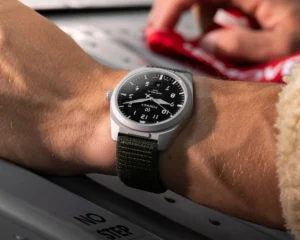
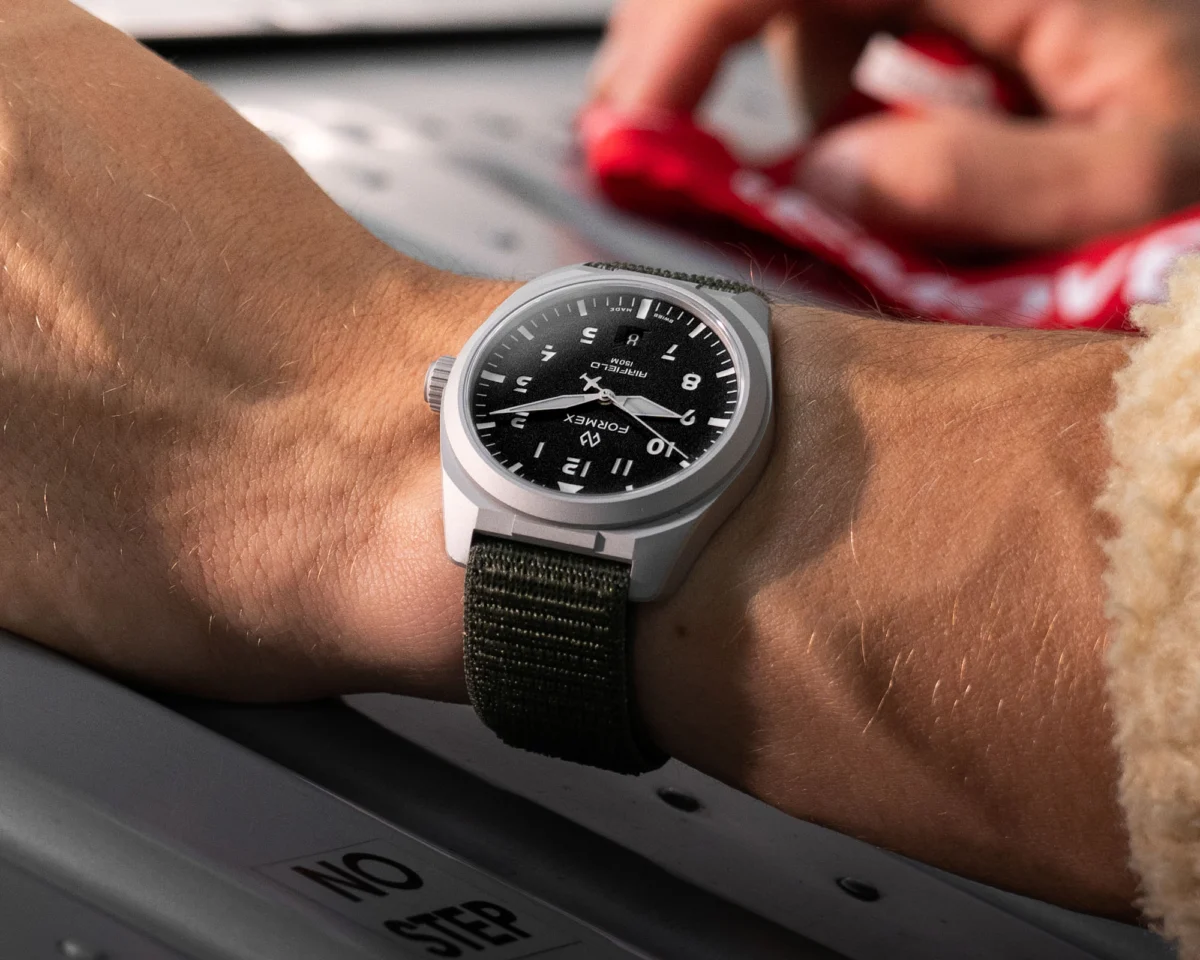
The most striking transformation from the Field series to the AirField lies in the dial architecture. While the original Field Automatic focused on maximum legibility through a simplified layout, the AirField introduces a grain-textured surface that mimics the aesthetic of industrial aircraft components. The stencil-style Arabic numerals, a hallmark of recent Formex designs, have been retained, but they are now presented within a more complex, aviation-themed display.
The hour markers are recessed and filled with Grade A Super-LumiNova, a critical component for low-light legibility. Complementing this is a sloped chapter ring that creates depth, drawing the eye toward the center of the dial. A subtle but important inclusion is the pilot-style handset, which has been specifically calibrated to match the dial’s proportions. Perhaps the most evocative design choice is the seconds hand, which features an airplane-shaped counterweight—a direct homage to mid-century cockpit instrumentation. The date window, positioned at 6 o’clock, maintains the symmetry of the dial, avoiding the visual imbalance often caused by 3 o’clock date apertures.

Technical Advancements: The Sellita SW200-2 Power+
The transition from the standard Sellita caliber to the SW200-2 Power+ movement marks a notable step forward in the internal performance of the Formex collection. The movement operates at a frequency of 28,800 vibrations per hour (4Hz) and provides an extended power reserve of 65 hours. This 20-hour increase over the standard SW200-1 is achieved through an optimized mainspring and a higher-efficiency gear train, allowing for greater "weekend-proof" autonomy.
While this specific iteration of the movement is not chronometer-certified, the decision to prioritize power reserve over COSC certification reflects a shift in consumer demand. For the daily wearer, a long weekend of rest off the wrist no longer requires resetting the time on Monday morning. By standardizing this movement across its new releases, Formex is positioning its mid-range catalog to compete with luxury offerings that demand higher technical specifications without sacrificing accessibility.
Market Context and Strategic Positioning
The release of the AirField must be viewed through the lens of Formex’s recent brand trajectory. Over the past five years, the brand has aggressively pursued a strategy of "direct-to-consumer" excellence, focusing on proprietary technical features like the carbon fiber micro-adjustment deployant clasp. This clasp, available on the leather strap options for the AirField, allows the wearer to adjust the watch’s fit by several millimeters throughout the day—a necessity as the wrist expands and contracts due to temperature and humidity.

Historically, pilot watches have been divided into two camps: the "B-Uhr" style, characterized by massive cases and oversized crowns for operation with gloves, and the modern, slimmed-down interpretation designed for urban settings. The Formex AirField occupies the latter, bridging the gap between a tool watch and a dress-casual accessory.
Broader Industry Implications
The release of the AirField is indicative of a broader industry shift toward "hybridization." Brands are increasingly finding that specialized tool watches—be they dive, field, or pilot—can benefit from shared platforms. By utilizing the same titanium case architecture for both the Field and the AirField, Formex is able to achieve economies of scale that keep the final price point competitive. This efficiency allows the brand to invest more heavily in material finishes and movement upgrades that might otherwise be cost-prohibitive.
Furthermore, the introduction of four distinct colorways—Desert Sand, Horizon Blue, Jet Black, and Tarmac Grey—suggests that Formex is targeting a demographic that values style as much as substance. These names clearly evoke the environments in which such a watch is meant to be worn, ranging from arid desert landscapes to modern metropolitan airfields.

Conclusion and Outlook
The Formex AirField Automatic 40mm is not merely a stylistic update to an existing model; it is a calculated expansion of a successful platform. By integrating the technical advantages of the Sellita SW200-2 Power+ movement with the established durability of the brand’s hardened titanium case, Formex has created a watch that meets the modern requirements for both aesthetic variety and mechanical performance.
As the watch industry continues to move toward more robust, lightweight materials like grade 2 titanium, and as consumers demand greater power reserves for their automatic watches, Formex appears well-positioned. The AirField serves as a testament to the brand’s ability to listen to its user base while maintaining a distinct design language. For enthusiasts of aviation-inspired timepieces, the AirField offers a compelling blend of heritage-inspired looks and modern Swiss manufacturing, ensuring its place in a crowded market of daily-wear tool watches. Moving into late 2026 and beyond, it will be the performance of the SW200-2 Power+ in real-world conditions that will likely cement the AirField’s reputation as a reliable, high-utility companion for both the skies and the streets.