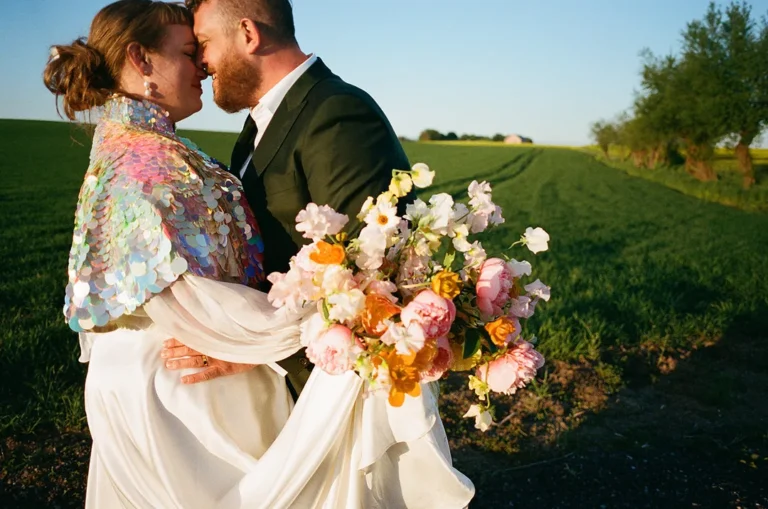












The matrimonial union of Milly and Lewis at the historic St Andrew and St Cuthman Church in Findon, West Sussex, serves as a quintessential example of contemporary wedding planning intersecting with traditional English heritage. The event, which culminated in a grand reception at the private estate of Findon Place, highlights the rising trend of bespoke, countryside celebrations that prioritize logistical seamlessness and high-end vendor collaboration.
Chronology and Event Logistics
The couple’s journey to the altar spanned an eight-year relationship, originating from a chance meeting on a public train and a subsequent digital connection. Following a proposal in the ski resort of Val d’Isère, the couple engaged in a 12-month planning period, a timeframe consistent with the current industry average for luxury weddings in the United Kingdom.
The wedding day followed a meticulously orchestrated timeline designed to minimize stress for the participants. The ceremony commenced at St Andrew and St Cuthman Church, officiated by Fr. Mark Heather. The processional featured the classic composition "Can’t Help Falling in Love," performed by the Magio Strings quartet, while the liturgy included personal readings and a musical performance by the bride’s sister. Following the exchange of rings from G. Collins & Sons—a firm with a long-standing Royal Warrant—the couple exited the church in a vintage Bentley provided by Premier Wedding Carriage.
The transition from the religious ceremony to the secular reception at Findon Place was marked by a transit period through the South Downs. Upon arrival, the wedding party and guests engaged in a drinks reception characterized by a deliberate, relaxed atmosphere, facilitated by the strategic placement of outdoor lounge furniture. The transition to the evening phase occurred within a purpose-built sailcloth marquee, provided by Tents N Events, which was integrated into the estate’s grounds.
Professional Coordination and Supplier Integration
The execution of the event relied heavily on the expertise of wedding planner Rachel Dalton, whose role was to reconcile the couple’s aesthetic vision with the logistical constraints of the venue. Industry analysts note that the use of professional planning services has become a prerequisite for estate-style weddings, where the infrastructure—such as marquee installation and catering logistics—requires a high degree of technical oversight.
The visual documentation of the day was managed by Jessica Bevan, a specialist in fine-art wedding photography. Bevan’s work, which balances editorial portraiture with candid, documentary-style imagery, serves as a significant case study in how modern wedding photography is shifting toward a "refined" aesthetic. By utilizing natural light and high-contrast compositions, Bevan’s photography provided a historical record of the event that emphasizes the architectural and natural beauty of the Findon Place location.
Floral arrangements were central to the event’s aesthetic continuity. The florist utilized a sustainable approach to floral design, repurposing arrangements from the church to the reception site. This practice is increasingly common in high-end event planning, reflecting a growing industry focus on reducing waste while maintaining a cohesive visual narrative across multiple locations.
Data and Economic Context
The wedding industry in the United Kingdom has seen a marked shift toward the "destination-local" model, where couples choose rural settings that offer a sense of privacy and exclusivity. Findon Place, by providing a "home away from home" experience, addresses the consumer demand for venues that offer more than just a banquet hall.
Regarding the financial commitment, the wedding featured several premium partnerships, including Maids to Measure for bridal party attire and a bespoke dress by Suzanne Neville. The inclusion of these brands highlights a trend in the luxury wedding market where couples favor designers known for inclusive sizing and technical precision. Furthermore, the integration of third-party entertainment, such as the BEAT Band via ALR Music, illustrates the professionalization of the "evening party" segment, where live music and high-production lighting—such as the silver mirror ball installation—are used to transition the atmosphere from formal to celebratory.
Official and Participant Perspectives
Reflecting on the process, the bride emphasized the importance of delegation and the management of expectations. The couple’s decision to utilize a professional wedding shop for their gift registry and to hire experienced vendors allowed them to maintain a "calm and joyful" demeanor throughout the day.
"Wedding planning can feel overwhelming," the bride noted, reflecting on the necessity of delegating tasks to family members and professionals. This sentiment is echoed by wedding planners who advocate for the "step away" technique—whereby the couple intentionally carves out private time during the event to observe the proceedings from a distance. This practice, while seemingly simple, is often cited as a critical factor in ensuring that the couple feels present during their own celebration.
Broader Implications for the Wedding Industry
The success of the Findon Place event underscores several broader implications for the wedding industry. First, the demand for "blank canvas" venues, such as private estates that allow for the construction of marquees, remains high. These venues offer couples the flexibility to customize their environment, though they necessitate the engagement of independent planners and specialized vendors.
Second, there is a clear move toward personalizing traditional rituals. By incorporating personal readings and professional musicians into the religious ceremony, the couple successfully blended traditional ecclesiastical structures with contemporary, highly personal elements. This hybrid approach is likely to continue as the standard for couples seeking a balance between legacy and modernity.
Finally, the role of digital registries and online vendor directories, such as those provided by platforms like Love My Dress, has fundamentally changed how couples organize their nuptials. The ability to bookmark, save, and curate a digital dashboard of vendors and inspiration allows for a more cohesive planning process, reducing the risk of stylistic mismatch and logistical failure.
Analysis of Stylistic Choices
The stylistic choices made by the couple—ranging from the sage green palette of the bridesmaids to the espresso martinis served at the cocktail hour—suggest a move toward "relaxed elegance." The decor, which included tall taper candles and bud vases, prioritized intimacy over ostentation. The use of silver birch trees within the marquee to obscure structural king poles demonstrates a sophisticated approach to venue dressing, effectively bringing the "English countryside" theme into the heart of the temporary structure.
As the industry continues to evolve, the case of this wedding demonstrates that the most successful events are those that leverage professional expertise to create a seamless experience for guests while maintaining a deeply personal, curated aesthetic. The transition from the church to the marquee, the use of professional photography to document candid moments, and the careful curation of musical performances all point to a professionalized, high-value sector that places significant weight on the "timeless and elegant" narrative.
For future couples, the takeaway remains clear: the prioritization of professional planning, the selection of vendors who understand the specific requirements of the chosen venue, and the conscious decision to delegate tasks are the pillars upon which a successful, low-stress wedding is built. The wedding of Milly and Lewis stands as a testament to this collaborative effort, providing a blueprint for those seeking to combine the tradition of the English countryside with the refined expectations of a modern celebration.