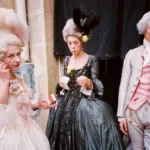





Two decades after its polarizing initial release at the 2006 Cannes Film Festival, Sofia Coppola’s third feature film, Marie Antoinette, stands as a watershed moment in modern cinema, fundamentally altering the aesthetic, sonic, and narrative boundaries of the historical drama genre. While early cinematic precursors such as Baz Luhrmann’s Moulin Rouge! and Brian Helgeland’s A Knight’s Tale (both released in 2001) had successfully injected contemporary pop and rock elements into period settings, Coppola’s pastel-drenched biographical drama achieved something far more culturally enduring. It did not merely borrow modern sensibilities; it weaponized anachronism to construct an empathetic, deeply psychological portrait of a misunderstood historical figure.
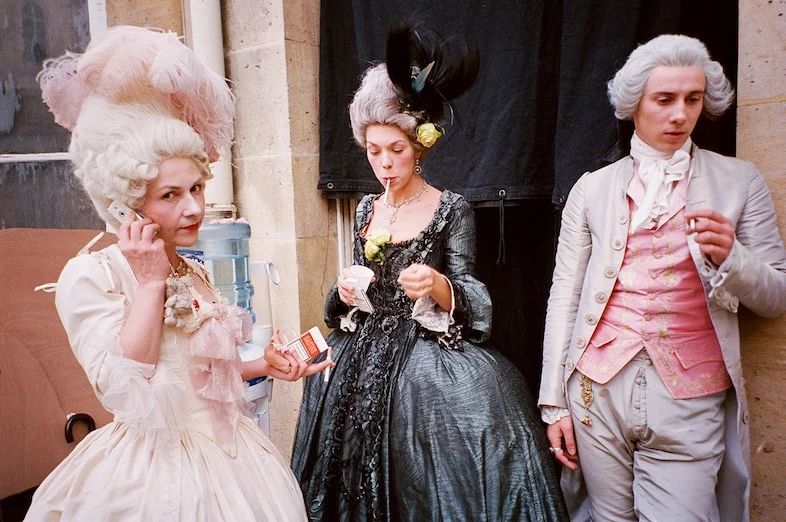
The film’s twentieth anniversary is now being marked by a comprehensive archival release that invites critics, historians, and film enthusiasts alike to reassess its legacy. Published jointly by MACK and Important Flowers—the independent publishing imprint founded by Coppola—a new volume titled Making Marie Antoinette captures the behind-the-scenes reality of a production that was as rigorous in its historical construction as it was radical in its modern interpretation. Featuring hundreds of candid photographs by long-time collaborator and photographer Andrew Durham, an oral history compiled by Keaton Well, and an in-depth dialogue between Durham and the director, the publication reinforces the film’s status not as a miscalculated historical misfire—as some contemporary critics claimed—but as a visionary blueprint for modern prestige television and cinema.
Main Facts and Architectural Shift in the Genre
To understand the magnitude of Marie Antoinette‘s influence, one must examine the state of the historical drama genre prior to 2006. Historically, costume dramas were tethered to a rigid, often austere sense of academic fidelity. They prioritized dry historical accuracy, grand institutional perspectives, and severe, muted color palettes designed to convey solemnity and gravity. Coppola shattered this paradigm by trading austere historical distance for vibrant, sensory immediacy.
By utilizing a confectionary color palette dominated by Ladurée macarons, champagne pinks, and seafoam greens, alongside a seminal New Wave and post-punk soundtrack featuring artists like Bow Wow Wow, New Order, The Cure, and Siouxsie and the Banshees, Coppola transformed Versailles into a glittering, claustrophobic gilded cage. The inclusion of a stray pair of purple Converse high-top sneakers glimpsed during a shoe-shopping montage was not merely an editing oversight, as some early detractors suggested, but a deliberate Brechtian device reminding the audience of the psychological bridge between the eighteenth-century monarch and the modern adolescent.
The structural impact of this stylistic gamble is visible across contemporary television and film. Industry analysts note that without the commercial and artistic risks taken by Marie Antoinette, modern touchstones such as Netflix’s record-breaking regency romance series Bridgerton, Yorgos Lanthimos’s darkly satirical The Favourite, and subsequent stylized period adaptations would lack both the stylistic permission and the audience appetite required for greenlighting. Coppola proved that contemporary youth culture and historical opulence were not mutually exclusive, creating a template where historical figures could be reframed through a contemporary emotional lens.
Chronology and Production History
The journey of Marie Antoinette from conception to cultural cornerstone spans years of meticulous preparation, challenging principal photography, and a notoriously rocky public reception that eventually mellowed into cult reverence.
- 2004–2005 (Pre-Production and Access): Sofia Coppola secured unprecedented cooperation from the French government and the curators of the Palace of Versailles. While previous filmmakers had been restricted to soundstages or permitted only limited access, Coppola’s production was granted permission to film on location in key areas of the palace, including the Hall of Mirrors and private royal chambers, lending genuine tactile authenticity to the artificiality of court life.
- Spring–Summer 2005 (Principal Photography): Filming took place across France, featuring lead actress Kirsten Dunst in the title role alongside an ensemble cast that included Jason Schwartzman as Louis XVI, Judy Davis, Rose Byrne, and Jamie Dornan. During this period, photographer Andrew Durham captured the hundreds of behind-the-scenes images that would later populate Making Marie Antoinette, documenting the surreal juxtaposition of eighteenth-century court attire with twenty-first-century filmmaking equipment.
- May 2006 (The Cannes Film Festival Premiere): The film debuted in competition at the 59th Cannes Film Festival. The initial reception was notoriously fractured. While a faction of critics praised its visual audacity and feminist subtext, a vocal segment of the press—particularly American and traditionalist reviewers—booed the film during screenings, taking issue with its lack of explicit political commentary regarding the French Revolution and its refusal to treat the monarchy with traditional historical reverence.
- October 2006 (Theatrical Release): Distributed by Sony Pictures Releasing, the film underperformed at the domestic box office against its estimated $40 million production budget, grossing roughly $60 million worldwide. Despite the tepid box office returns, the film found an immediate champion in the design and fashion communities.
- February 2007 (Academy Award Recognition): The cinematic community validated the film’s technical mastery when Milena Canonero won the Academy Award for Best Costume Design, cementing the movie’s aesthetic influence on high fashion, editorial styling, and interior design trends for the subsequent decade.
- 2010s–Present (Digital Reappraisal and Fandom): As digital media platforms such as Tumblr and Pinterest matured, Marie Antoinette experienced a massive second life. Younger demographics recontextualized the film’s depiction of isolation, loneliness, and opulent teenage girlhood, transforming its protagonist from a symbol of detached tyranny into an enduring archetype of feminine melancholy and aesthetic rebellion.
Supporting Data and Archival Insights
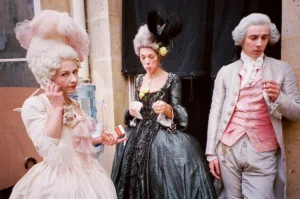
The release of Making Marie Antoinette provides empirical evidence of the immense logistical and artistic coordination required to execute Coppola’s singular vision. The book’s curated selection of photography highlights the duality of the production environment. As noted in the publisher’s materials, images of Kirsten Dunst wearing elaborate baroque wigs and corsetry while casually smoking a cigarette or riding a motorized scooter capture an atmosphere that exists "somewhere between reality and the entrancing fiction of the film."
Costume data from the production underscores the obsessive level of detail involved. Milena Canonero collaborated closely with historic Parisian luxury houses such as House of Worth descendants and shoe designer Manolo Blahnik to construct footwear and garments that combined historical silhouettes with contemporary fabrics and color saturations. The financial investment in tactile realism—hand-embroidered silks, authentic period textiles, and thousands of real pastries consumed or discarded on set—directly countered criticisms that the film substituted style for substance.
Furthermore, the oral history compiled by Keaton Well features retrospective insights from key crew members and actors, detailing how Coppola fostered an intimate, collaborative set environment that insulated the young cast from the immense pressure of working within historic French monuments.
Critical Analysis of the PR Reversal
From an analytical standpoint, the cultural trajectory of Marie Antoinette offers a fascinating case study in image rehabilitation, mirroring the very historical reassessment that the film championed. For centuries, Marie Antoinette was universally stereotyped through the apocryphal, dismissive quote attributed to her: "Let them eat cake" (Qu’ils mangent de la brioche), a phrase historians confirm she never uttered. She was cast by revolutionary propaganda and subsequent historiography as the ultimate scapegoat for monarchical excess.
Coppola’s cinematic intervention effectively short-circuited this centuries-old narrative by stripping away the geopolitical weight of the French Revolution and focusing entirely on the psychological entrapment of a teenage Austrian archduchess thrust into a hostile, hyper-surveilled foreign court. By portraying her excessive spending not as inherent malice, but as a compulsive coping mechanism for profound loneliness, social isolation, and a loveless dynastic marriage, the film reframed her as a victim of institutionalized misogyny.
The sociological implications of this shift are clear. Modern internet subcultures—ranging from "Coppolacore" aesthetics to millennial and Gen-Z moodboards—have adopted the film’s visual iconography to explore themes of interiority, consumerism, and gendered performance. The film transformed a historical adversary into a patron saint of modern girlhood, proving that popular culture possesses the capacity to rewrite historical consensus far more effectively than academic text ever could.
Broader Impact and Industry Implications
Two decades on, the legacy of Marie Antoinette extends far beyond film studies syllabi and moodboards; it remains a foundational text for contemporary auteur cinema driven by distinct aesthetic signatures. Directors working within the historical and biographical genres today routinely reference Coppola’s willingness to prioritize emotional truth over encyclopedic accuracy.
As the cultural industries continue to grapple with the demands of digital-era consumption, Making Marie Antoinette serves as a physical monument to a cinematic moment when style and substance merged to create an imperishable artistic statement. By looking back at the making of a film that was initially misunderstood by its contemporary gatekeepers, the cultural landscape acknowledges a modern truth: true cinematic innovation often requires time to reveal its brilliance.