








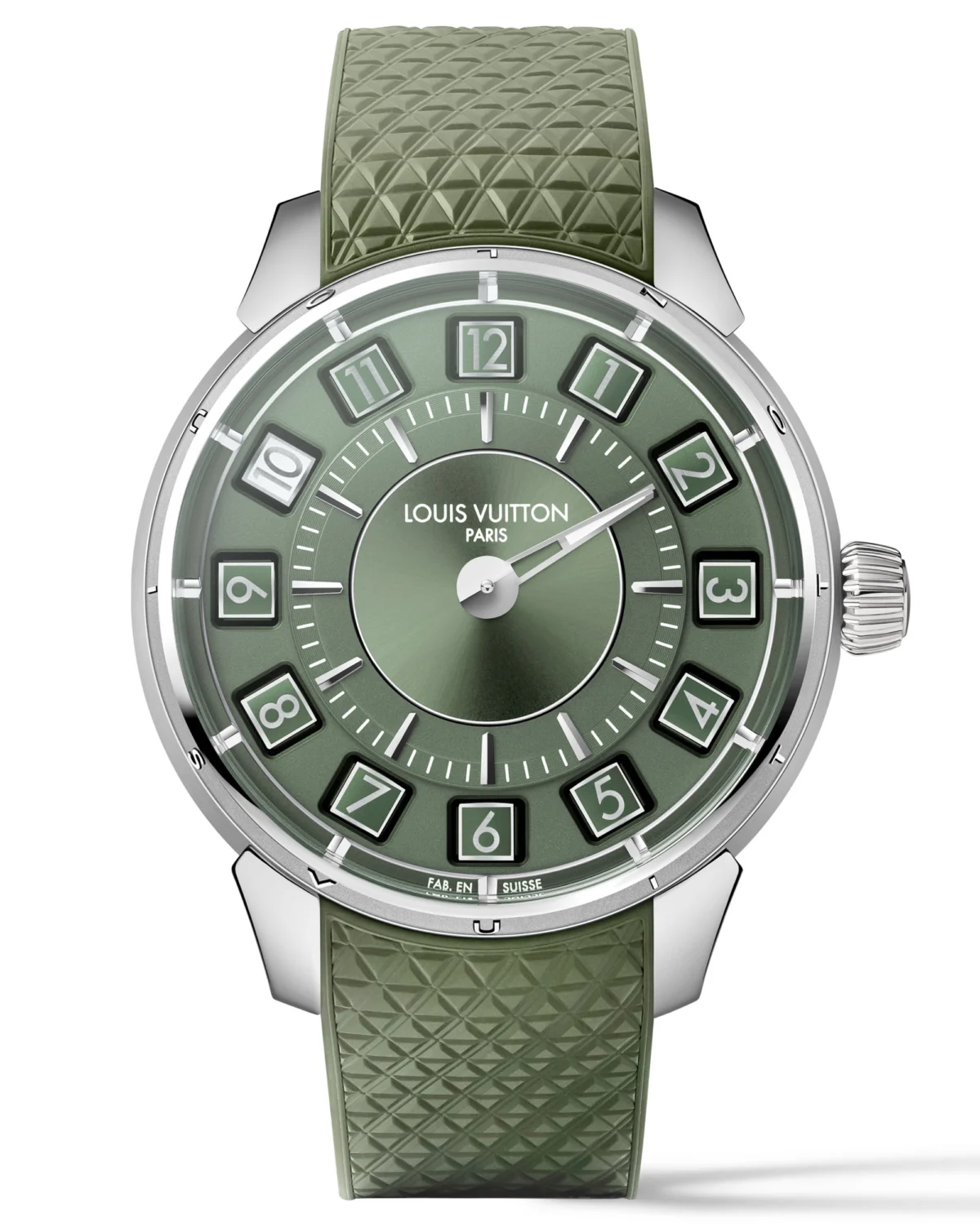
Louis Vuitton has officially unveiled a significant expansion of its horological portfolio for 2026, introducing five new references to the Tambour Spin Time collection. This release marks a strategic transition for the brand, as these models move from the exclusive, limited-production status seen in 2025 to becoming permanent fixtures in the house’s core catalog. The collection is bifurcated into two primary architectural categories: the standard 39.5mm Tambour Spin Time, represented by two models, and the more expansive 42.5mm Tambour Spin Time Air, which features three open-worked complications, including world-timer and flying tourbillon configurations.

Historical Context and the Evolution of the Spin Time
The "Spin Time" complication has served as a cornerstone of Louis Vuitton’s high-watchmaking identity since its inception in 2009. Unlike traditional watches that utilize hands to indicate the hour, the Spin Time mechanism relies on twelve rotating cubes positioned around the dial. Each cube rotates instantaneously at the top of the hour to display either a number or a specific identifier, effectively decoupling the hour display from the central axis of the movement.
This latest iteration follows a successful pilot program in 2025, where limited-edition Tambour Taiko Spin Time models were introduced to gauge collector appetite for more avant-garde, non-traditional timekeeping methods. The 2026 launch indicates a deliberate effort by Louis Vuitton’s La Fabrique du Temps facility in Geneva to institutionalize these complex mechanisms, ensuring they are accessible to a wider demographic of collectors rather than remaining strictly within the realm of boutique, one-off releases.

Analyzing the Standard Collection: The 39.5mm Tier
The entry point for this new permanent lineup is the 39.5mm Tambour Spin Time, which retains the quintessential drum-shaped silhouette that has defined the Tambour line since 2002.
The first of the duo, the Tambour Spin Time Green, is rendered in 18k white gold. It serves as a study in monochromatic elegance, paired with a high-performance green rubber strap that aligns with the current market trend toward vibrant, monochromatic sports-luxury timepieces.

In contrast, the Tambour Spin Time Australia’s Opal offers a more artisanal approach to the same 39.5mm architecture. Crafted in 18k rose gold, this model utilizes a bezel and lugs set with blue sapphires, providing a distinct contrast to the dial. The dial itself is composed of hand-cut slices of Australian opal, a material prized for its unique iridescence and play of color. The inclusion of diamond-set indices further positions this piece as a premium, jewelry-forward interpretation of the Spin Time complication, demonstrating the versatility of the base movement when paired with high-end gem setting.
The "Air" Series: Technical Complexity and Open-Work Design
The Tambour Spin Time Air models represent the more technical, industrial evolution of the concept. By increasing the case size to 42.5mm and opting for an open-worked display, Louis Vuitton exposes the underlying gear train of the Spin Time module, allowing the wearer to observe the mechanical dance of the rotating blocks.

The entry-level Air model, the Tambour Spin Time Air Blue, utilizes an 18k white gold case and an unconventional hour display. Instead of traditional numerals, the rotating blocks spell out "LOUIS VUITTON." As the hour progresses, the corresponding letter in the name rotates to a different color, providing a playful, brand-centric take on the passage of time.
The Tambour Spin Time Air Antipode Blue shifts the utility of the mechanism toward the practical needs of the global traveler. While the central dial indicates the primary local time, the rotating cubes are repurposed into a 24-zone world-timer. Each block displays two city names on opposite sides of the globe. Because the 12-hour cycle is synchronized across both locations—differentiated only by AM/PM status—the system allows for a compact and readable global time reference that avoids the clutter often found on traditional world-timer watches.

At the apex of this release is the Tambour Spin Time Air Flying Tourbillon Salmon. This model features a 950 platinum case and a salmon-colored dial, a combination highly favored by modern horological enthusiasts for its classic yet distinct aesthetic. The flying tourbillon, which appears to float in the center of the dial, serves as the heart of the timepiece. The minute hand has been ingeniously relocated to orbit the perimeter of the tourbillon cage, a design choice that preserves the central visual impact of the escapement while maintaining timekeeping legibility.
Mechanical Specifications and Performance Data
The reliability of these five models is underpinned by three distinct in-house movements developed at La Fabrique du Temps: the Caliber ST13.01, Caliber ST12.01, and Caliber LFT ST05.01. Despite their functional differences, these movements share a unified performance baseline:

- Frequency: 4Hz (28,800 vibrations per hour), which is the industry standard for ensuring chronometric precision.
- Power Reserve: 45 hours, providing sufficient autonomy for daily rotation.
- Winding Mechanism: Automatic, catering to the expectations of contemporary luxury watch consumers who prioritize convenience.
The use of modular movement architecture allows Louis Vuitton to maintain consistent performance across varying levels of complexity, from the straightforward jumping-hour display to the high-complication tourbillon.
Market Implications and Brand Strategy
The decision to make these models part of the permanent collection is a tactical move by Louis Vuitton to solidify its reputation as a serious manufacturer of high-complication watches. For years, the brand was viewed primarily as a fashion house with a secondary interest in accessories; however, the ongoing investment in the La Fabrique du Temps facility and the consistent release of complex mechanical pieces suggest a long-term goal of competing with traditional Swiss heavyweights in the $50,000+ price bracket.

Industry analysts note that by creating a "permanent" collection of Spin Time models, Louis Vuitton is effectively building a "signature" look that is instantly recognizable. In a market often flooded with variations of the classic three-hand steel sports watch, the Spin Time’s unique aesthetic acts as a brand differentiator. The shift toward permanent status likely also aims to reduce the "FOMO" (fear of missing out) associated with limited editions, allowing collectors to commit to a purchase on their own timeline rather than reacting to scarcity-driven sales tactics.
Future Outlook for the Tambour Line
The 2026 releases do more than just add volume to the brand’s catalog; they provide a clear roadmap for the evolution of the Tambour collection. By balancing the decorative arts (as seen in the Opal model) with rigorous mechanical engineering (as seen in the Flying Tourbillon and Antipode models), Louis Vuitton is demonstrating an ability to serve multiple segments of the luxury market simultaneously.

As the brand moves forward, the primary challenge will be maintaining the perceived value of these timepieces as they become more readily available. With the integration of these models into the core collection, Louis Vuitton has successfully transitioned from a brand that occasionally produces watches to a full-fledged watchmaker with a defined, recognizable, and technically sophisticated house style. For collectors, the availability of these pieces serves as a testament to the brand’s commitment to sustained innovation in the field of high-end horology. For further information regarding pricing, availability, and specific regional retail details, interested parties are advised to consult official Louis Vuitton documentation or visit authorized brand boutiques.