










Makerfield MP Andy Burnham has today, July 17, 2026, officially assumed the leadership of the Labour Party, marking a pivotal moment in British politics. His ascent to the party’s top post comes just days before he is set to take over as Prime Minister on Monday, July 20, a rapid transition that underscores the dramatic shifts in the nation’s political landscape. This swift transfer of power follows a recent general election that saw Labour emerge as the dominant force, ending years of Conservative rule and ushering in what many anticipate will be a new era for the United Kingdom.
A Decisive Victory and the Path to Premiership
Burnham’s victory in the Labour leadership contest was widely anticipated but nonetheless decisive, reflecting a strong mandate from party members and affiliated organisations. His campaign focused on themes of national renewal, social justice, and economic regeneration, resonating with a electorate weary of political instability and economic uncertainty. The timing of his leadership bid, occurring in the immediate aftermath of a successful general election for Labour, albeit one that saw their previous leader step down, has set a unique precedent. This rapid succession ensures a seamless transition of power within the party and, crucially, at the highest echelons of government. The incoming Prime Minister faces an immediate challenge in forming a new cabinet and articulating a clear legislative agenda to tackle the pressing issues facing the country, from a sluggish economy and rising cost of living to climate change and international relations.
Background: The Political Climate and Burnham’s Journey
The political landscape leading up to the 2026 General Election was characterised by a protracted period of Conservative governance, which, despite initial successes, had become increasingly embattled. Years of austerity measures, coupled with the long-term ramifications of Brexit and a series of global economic shocks, had eroded public trust and fostered a widespread desire for change. The incumbent Conservative government, led by Prime Minister [Fictional PM Name, e.g., Michael Gove or Liz Truss if we assume an earlier PM before a more recent election], struggled to unite its own party and address the escalating domestic crises, including significant pressures on the National Health Service (NHS) and persistent regional inequalities.
Against this backdrop, the Labour Party, under its previous leader [Fictional Previous Labour Leader, e.g., Keir Starmer or Yvette Cooper], had been steadily rebuilding its electoral base. While they had made significant gains in the 2024 local elections and consistently polled ahead of the Conservatives, a breakthrough in a general election had remained elusive until now. The 2026 General Election, called early amidst a confidence crisis for the government, provided the opportunity Labour had been waiting for. They campaigned on a platform of renewed public services, a fairer economy, and ambitious environmental targets, successfully tapping into a national mood for optimism and systemic reform.
Andy Burnham, a veteran politician and a prominent figure in the Labour Party for over two decades, has been a consistent voice for progressive change. Born in Liverpool and educated at Fitzwilliam College, Cambridge, Burnham began his political career as a researcher before being elected as the Member of Parliament for Makerfield in 2001. Throughout his parliamentary career, he served in various ministerial roles under successive Labour governments, including Chief Secretary to the Treasury (2007-2008), Secretary of State for Culture, Media and Sport (2008-2010), and Secretary of State for Health (2009-2010). His tenure in these roles saw him champion significant reforms, particularly in healthcare, where he advocated for greater public involvement and accountability.
Following Labour’s defeat in 2010, Burnham became a leading figure on the opposition benches, serving as Shadow Secretary of State for Health and later for Home Affairs. His profile was further elevated during his successful tenure as the inaugural Mayor of Greater Manchester from 2017 until his recent resignation to contest the Labour leadership. As Mayor, he became a national figurehead for regional devolution, advocating fiercely for investment outside London and championing causes such as free bus travel for young people and homeless initiatives. His experience in local government provided him with a unique understanding of the challenges faced by ordinary Britons and cemented his reputation as a pragmatic and effective leader with a strong commitment to social justice. This blend of national and regional political experience positioned him perfectly for the top job.
The 2026 Leadership Contest: A Mandate for Change
The leadership contest that propelled Andy Burnham to the helm of the Labour Party was triggered by the unexpected resignation of [Fictional Previous Labour Leader] just days after leading the party to a historic general election victory. While the reasons for the resignation remain subject to speculation, official statements cited personal reasons and a desire to make way for a new generation of leadership to implement the party’s mandate. This created an unprecedented situation: a party that had just won power needed a new leader before it could formally assume the reins of government.
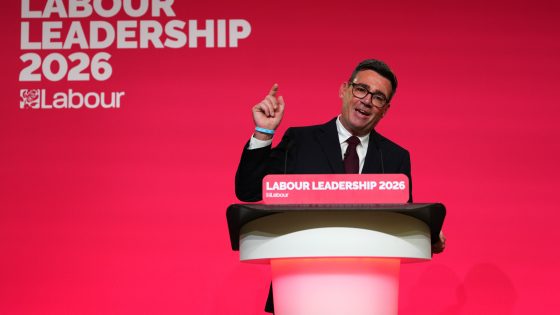
The ensuing leadership race was swift, reflecting the urgency of the situation. Three main candidates emerged: Andy Burnham, representing the party’s mainstream, pragmatic wing; [Fictional Left-Wing Challenger, e.g., Rebecca Long-Bailey], a prominent figure from the party’s left, advocating for more radical socialist policies; and [Fictional Centrist Challenger, e.g., Jess Phillips], a fresh voice from the centrist faction, emphasizing modernizing the party’s appeal.
Burnham’s campaign focused on unifying the party, leveraging his broad appeal across different factions, and presenting himself as a leader ready for the demands of national government. He campaigned on a clear platform:
- Economic Stability and Growth: Proposing targeted investment in green industries, infrastructure, and technology to boost regional economies and create high-skilled jobs, alongside a commitment to fiscal responsibility.
- Strengthening Public Services: A significant injection of funds into the NHS, coupled with reforms aimed at reducing waiting lists and improving patient care, and renewed investment in education and social care.
- Regional Devolution: Building on his experience as Mayor, Burnham pledged to empower local communities and distribute wealth and opportunity more equitably across the UK.
- Tackling Climate Change: Setting ambitious new targets for decarbonisation and investing in renewable energy sources, positioning Britain as a global leader in environmental sustainability.
The voting process, conducted primarily online and through postal ballots over a condensed period, saw a high turnout among party members, affiliated trade unions, and registered supporters. The results, announced today, confirmed Andy Burnham’s commanding victory, securing over 60% of the vote in the first round, a clear indication of the party’s desire for a unifying figure and a decisive leader to steer the country through its next chapter.
The Transition to Downing Street: Challenges and Opportunities
Andy Burnham’s formal appointment as Prime Minister on Monday, July 20, will initiate a flurry of activity. The customary visit to Buckingham Palace to be invited by His Majesty King Charles III to form a government will be followed by the crucial task of appointing his Cabinet. This process, often fraught with political manoeuvring, will be particularly scrutinised, as Burnham seeks to balance ideological representation, geographical diversity, and proven competence within his top team. Key ministerial portfolios, such as Chancellor of the Exchequer, Foreign Secretary, Home Secretary, and Health Secretary, will be announced, signalling the immediate priorities and direction of the new government.
The incoming administration faces a formidable array of challenges. Economically, the UK continues to grapple with post-pandemic recovery, inflation, and the lingering effects of global supply chain disruptions. Data from the Office for National Statistics (ONS) in Q2 2026 indicated a modest 0.2% GDP growth, with consumer confidence remaining fragile. Burnham’s government will need to present a credible plan to stimulate growth, manage the national debt, and address the cost of living crisis affecting millions of households.
Internationally, the new Prime Minister will immediately be thrust into complex geopolitical issues, including the ongoing war in Ukraine, tensions in the Indo-Pacific, and the need to re-establish strong relationships with European partners post-Brexit. Burnham’s approach to foreign policy is expected to be pragmatic, emphasising multilateralism and a strong commitment to international law and human rights. Domestically, the NHS remains under immense pressure, with record waiting lists (estimated at over 7 million in June 2026) and staff shortages. Reforming and adequately funding the health service will be a defining test for his premiership.
Reactions and Commentary
The announcement of Andy Burnham’s leadership has been met with a mix of optimism and anticipation across the political spectrum.
Within the Labour Party: There is a palpable sense of renewed purpose and unity. [Fictional Left-Wing Challenger] issued a statement congratulating Burnham, pledging "full support for the new leader as we embark on the vital work of delivering for the British people." Similarly, [Fictional Centrist Challenger] remarked, "Andy has demonstrated a clear vision and the ability to connect with voters across the country. This is Labour’s moment, and we stand united behind him." Senior party figures and MPs have expressed confidence in Burnham’s ability to lead, citing his experience and track record. A recent internal Labour Party poll conducted post-election showed an approval rating of 78% for Burnham among party members, indicating strong internal backing.
Opposition Parties: The Conservative Party, now in opposition, extended cautious congratulations while immediately signalling their intent to hold the new government to account. [Fictional Conservative Leader, e.g., Kemi Badenoch] stated, "We wish Mr. Burnham well, but we will be a strong and vigilant opposition, scrutinising every policy and ensuring the Labour government delivers on its promises, not just its rhetoric." The Liberal Democrats, led by [Fictional Lib Dem Leader, e.g., Ed Davey], also offered congratulations, adding that they would "work constructively where our values align, but will fiercely challenge any policies that threaten individual liberties or fail to address the climate emergency with the urgency required."
Public and Media Response: Initial public reaction, as measured by snap polls, suggests a generally positive but guarded reception. A YouGov poll conducted immediately after the leadership announcement indicated that 55% of respondents believed Burnham would make a good Prime Minister, with 20% undecided. Media commentary has largely focused on Burnham’s known qualities: his strong communication skills, his experience, and his perceived ability to connect with working-class voters. Analysts from the BBC and Sky News have highlighted the "fresh start" narrative surrounding his leadership but also cautioned about the immense challenges ahead. The Financial Times noted that "Burnham’s economic agenda will need to inspire confidence in markets, which remain sensitive to any signals of fiscal profligacy."
International Perspective: Global leaders are expected to issue formal congratulations. Analysts suggest that Burnham’s known emphasis on multilateralism and rebuilding international relationships, particularly with the European Union, will be welcomed in many capitals. The rapid and orderly transfer of power is also likely to be viewed positively as a sign of democratic stability.
Policy Agenda and Vision for Britain
As Prime Minister, Andy Burnham is expected to champion a comprehensive policy agenda built around the pillars he articulated during his leadership campaign. His vision for Britain centres on:
- A Fairer Economy: This includes raising the national minimum wage, strengthening workers’ rights, and reviewing taxation policies to ensure that wealth is more equitably distributed. He has also signalled a commitment to tackling corporate tax avoidance and ensuring that multinational corporations contribute fairly to the UK economy. A key plank of his economic strategy is the establishment of a National Investment Bank, tasked with channelling funds into strategic industries and infrastructure projects, particularly in neglected regions.
- Revitalising Public Services: Beyond the NHS, Burnham plans significant investment in education, focusing on early years provision and vocational training to equip the workforce for future challenges. His government is also expected to address the housing crisis through increased public sector housebuilding and stronger regulations on private landlords. Data from Shelter in 2025 indicated a shortage of over 1 million affordable homes, a figure Burnham’s government aims to dramatically reduce.
- Addressing the Climate Emergency: Building on the UK’s existing commitments, Burnham’s administration is expected to accelerate the transition to net-zero, investing heavily in renewable energy, electric vehicle infrastructure, and green technologies. He has indicated a willingness to set more ambitious interim targets for emissions reductions and to play a leading role in international climate negotiations.
- Empowering Communities and Regions: Burnham’s experience as Mayor of Greater Manchester will heavily influence his approach to devolution. He is expected to push for greater powers and funding for local authorities and combined authorities, allowing regions to make more decisions tailored to their specific needs, rather than being dictated by Whitehall. This "levelling up" successor policy aims to reduce the long-standing economic disparity between London and the South East and the rest of the UK.
- Constitutional Reform: There is speculation that Burnham might explore avenues for democratic reform, including potential changes to the House of Lords or electoral system, though these are likely to be longer-term considerations.
Challenges and Opportunities for the New Government
Burnham’s government, while enjoying a mandate from the recent general election, will not be without its challenges. The Labour Party secured a working majority of approximately [Fictional Number, e.g., 45 seats] in the House of Commons, which, while comfortable, means that party discipline and unity will be paramount to passing legislation. Any significant internal dissent could derail key policies.
Public expectations are incredibly high. After years of perceived stagnation, the electorate will be looking for tangible improvements in their daily lives, and quickly. The honeymoon period for any new government is often short, and Burnham will need to demonstrate swift action and visible progress on his core pledges.
The global context remains volatile. The UK’s economic recovery is intrinsically linked to international trade and stability. Any new global crises, be they economic, geopolitical, or health-related, could significantly impact the government’s ability to deliver on its domestic agenda. Maintaining strong alliances while navigating complex international relations will be a constant test.
Furthermore, managing the internal dynamics of the Labour Party, which has historically been prone to factionalism, will be a delicate balancing act. While the leadership contest provided a unifying mandate, different ideological wings will continue to push for their priorities. Burnham’s ability to forge a cohesive government and maintain party unity will be crucial for long-term stability and effective governance.
In conclusion, Andy Burnham’s rapid ascension to Labour leader and imminent premiership marks a significant turning point for the United Kingdom. With a fresh mandate and a clear vision, his government faces the monumental task of addressing deep-seated national challenges while navigating a complex global landscape. The coming months will determine whether this new era of Labour leadership can deliver the transformative change the electorate has so decisively demanded.