



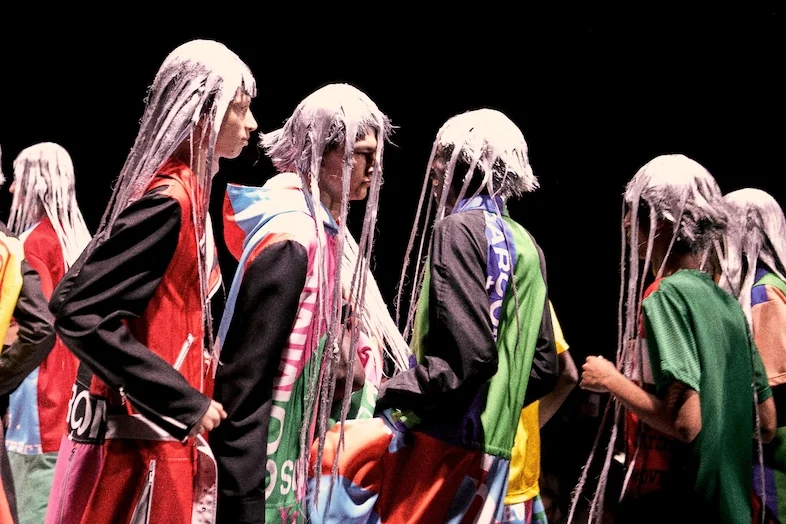
The recent unveiling of Rei Kawakubo’s Comme des Garçons Homme Plus Spring/Summer 2027 collection, titled "If the war were to end," on June 26, marks a significant thematic evolution for the famously reticent designer. This latest presentation, characterized by a vibrant palette and a palpable sense of optimism, stands in poignant contrast to her Autumn/Winter 2025 Homme Plus collection, "To hell with war," which delivered a stark and angry commentary on contemporary global conflicts. Through these two successive collections, Kawakubo, an artist who predominantly communicates through her meticulously crafted designs rather than spoken words, offers a compelling dialogue on the human experience of conflict and the yearning for peace, utilizing fashion as a potent medium for social and emotional expression.
Rei Kawakubo: A Silent Revolutionary of Fashion
Rei Kawakubo, the 83-year-old founder of Comme des Garçons, has cultivated an iconic mystique throughout her illustrious career, largely due to her famously aloof public persona. She rarely engages in public speaking, grants interviews sparingly, and when she does, often relies on her husband and Comme des Garçons CEO, Adrian Joffe, to serve as her interpreter. This deliberate withdrawal from traditional media engagement has, paradoxically, amplified the voice of her work, transforming her collections into profound philosophical statements and intricate narratives. Since establishing Comme des Garçons in 1969, Kawakubo has consistently challenged the prevailing orthodoxies of the fashion industry, positioning her brand not merely as a purveyor of clothing but as a vehicle for avant-garde thought and social critique.
Her designs, often sculptural, deconstructed, and conceptually driven, are renowned for their ability to provoke introspection and dialogue. For decades, Kawakubo has used the runway as a platform to deconstruct societal norms, expose underlying tensions, and question established aesthetics. Notable examples include her Spring/Summer 1997 collection, Lumps and Bumps, which daringly challenged conventional ideals of body image by introducing garments with strategically placed padding that distorted the silhouette, thereby questioning beauty standards and the fetishization of the perfect form. Similarly, her Autumn/Winter 2005 collection, Broken Bride, explored the complexities and constraints placed upon women within traditional societal roles, subverting the romantic ideal of a bride with fragmented and deconstructed bridal wear that hinted at disillusionment and societal pressures. These collections underscore Kawakubo’s consistent methodology: to use the visceral language of clothing to engage with complex socio-cultural issues.
A Chronology of Commentary: From Anguish to Aspiration
Kawakubo’s recent engagement with anti-war sentiments is not an isolated thematic foray but rather an intensified expression of her long-standing commitment to using fashion as a mirror to society. While her work has often carried undertones of defiance against conformity and oppressive structures, the explicit titling of "To hell with war" (AW25) and "If the war were to end" (SS27) marks a direct and powerful engagement with the contemporary global landscape of conflict. This two-part series, presented during a period of escalating geopolitical tensions and widespread humanitarian crises, serves as a profound artistic response to the pervasive anxieties of our time.
The Autumn/Winter 2025 Homme Plus collection, "To hell with war," presented last year, was an uncompromising and emotionally charged declaration. It offered a chilling and angry interpretation of the devastating impact of war, manifested through a somber aesthetic. Models appeared in military-inspired garb, their forms adorned with funereal flowers, creating a haunting tableau that evoked loss, mourning, and the grim reality of conflict. The collection’s muted palette, often dominated by black and deep, somber tones, reinforced the sense of despair and protest. The visual language was unambiguous: a direct, visceral rejection of violence and its consequences. The use of military motifs, typically associated with power and aggression, juxtaposed with symbols of fragility and death, underscored the tragic irony and destructive nature of armed conflict.
In stark contrast, the Spring/Summer 2027 Homme Plus show, "If the war were to end," marks a significant tonal shift, pivoting from a posture of angry defiance to one of hopeful contemplation. This collection imagines an idealized future, a world post-conflict, where joy and renewal can begin to blossom. Kawakubo’s artistic evolution from the visceral anger of AW25 to the hopeful idealism of SS27 demonstrates a profound responsiveness to the ongoing global narrative, moving beyond mere protest to envisioning a path forward.
The Aesthetics of Optimism: Decoding SS27
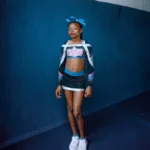
For the SS27 collection, Kawakubo dramatically departed from her characteristic affinity for black, a color that has long been a cornerstone of her aesthetic and a symbol of her anti-establishment stance. Instead, the runway was awash with a collection composed almost entirely of pinstripes rendered in bright, candy colors. Shades of fuchsia, sky blue, sage green, lilac, and coral replaced the customary somber hues, creating an immediate and striking visual impact that signaled a profound change in mood. This bold embrace of color, particularly in the context of traditional menswear fabrics like pinstripes, infused the collection with an unexpected lightness and playfulness.
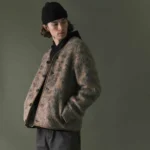
Even camouflage prints, typically associated with military attire and conflict, underwent a radical transformation. Appearing briefly, they were almost undetectable in their conventional form, reimagined through a psychedelic spectrum of coral, lilac, sage, and sky blue. This recontextualization of a militaristic motif into something vibrant and almost hallucinatory speaks to the collection’s core message: the possibility of transforming instruments of war into symbols of peace and joy. It suggests a world where the very elements of conflict are re-coded, losing their aggressive connotations in favor of celebratory ones.
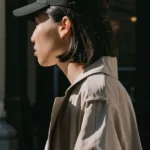
The accessories further amplified this thematic shift. While AW25 featured grim military helmets, SS27 presented models adorned with sun hats, piled high atop every head. These whimsical, oversized hats evoked leisure, freedom, and protection from the sun, a stark contrast to the protective gear of warfare. They symbolized a return to normalcy, to the simple pleasures of life unfettered by conflict. The footwear, too, contributed to the collection’s playful spirit, with freaky, exaggerated winklepicker toes adding a touch of eccentric joy and individuality.
The sensory experience of the show was meticulously curated to reinforce the message of hope. A choral a cappella soundtrack permeated the venue, its harmonious voices creating an ethereal and uplifting atmosphere. This auditory element, devoid of the harshness often associated with wartime sounds or the somber tones of lament, underscored the collection’s vision of peace and collective harmony. The combination of vibrant colors, reimagined prints, joyful accessories, and an uplifting soundtrack created an immersive environment that vibrated with a sense of optimism and collective relief.
Broader Context and Supporting Data: Fashion’s Response to Global Events
Fashion has historically served as a barometer of societal mood, often reflecting or reacting to major global events. During wartime, fashion frequently adopts utilitarian styles, rationing, and a focus on practicality, as seen during both World Wars with the rise of simpler silhouettes and durable fabrics. Conversely, post-war periods often witness an explosion of extravagance, newness, and a celebratory return to luxury and elaborate dressing, symbolizing a collective desire for beauty and normalcy after hardship. Kawakubo’s SS27 collection, "If the war were to end," can be seen as an artistic interpretation of this latter phenomenon, albeit through her uniquely avant-garde lens. It is not merely a forecast of fashion trends but a profound cultural commentary on the human longing for an end to suffering.
According to data from organizations like the United Nations and various conflict monitoring groups, the current global landscape is marked by numerous ongoing conflicts, displacements, and humanitarian crises. This pervasive reality makes Kawakubo’s imaginative leap into a post-war future particularly resonant. Her work transcends the immediate political specifics of any single conflict, instead tapping into a universal human aspiration for peace. Fashion critics and cultural commentators have increasingly noted the growing trend of designers using their platforms to engage with social and political issues, moving beyond purely aesthetic concerns. Kawakubo, however, has been at the forefront of this movement for decades, consistently demonstrating fashion’s capacity for profound artistic and intellectual engagement.
Inferred Reactions and Industry Impact
While Rei Kawakubo rarely solicits direct feedback, the impact of her collections reverberates widely across the fashion industry and beyond. Fashion critics are expected to laud this collection for its audacious shift in tone and its poignant message. Industry analysts might interpret the collection as a powerful statement on the role of art and design in offering hope during times of despair. For a designer of Kawakubo’s stature, whose influence is undeniable, to embrace such a profoundly optimistic vision could signal a broader yearning within the creative community for narratives of renewal and peace.
One could infer reactions from various stakeholders:
- Fashion Critics: Leading critics would likely commend Kawakubo’s ability to evolve her narrative, moving from a visceral condemnation of war to an imaginative embrace of peace. They might highlight the masterful use of color and symbolism to convey complex emotions without resorting to literalism. The collection would be analyzed for its conceptual depth and its relevance to the current global climate.
- Industry Insiders: Designers and brands might find inspiration in Kawakubo’s courage to deviate from her signature aesthetic for a powerful thematic purpose. Her choice to foreground hope could influence conversations around sustainability, ethical production, and the broader social responsibility of fashion.
- Cultural Commentators: Beyond the fashion world, commentators might see the collection as a significant cultural artifact, reflecting a collective desire for an end to global suffering. It could spark discussions about the power of imagination in envisioning a better future, even amidst grim realities.
- Humanitarian Organizations: While not a direct political statement, the collection’s theme aligns with the aspirations of organizations working for peace and conflict resolution, offering a symbolic resonance with their missions.
Broader Implications and Kawakubo’s Enduring Legacy
The "If the war were to end" collection by Comme des Garçons Homme Plus SS27 carries significant implications, both within the fashion ecosystem and as a broader cultural commentary. Firstly, it reaffirms Rei Kawakubo’s unparalleled position as an artist who transcends mere seasonal trends. Her work consistently challenges the commercial imperatives of fashion, instead prioritizing conceptual integrity and artistic expression. This collection further cements her legacy as a visionary who uses her craft to engage with the most pressing human concerns.
Secondly, the collection serves as a powerful testament to the transformative potential of optimism. In an era often characterized by cynicism and despair, Kawakubo’s decision to imagine a joyful, post-conflict world is a profound act of artistic defiance. It suggests that even from the deepest shadows of despair, hope can be cultivated and expressed. The collection’s vibrant aesthetic and joyful mood, emanating from a designer known for her challenging and often somber creations, offers a potent reminder that beauty and optimism can emerge even in the most unlikely of contexts.
Finally, the shift from "To hell with war" to "If the war were to end" presents a compelling narrative arc, demonstrating the dynamic nature of artistic response to ongoing events. It illustrates how art can process trauma and transition towards aspiration. By offering a vision of peace, Kawakubo invites her audience to participate in that imaginative journey, to consider what a post-conflict world might look like, and to perhaps, find a renewed sense of purpose in striving for such a future. Her work continues to provoke, to challenge, and, with this latest collection, to inspire a much-needed sense of hope. If someone who has so consistently embraced the avant-garde and the challenging aspects of human existence can find and articulate such a powerful vision of light, then perhaps there is indeed room for more optimism in the collective human experience. The SS27 collection is not just clothing; it is a meditation on peace, a dream for a better tomorrow, articulated through the singular, uncompromising vision of Rei Kawakubo.