









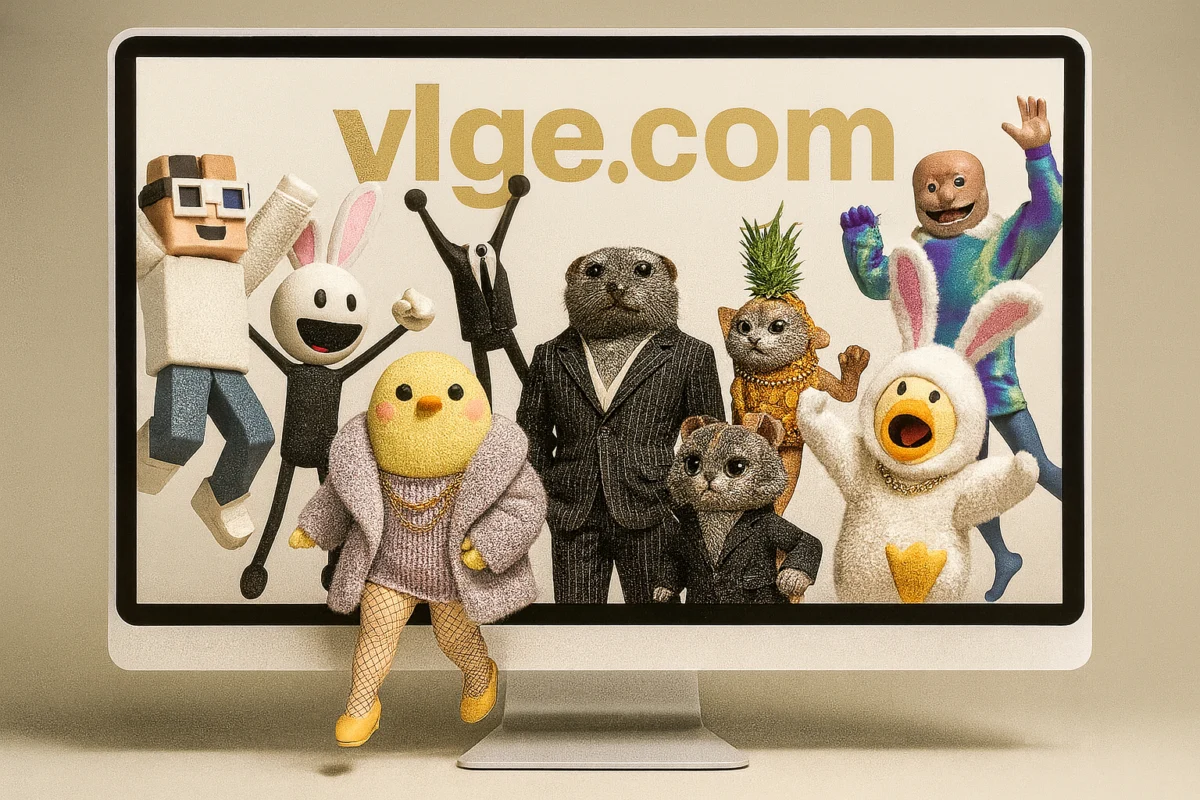
The fashion industry has long grappled with a fundamental paradox: a creative sector driven by the pursuit of the "new" and "sustainable" that remains tethered to the carbon-heavy, logistically complex traditions of the physical runway. For Evelyn Mora, an entrepreneur who spent her early career observing the limitations of traditional fashion presentation, the realization was stark. While designers were increasingly prioritizing sustainable materials and ethical labor, the method of showcasing those collections—the large-scale, international fashion show—remained an environmental and financial burden. In response to this systemic inefficiency, Mora founded VLGE in 2021, a gaming and immersive-world-building platform designed to transition the industry from physical spectacles to interactive, digital-first experiences.
Today, VLGE is moving beyond its initial proof-of-concept phase to become a central infrastructure for the next generation of commerce. The platform recently announced its most ambitious project to date: World Fashion Week. This initiative will see 50 fashion brands launch individual, shoppable digital worlds, all powered by VLGE’s proprietary technology. The event serves as a bridge, allowing creators and established houses to launch interactive games and storefronts across multiple platforms, most notably Roblox, without the technical barriers that have historically sidelined smaller players in the digital space.
The Evolution of VLGE: From Vision to Infrastructure
The trajectory of VLGE reflects a broader shift in how brands perceive the digital landscape. What began as an experiment in 3D gamified fashion has evolved into a sophisticated software-as-a-service (SaaS) model that prioritizes interoperability and accessibility. Since its inception in 2021, VLGE has positioned itself as a specialist in "immersive world-building," a term that encompasses more than just virtual reality. It refers to the creation of persistent, interactive environments where consumers can engage with a brand’s narrative, participate in mini-games, and purchase products—all within a unified digital ecosystem.
The platform’s growth has been fueled by significant interest from both the fashion and technology sectors. To date, VLGE has raised a total of $5 million in capital. The investor pool is particularly telling of the platform’s cross-industry appeal, featuring Lammot J. du Pont of the du Pont family, the L’Oréal Group, and the British Fashion Council. These backers represent a mix of legacy industrial wealth, global beauty dominance, and institutional fashion authority, suggesting a consensus that the future of retail lies in gamified environments.
Early adopters of the platform include high-profile names such as Lancôme, Charlotte Tilbury, and Vogue Scandinavia. These collaborations demonstrated that immersive worlds could drive engagement levels far higher than traditional e-commerce sites or social media advertisements. By transforming the shopping experience into an interactive journey, VLGE allows brands to connect with Gen Z—a demographic that increasingly favors "experience-led" consumption over passive browsing.
World Fashion Week and the Democratization of Digital Design
The announcement of World Fashion Week marks a significant milestone for VLGE. While the company made headlines previously for launching the world’s first 3D gamified fashion week, this new iteration is focused on scale and interoperability. The 50 participating brands are not merely hosting digital galleries; they are launching "shoppable worlds" that can be exported to other platforms.
Mora has specifically targeted Roblox as the primary destination for these worlds. "Roblox has become fashion’s most powerful youth frontier," Mora stated, noting that the platform’s user base provides a direct line to the next generation of global consumers. However, until the advent of VLGE’s tools, building on Roblox was a privilege reserved for brands with massive budgets. Typically, a brand would need to hire a specialized agency, paying anywhere from $10,000 to $100,000 for a single world, with development timelines stretching over several months.
VLGE’s technology disrupts this model by providing a no-code, browser-based interface. Users can build their worlds in real-time, and the platform handles the complex translation of assets into Roblox’s specific coding language. This "instant" launch capability effectively removes the technical and financial gatekeeping that has characterized the metaverse era. Beyond Roblox, VLGE is also compatible with Unreal Engine and is currently developing integration for Meta Horizon Worlds, ensuring that the content created on its platform remains "future-proof" as the hardware and software of the immersive web continue to evolve.
Economic Analysis: The Shift from Agencies to SaaS
The economic implications of VLGE’s model are profound. In the traditional agency-client relationship, a brand’s digital presence is a capital expenditure—a one-off project that requires constant maintenance and reinvestment. VLGE shifts this to an operational expenditure model through four distinct payment tiers: Freemium, and three paid tiers designed for individual creators, small businesses, and large enterprises.

This tiered approach allows emerging designers to compete on the same digital playing field as luxury conglomerates. For a small brand, the ability to launch a shoppable game on Roblox for a fraction of the cost of a traditional agency fee represents a massive reduction in the barrier to entry. Furthermore, the interoperability of the assets means that a brand does not have to rebuild its digital storefront every time a new platform gains popularity. A 3D asset created for World Fashion Week can, in theory, be used across various digital touchpoints, maximizing the return on investment for the original design work.
The Convergence of Physical and Digital Retail
A key component of VLGE’s future strategy is the launch of an "e-tail" store that bridges the gap between physical and digital goods. This store will sell physical items from emerging brands alongside 3D digital assets. These digital assets are not merely cosmetic; they are "wearable" within environments like Roblox, allowing consumers to align their digital avatars’ styles with their real-world identities.
This "phygital" approach addresses a growing trend among Gen Z consumers who view their digital presence as an extension of their physical selves. By offering a platform where a consumer can buy a physical jacket and receive the 3D version for their avatar simultaneously, VLGE is creating a holistic commerce loop. This strategy also provides a new revenue stream for designers, who can monetize their intellectual property in the digital realm without the overhead costs associated with physical manufacturing and shipping.
Sustainability and the Future of the Fashion Calendar
Beyond the technological and economic shifts, the rise of platforms like VLGE offers a potential solution to the fashion industry’s sustainability crisis. Traditional fashion weeks require thousands of people to fly across the globe, the construction of temporary sets that are often discarded after 15 minutes of use, and the production of physical samples that may never go into mass production.
A digital-first "World Fashion Week" eliminates the carbon footprint associated with travel and physical waste. It allows brands to test designs in a virtual environment, gathering data on which styles resonate with consumers before committing to physical production. This "on-demand" approach to manufacturing, guided by digital engagement data, could significantly reduce the overproduction that plagues the industry.
Industry Reactions and Broader Implications
The industry response to VLGE’s expansion has been largely positive, though it comes at a time when the initial "metaverse" hype has cooled in favor of more practical applications of technology. Analysts suggest that the success of World Fashion Week will be a litmus test for whether gamified commerce can move from a novelty to a standard retail practice.
"This moment isn’t just about fashion; it’s about the infrastructure that will power the next generation of commerce," Mora emphasized. Her vision aligns with a broader trend in technology where the "web" is becoming increasingly spatial and interactive. As legacy e-commerce platforms like Shopify and Amazon begin to explore 3D product visualization, VLGE’s head start in world-building and gaming integration places it at the forefront of this transition.
The significance of VLGE lies in its ability to translate complex tech into a user-friendly format for a creative industry. By making the creation of immersive worlds as simple as managing a traditional website, VLGE is positioning itself as the "WordPress" of the immersive web. For the 50 brands participating in World Fashion Week, the event is more than a marketing exercise; it is a transition into a new era of retail where the boundaries between playing, socializing, and shopping are permanently blurred.
As the fashion world looks toward 2025 and beyond, the success of initiatives like World Fashion Week will likely dictate how brands allocate their marketing and development budgets. If VLGE can prove that digital worlds drive higher conversion rates and deeper brand loyalty than traditional methods, the "large-scale fashion show" that Evelyn Mora sought to disrupt may soon become a relic of the past, replaced by a global, interconnected, and sustainable digital stage.