





The evolution of modern menswear has increasingly emphasized performance fabrics that bridge the gap between daily comfort, active utility, and sustainable sourcing. Among these materials, bamboo-derived textiles have transitioned from a niche alternative into a mainstream staple within the intimate apparel market. As consumers grow more discerning about fabric composition, breathability, and moisture management, the underwear drawer has shifted from an afterthought to a foundational element of daily grooming and wardrobe architecture.

Evaluating the current market landscape requires looking beyond standard marketing terminology. While the term "bamboo underwear" is ubiquitous across retail platforms, the underlying science involves regenerated cellulose fibers—primarily viscose or rayon—engineered through chemical and mechanical processes. Understanding how these fabrics compare to traditional options like organic cotton, hemp, and synthetics provides necessary clarity for consumers navigating a crowded marketplace.
The Material Science: Understanding Bamboo Viscose and Rayon
When examining labels on contemporary bamboo undergarments, buyers rarely encounter raw natural bamboo fiber. Instead, the raw plant material undergoes a chemical dissolution process to extract cellulose, which is then regenerated into viscose or rayon fibers. Consequently, the performance of the final garment—ranging from moisture-wicking capabilities to tactile softness—depends heavily on the subsequent yarn knit, weave density, and secondary fiber blends, such as elastane or spandex, which provide necessary mechanical stretch.
The processing methodology also dictates the true environmental footprint of the textile. While the cultivation of bamboo requires minimal water and no heavy pesticide applications compared to conventional cotton, the closed-loop or standard chemical processing of viscose influences whether the final product achieves genuine sustainability certifications. Consumers seeking eco-friendly alternatives must evaluate third-party verifications rather than relying solely on raw fiber marketing claims.
Comparative Material Analysis
To contextualize where bamboo stands in the broader sustainable apparel market, industry analysts compare its performance characteristics against established textiles:
| Feature | Bamboo Underwear | Organic Cotton | Hemp | Recycled Synthetics |
|---|---|---|---|---|
| Softness | Ultra-soft, silk-like drape | Soft, varies by staple length | Initially rough, softens over time | Varies by polymer blend |
| Breathability | Highly breathable | Moderate airflow | Excellent thermal regulation | Varies by knit structure |
| Moisture-Wicking | Superior absorption and evaporation | Good, retains some moisture | Moderate absorption | Varies; often engineered |
| Antibacterial Properties | Not inherently established for processed viscose | None natural | Naturally antimicrobial | Depends on chemical treatments |
| Sustainability | Dependent on closed-loop processing | Superior to conventional cotton | Highly sustainable crop | Reuses post-consumer waste |
| Durability | Moderate; can be delicate when wet | High longevity | Extremely high durability | High tensile strength |
| Price Point | Mid-range | Accessible to affordable | Premium / High | Varies widely |
This comparative matrix illustrates that while bamboo-derived viscose excels in tactile comfort, moisture regulation, and initial drape, material longevity and environmental claims are intrinsically linked to manufacturing standards.
Top-Rated Men’s Bamboo Underwear Selections
Market evaluations across consumer testing panels, fabric durability stress-tests, and user feedback have highlighted several standout products tailored to specific functional needs, price points, and architectural preferences.

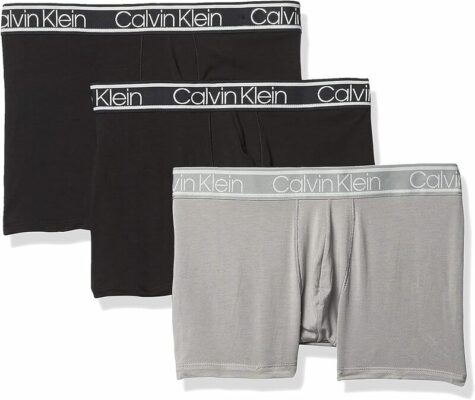
Best Overall: Calvin Klein Bamboo Boxer Briefs
- Material Composition: 66% Bamboo Viscose, 29% Cotton, 5% Elastane
- Style: Boxer Briefs
- Sizing: S–XL
Long a dominant force in men’s foundational wear, Calvin Klein bridges heritage design with contemporary fabric technology in this offering. The integration of bamboo viscose with a substantial cotton and elastane blend delivers structural integrity alongside a luxurious hand-feel. Ergonomic seaming and a contoured support pouch provide functional stability, while inherent moisture-wicking properties manage microclimate humidity during extended wear. Although internal paper tags require removal for optimal comfort, the overall balance of durability, retention of shape, and refined aesthetic solidifies its standing as a primary industry benchmark.
Best Everyday: Chill Boys Bamboo Boxers
- Material Composition: 95% Bamboo Viscose, 5% Spandex
- Style: Loose-Fit Boxers
- Sizing: S–XXXL
For individuals prioritizing unrestricted airflow and a relaxed silhouette, Chill Boys offers an alternative modeled on traditional pajama-style comfort. Utilizing a high percentage of bamboo viscose paired with spandex, the garment provides a silky, lightweight drape that minimizes friction. While lacking the compression or athletic support of a boxer brief, the design offers superior odor resistance and breathability for casual, low-impact daily routines.

Best Budget: Bamboo Sports Briefs
- Material Composition: 95% Bamboo Rayon, 5% Spandex
- Style: Athletic Briefs
- Sizing: S–XXL
Value-driven packaging without structural compromise has made multi-pack bamboo briefs a popular choice for budget-conscious consumers. Engineered to mitigate chafing through seamless or flatlock construction, these briefs maintain a snug, supportive profile suitable for physical training or daily wear across seasonal shifts. The omission of physical labels further eliminates skin irritation, though users seeking relaxed leg coverage should note the traditional brief architecture.
Best on Amazon: Bamboo Cool Boxer Briefs
- Material Composition: 92% Bamboo Viscose, 8% Spandex
- Style: Boxer Briefs
- Sizing: S–XXXL
Characterized by a seamless engineering process and a high spandex content, these boxer briefs optimize stretch recovery and fit conformity. The high-viscose ratio ensures rapid sweat dispersal and thermal regulation, though consumer reviews frequently note generous sizing parameters, suggesting that buyers between sizes select the smaller tier for secure support.

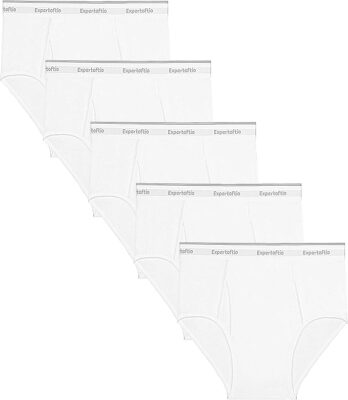
Best Briefs: Expertoftio Bamboo Underwear Briefs
- Material Composition: 95% Viscose from Bamboo, 5% Spandex
- Style: Classic Briefs
- Sizing: S–XXL
Targeting users who require targeted pelvic support combined with lightweight thermal regulation, Expertoftio’s brief design performs effectively across demanding applications, including cold-weather athletic layering. The breathable cellulose matrix functions efficiently to wick moisture, though dimensional inconsistencies reported in user feedback indicate that sizing up is advisable for an optimal fit.
Best Boxer Briefs: SUMABA Bamboo Boxer Briefs
- Material Composition: 94% Bamboo Viscose, 6% Spandex
- Style: Boxer Briefs
- Sizing: M–XXXL
Focusing on structural comfort, SUMABA utilizes a double-layer open-front pouch architecture paired with a wide, pressure-distributing waistband. The absence of external tags and traditional side seams prevents friction points, making this model well-suited for users prone to skin sensitivity or chafing during high-movement activities.
Best Luxury: Mr. Davis Bamboo Boxer Brief Underwear
- Material Composition: Premium Bamboo Viscose and Elastane
- Style: Boxer Briefs
- Sizing: S–3XL
Positioned at the upper tier of the market, boutique producer Mr. Davis focuses on precision tailoring for men requiring specialized sizing and superior climate control. Engineered for active outdoor lifestyles and travel, the fabric utilizes advanced flatlock stitching and high-grade thermal regulation properties. While representing a significant financial investment per multi-pack, rotation strategies significantly extend garment lifespan.
Comprehensive Product Comparison
| Product | Intended Use | Material Blend | Silhouette | Size Range | Key Functional Attributes | Market Tier |
|---|---|---|---|---|---|---|
| Calvin Klein Bamboo Boxer Briefs | Overall Performance | 66% Bamboo Viscose, 29% Cotton, 5% Elastane | Boxer Brief | S–XL | Contoured pouch, moisture management, high durability | Premium |
| Bamboo Sports Briefs | Budget Value | 95% Bamboo Rayon, 5% Spandex | Brief | S–XXL | Chafe-free construction, tagless, multi-pack value | Budget |
| Bamboo Cool Boxer Briefs | Seamless Comfort | 92% Bamboo Viscose, 8% Spandex | Boxer Brief | S–XXXL | Seamless knit, odor mitigation, high stretch | Mid-Range |
| Chill Boys Bamboo Boxers | Casual / Lounge | 95% Bamboo Viscose, 5% Spandex | Loose Boxer | S–XXXL | Relaxed airflow, lightweight drape, pajama-like feel | Mid-Range |
| Expertoftio Bamboo Underwear Briefs | Active / Thermal | 95% Viscose from Bamboo, 5% Spandex | Brief | S–XXL | Second-skin feel, rapid evaporation, layering utility | Budget |
| SUMABA Bamboo Boxer Briefs | Support & Fit | 94% Bamboo Viscose, 6% Spandex | Boxer Brief | M–XXXL | Double-layer pouch, wide waistband, seamless sides | Mid-Range |
| Mr. Davis Bamboo Boxer Briefs | Premium Utility | Proprietary Bamboo Viscose / Elastane | Boxer Brief | S–3XL | Advanced temperature regulation, flatlock seams | Luxury |
Key Purchasing Considerations
When navigating the men’s bamboo underwear category, three primary criteria dictate long-term satisfaction:

- Fabric Composition and Blend Ratios: Pure cellulose fibers lack mechanical elasticity. A quality bamboo undergarment must integrate spandex, elastane, or a complementary natural fiber like cotton to ensure the garment retains its shape after repeated laundering without sagging or losing compression.
- Architectural Fit and Support: Body morphology dictates the ideal silhouette. While compression-oriented boxer briefs prevent inner-thigh friction and secure athletic positioning, loose-cut boxers or pouch-enhanced briefs accommodate users prioritizing maximum ventilation and unrestricted movement.
- Value vs. Durability: Given that pricing ranges from entry-level multi-packs to premium individual garments, evaluating cost-per-wear alongside laundering resilience prevents premature degradation. Proper care—typically cold water washing and avoiding high-heat tumble drying—is essential for preserving the structural integrity of delicate viscose fibers.
Methodological Evaluation and Industry Trust
The selection process for top-tier intimate apparel requires rigorous qualitative and quantitative assessment. Editorial recommendations are developed by analyzing structural specifications, tracking user performance metrics across independent retail channels, and assessing manufacturing transparency. By narrowing an initial pool of dozens of candidate garments down to verified top performers, the selection process ensures that consumers receive practical, tested, and reliable guidance tailored to modern menswear requirements.