










Drapers examines the profound and ongoing impact of the US-Israel war with Iran on global fashion retail, dissecting the severe disruptions to supply chains and the persistent erosion of consumer confidence as geopolitical uncertainty continues to grip the world economy. As of May 2026, the protracted conflict, which escalated significantly in late 2025, has reshaped the operational landscape for retailers, forcing an urgent re-evaluation of logistics, sourcing strategies, and market forecasts. The sector, a bellwether for discretionary spending, faces unprecedented challenges ranging from soaring shipping costs and extended transit times to dampened consumer purchasing power and a fundamental shift in market dynamics.
Escalation and Geopolitical Context
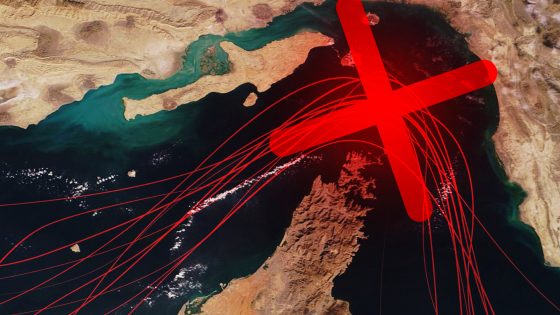
The conflict, which intensified dramatically in late 2025, represents a critical flashpoint in Middle Eastern geopolitics. Initial skirmishes escalated into broader confrontations involving naval engagements, cyber warfare, and targeted strikes, primarily impacting vital maritime passages. The Strait of Hormuz, a choke point for global oil shipments, and the Red Sea, a crucial artery connecting Asian manufacturing hubs to European markets via the Suez Canal, quickly became zones of high risk. These developments were not isolated; they built upon years of underlying regional tensions, but the direct involvement of major global powers marked a significant and destabilizing shift. Analysts from the Global Economic Forum noted in their Q1 2026 report that the conflict’s expansion was "an inevitable consequence of escalating regional proxy wars and a failure of de-escalation diplomacy," pushing crude oil prices past $120 a barrel and triggering a cascading effect across all sectors reliant on global trade and energy.
Disruptions Across the Supply Chain
The direct and indirect consequences of the conflict have reverberated through every segment of the fashion supply chain. The industry, inherently globalized with complex networks spanning continents for sourcing, manufacturing, and distribution, has proven particularly vulnerable.
Maritime Commerce Under Siege
The most immediate and visible impact has been on maritime shipping. With the Red Sea and the Strait of Hormuz deemed high-risk zones, major shipping lines have been forced to reroute vessels around the Cape of Good Hope, adding thousands of nautical miles and weeks to transit times. For instance, a typical journey from Shanghai to Rotterdam, previously taking approximately 28-32 days via the Suez Canal, now extends to 40-45 days. This extended duration translates directly into increased fuel consumption, higher operational costs for shipping companies, and, crucially, a significant surge in insurance premiums for cargo traversing these dangerous waters or taking the longer alternative routes. Data from the Baltic Freight Index shows that container shipping costs on the Shanghai-Rotterdam route have surged by an estimated 250% since December 2025, with similar increases observed on other key Asia-Europe and Asia-North America lanes.
The ramifications for fashion retail are profound. Delayed shipments mean longer lead times for new collections, challenges in fulfilling seasonal demand, and potential stockouts of popular items. Retailers are grappling with the dilemma of either absorbing these exorbitant costs, thereby eroding profit margins, or passing them on to consumers, risking further dampening of demand.
Raw Material Volatility
The conflict’s impact on energy markets has directly influenced the cost and availability of raw materials essential to fashion production. The spike in crude oil prices, a direct consequence of instability in the Middle East, has sent shockwaves through the production of synthetic fibers such as polyester, nylon, and acrylic, which are petroleum-derived. Manufacturers face significantly higher input costs, leading to increased prices for these fundamental textile components. Even natural fibers are not immune; the energy-intensive processes of ginning, spinning, and weaving are all subject to higher utility costs, irrespective of the fiber’s origin. Furthermore, agricultural supply chains for natural fibers like cotton, particularly those originating from regions bordering or indirectly affected by the broader geopolitical instability, face potential disruptions in harvesting, processing, and transportation dueencing output and driving up prices.
Manufacturing Bottlenecks and Labor Concerns
Manufacturing hubs, particularly in Asia, are experiencing secondary effects. Increased energy costs translate into higher operational expenses for factories, potentially leading to reduced output or increased unit costs. Factories reliant on specific components or raw materials from affected regions face delays or shortages. Moreover, the general economic uncertainty stemming from the conflict can impact labor availability and costs in manufacturing zones, as workers contend with rising inflation and potential instability. Brands are increasingly reporting longer production cycles and reduced flexibility from their manufacturing partners, a direct consequence of these compounding pressures.
The Chilling Effect on Consumer Confidence
Beyond the operational headaches, the conflict has cast a long shadow over consumer sentiment, significantly impacting purchasing behavior in fashion retail.
Inflationary Pressures and Eroding Purchasing Power
The higher costs embedded throughout the supply chain — from raw materials to manufacturing and shipping — are inevitably trickling down to the consumer. Retailers, under immense pressure, are often forced to adjust pricing upwards. This inflationary trend is exacerbated by broader economic concerns tied to the conflict, including rising energy prices for households and general economic uncertainty. Consumers, facing increased costs for essentials like food and utilities, have less discretionary income available for non-essential purchases like clothing and accessories. A recent survey by the National Retail Federation indicated that 65% of consumers in major Western markets are now "more price-sensitive" than they were a year ago, with 40% planning to "significantly reduce" their non-essential spending.
Economic Uncertainty and Discretionary Spending
The persistent geopolitical instability fuels a pervasive sense of economic uncertainty. Fears of a global recession, potential job losses, and a general decline in living standards compel consumers to adopt a more cautious financial stance. Fashion, often seen as a discretionary luxury, is among the first categories to feel the pinch during such times. Consumer sentiment indices across Europe and North America have shown steady declines since late 2025, indicating a reluctance to engage in significant spending beyond immediate necessities. This translates into fewer impulse purchases, a longer buying cycle for durable fashion items, and a general contraction in the overall market size for many fashion segments.
Shifting Priorities and Values
Beyond mere economics, the conflict is also influencing consumer values and priorities. There’s a discernible shift towards durability, versatility, and value for money. Fast fashion, which thrives on rapid trend cycles and affordability, faces headwinds as consumers become more discerning about the longevity and ethical footprint of their purchases. Brands perceived as responsible, sustainable, or offering timeless quality may fare better, as consumers seek items that transcend fleeting trends and offer enduring utility in an uncertain world. The psychological impact of global instability can also lead to a preference for comfort, practicality, and perhaps even a subtle rejection of overt luxury in favor of more understated elegance.
Industry Responses and Mitigation Strategies
In response to these multi-faceted challenges, the fashion industry is rapidly implementing a range of mitigation strategies, though their effectiveness varies.
Diversification and Nearshoring
Many brands are actively exploring avenues to diversify their manufacturing bases, reducing over-reliance on single regions or countries. This includes increasing production in Southeast Asian nations outside of the immediate Red Sea shipping routes, or even considering "nearshoring" (moving production closer to primary consumer markets, e.g., Turkey or Eastern Europe for European brands, or Central America for North American brands). While nearshoring can reduce transit times and mitigate geopolitical shipping risks, it often comes with higher labor and operational costs, requiring a delicate balance between resilience and profitability.
Inventory Management Adjustments
Retailers are refining their inventory management strategies. Some are increasing "safety stock" levels to buffer against potential shipping delays and supply disruptions, albeit at the cost of higher warehousing expenses. Others are adopting more agile, data-driven forecasting models to anticipate demand fluctuations more accurately, aiming to minimize overstocking in a volatile market. The challenge lies in balancing the need for sufficient stock against the risk of accumulating unsold inventory if consumer demand unexpectedly plummets.
Technological Adoption and Visibility
The crisis has accelerated the adoption of advanced supply chain technologies. Brands are investing in platforms that offer real-time visibility into their global logistics networks, allowing them to track shipments, identify potential bottlenecks, and react swiftly to disruptions. Artificial intelligence and machine learning are being deployed for more sophisticated demand forecasting, risk assessment, and scenario planning, enabling companies to model the impact of various geopolitical events and adjust strategies proactively.
Voices from the Industry
Industry leaders and analysts are unanimous in their assessment of the gravity of the situation.
Chloe Mills, reporting for Drapers, observed, "The fashion industry is caught in a perfect storm. Geopolitical instability is not just a backdrop; it’s a direct, measurable force reshaping every aspect of operations and consumer behavior."
Eleanor Vance, CEO of Veridian Apparel, a multinational fashion conglomerate, stated in a recent earnings call, "We are navigating unprecedented complexity. Our margins are under pressure from all sides – logistics costs have tripled on key routes, and consumers are understandably hesitant. Our focus is squarely on agility, cost containment, and fostering strong relationships with diversified suppliers. This isn’t a temporary blip; it’s a fundamental recalibration of global trade."
Marcus Thorne, Head of the UK Fashion Retail Consortium, highlighted the broader economic implications: "The government must recognize the severe economic strain this conflict places on a sector vital for employment and innovation. Increased import duties, coupled with these supply chain shocks, could lead to significant job losses and closures if not addressed through targeted support and strategic trade diplomacy."
Dr. Anya Sharma, Chief Economist at MacroTrend Analytics, provided a stark economic outlook: "Fashion retail is often the canary in the coal mine for consumer sentiment and discretionary spending. The current downturn signals broader economic anxieties that could persist for the foreseeable future, even if the conflict de-escalates. Businesses need to prepare for a prolonged period of elevated costs and constrained demand."
The Long-Term Outlook and Transformation
The ongoing Middle East conflict is not merely a short-term challenge but a catalyst for long-term structural transformation within the fashion industry. The imperative for resilience has never been clearer.
Towards Resilient and Decentralized Supply Chains
The era of highly optimized, lean global supply chains designed primarily for cost efficiency is giving way to a new paradigm prioritizing resilience and redundancy. This will likely involve a more regionalized approach to sourcing and manufacturing, reducing geographical concentration risks. While this may entail higher costs in the short term, the long-term benefit of reduced vulnerability to geopolitical shocks is becoming increasingly apparent.
Sustainability Challenges and Opportunities
The rerouting of vessels around the Cape of Good Hope significantly increases the carbon footprint of international shipping, posing a challenge to the fashion industry’s ambitious sustainability goals. However, the drive towards nearshoring and localized production, while motivated by resilience, could also present opportunities for more sustainable practices by reducing transportation emissions in the long run. The renewed emphasis on durable, high-quality garments over disposable fast fashion could also align with broader sustainability objectives.
Digital Acceleration and Data-Driven Decision Making
The crisis has underscored the critical need for digital transformation. Enhanced data analytics, AI-driven forecasting, and end-to-end supply chain visibility are no longer luxuries but necessities. Companies that effectively leverage technology to navigate uncertainty, optimize inventory, and understand evolving consumer behavior will be better positioned to weather the storm and emerge stronger.
Market Consolidation and Innovation
The sustained pressures from the conflict are likely to accelerate market consolidation, as smaller, less resilient players struggle to absorb costs and navigate disruptions. Larger, well-capitalized companies with diversified resources and robust strategic planning may be better equipped to adapt, potentially acquiring struggling competitors. Simultaneously, the need for innovative solutions in materials science, manufacturing processes, and retail models will intensify, driving new forms of creativity and efficiency within the sector.
The fashion industry stands at a critical juncture, fundamentally altered by the ongoing geopolitical instability emanating from the Middle East. As the US-Israel war with Iran continues to unfold, its reverberations through global supply chains and consumer confidence are forcing an urgent re-evaluation of long-held paradigms. The coming months and years will undoubtedly test the resilience, adaptability, and innovative spirit of fashion businesses worldwide, pushing them towards a future defined by greater prudence, strategic diversification, and a profound understanding of an interconnected, yet increasingly unpredictable, global landscape.