











The full economic repercussions of this conflict are still unfolding, but an unprecedented global economic downturn is now widely considered inevitable. While the short-term economic indicators may be subject to market volatility and potential governmental interventions, the consensus among leading financial institutions and economists points towards a significant and prolonged period of instability. Experts, including those cited in reports from The Guardian in late March 2026, warn that the world is bracing for a severe global recession, with some models even indicating the potential for a full-blown depression. The interconnectedness of global supply chains means that the knock-on effects are complex and difficult to predict with absolute certainty, but their scope is expected to permeate every aspect of daily life, from household budgets to international trade.
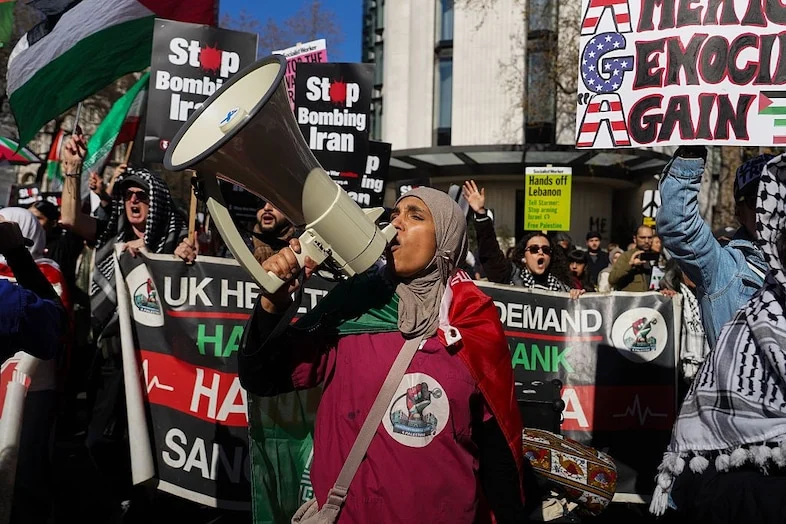
Beyond the economic fallout, the human toll of the war has already reached catastrophic levels, painting a grim picture of widespread suffering and displacement. Israel, in a rapid escalation following the initial US strikes, has intensified its military aggression against Lebanon, mirroring and in many ways repeating the tactics observed in the Gaza conflict. Reports from BBC News in early March 2026 confirm the targeting and killing of journalists, while The Guardian reported on March 14, 2026, the tragic deaths of healthcare workers, underscoring the severe risks faced by civilians and those attempting to provide aid. Humanitarian organisations, such as the International Rescue Committee, have reported the displacement of approximately one million people across Lebanon in just two weeks, leading to an urgent humanitarian crisis for children and vulnerable populations. Simultaneously, thousands of civilians within Iran have perished in the conflict, including a harrowing incident where an estimated 165 schoolgirls were killed in a single strike, as documented by UNICEF. Civilian casualties have also been reported in Israel and across other Gulf nations, highlighting the regional breadth of the violence. It is imperative that the devastating human cost of this conflict remains at the forefront of global attention, overshadowing concerns about consumer goods or leisure travel. While the immediate focus must be on alleviating suffering and providing aid (resources for which are available via guides from various humanitarian outlets), understanding the broader economic consequences of the US and Israel’s reckless decision to attack Iran is crucial for comprehending the full scope of this global crisis.
The Escalation: A Chronology of Conflict and Crisis
The path to the current global crisis began with a series of escalating tensions that culminated in direct military action. For years, diplomatic efforts to curb Iran’s nuclear ambitions and influence in the Middle East had been fraught, with successive US administrations navigating a delicate balance of sanctions and negotiations. However, the Trump administration adopted a more confrontational stance, withdrawing from international agreements and imposing increasingly stringent sanctions.
Early March 2026: Reports begin to surface of targeted strikes by the US and Israel against strategic Iranian facilities, reportedly aimed at degrading its military capabilities and nuclear infrastructure. These strikes, while initially presented as preemptive or retaliatory for unspecified regional aggressions, were widely condemned by international observers as a dangerous provocation.
Mid-March 2026: Iran responds swiftly and decisively. Citing its right to self-defence and vowing severe retaliation, the Iranian Revolutionary Guard Corps announces the immediate closure of the Strait of Hormuz to all oil and gas tankers, effectively choking off a vital artery of global energy supply. This action is accompanied by increased military posturing in the Persian Gulf.
Late March 2026: The ramifications are immediate and severe. Global oil prices surge to unprecedented levels, commodity markets react with extreme volatility, and international shipping lanes are thrown into disarray. Simultaneously, Israel intensifies its military operations in Lebanon, leading to mass displacement and casualties, drawing parallels to the earlier conflict in Gaza. Humanitarian organisations issue urgent appeals for aid as the regional crisis deepens.
April 2026: The Houthi movement in Yemen, an ally of Iran, announces its intention to reinstate its blockade of the Red Sea, a tactic previously employed between 2024 and 2025 in response to the Gaza conflict. This compounds the shipping crisis, impacting trade routes through the Suez Canal and further disrupting global supply chains, particularly for Europe.
Economic Fallout: A Global Quake
The decision to engage Iran militarily has unleashed an economic earthquake whose tremors are being felt worldwide. The closure of the Strait of Hormuz is not merely an inconvenience; it is a direct assault on the fundamental mechanisms of global trade and energy supply. Oil, the lifeblood of industrial economies, is integral to nearly every stage of production and transportation. With 30 per cent of the world’s seaborne oil, and significant portions of liquefied natural gas (LNG) and agricultural inputs like fertilisers, now unable to pass through this critical choke point, the global economy is facing a supply shock of historic proportions.
Adding to this, the high probability of the Houthis reinstating their blockade of the Red Sea further exacerbates the crisis. This strategic waterway, leading to the Suez Canal, is another crucial artery for global commerce, particularly impacting trade between Asia and Europe. The previous Houthi blockade in 2024-2025 significantly contributed to inflationary pressures in Europe, demonstrating the profound economic leverage such actions wield. The combined effect of these blockades creates a dual chokehold on global shipping, forcing longer, more expensive routes around Africa, increasing transit times, fuel costs, and insurance premiums for all maritime trade.
The International Monetary Fund (IMF) and the World Bank have issued grim forecasts, revising down global growth projections significantly. The IMF’s Managing Director, Kristalina Georgieva, recently warned that the confluence of energy shocks, supply chain disruptions, and heightened geopolitical uncertainty could trigger a "protracted period of stagflation," reminiscent of the 1970s but potentially more severe given today’s interconnected financial markets and higher global debt levels. Central banks worldwide are caught in a dilemma: raise interest rates to combat inflation, risking a deeper recession, or hold steady, allowing inflationary pressures to spiral out of control. The immediate outlook is one of unparalleled economic turbulence.
The Cost of Living Crisis: Everything Gets More Expensive
The most immediate and tangible impact for ordinary citizens will be a dramatic surge in the cost of living. The energy crisis directly translates into higher prices for virtually every good and service.
Household Energy Bills: Energy prices are set to skyrocket. In the UK, for instance, industry analysts and government projections, such as those reported by The Independent in late February 2026, suggest annual household energy bills could surge by as much as £288 per year, pushing millions more into energy poverty. Similar, if not more severe, increases are anticipated across Europe and other energy-importing nations.
Groceries and Food Inflation: The agricultural sector is particularly vulnerable. The blockade of the Strait of Hormuz impacts not only energy but also the supply of vital fertilisers, many of which originate from or transit through the region. Higher energy costs also directly increase the cost of farming, processing, and transporting food. Reuters reported on April 1, 2026, that UK food inflation is projected to reach as much as 10 per cent, making essential foodstuffs unaffordable for many low-income households. This global food insecurity crisis is compounded by the fact that many developing nations rely heavily on energy and fertiliser imports.
Petrol and Transportation: Fuel prices have already seen significant spikes. The BBC reported in early March 2026 on unprecedented increases in petrol and diesel prices, directly impacting commuters, logistics companies, and the entire supply chain. This translates into higher costs for goods in stores, increased public transport fares, and reduced mobility for many.
Retail and Consumer Goods: Industries reliant on global supply chains and energy-intensive manufacturing are facing immense pressure. The international textile industry, for example, is bracing for a "major hit," as detailed by FashionNetwork.com in late March 2026, due to increased shipping costs, raw material prices, and energy expenses, leading to higher prices for clothing and other consumer goods.
Housing Costs: The economic crisis is already reverberating through the housing market. Mortgage lenders, anticipating higher inflation and potential interest rate hikes from central banks, have begun to increase their rates. This affects not only homeowners but also renters, as landlords invariably pass on increased mortgage costs to their tenants, further exacerbating an already critical housing affordability crisis in many urban centres.
Workforce Dynamics: The Specter of the Four-Day Work Week
The severe energy shortages have compelled several nations to implement drastic measures to conserve fuel and electricity. Sri Lanka, the Philippines, and Pakistan have already adopted a four-day work week, a policy designed to reduce daily commutes and energy consumption in workplaces. The question now looms: could this become a widespread phenomenon, potentially affecting advanced economies like the UK and the US?
Historically, the UK resorted to a three-day work week in the early 1970s in response to severe coal shortages, demonstrating a precedent for such emergency measures during energy crises. However, Dr. Wladislaw Rivkin, Professor in Organisational Behaviour at Trinity Business School, expressed a degree of skepticism in an interview with Fortune, suggesting that a long-term shift to a four-day week is "unlikely" for the US and UK, as he believes the current sharp rise in fuel costs is temporary. Nevertheless, Dr. Rivkin also cautioned against entirely ruling out such a shift, noting that the trajectory largely depends on the duration and intensity of the US war on Iran and the subsequent global energy market response.
Regardless of a mandated four-day week, an increased shift towards remote work appears highly probable. European Commissioner for Energy and Housing, Dan Jørgensen, recently urged citizens across the continent to "work from home where possible." His recommendations also included reducing highway speed limits by 10 kilometres per hour, encouraging public transport usage, alternating private car access, increasing car-sharing initiatives, and adopting efficient driving practices. Jørgensen emphasised, "The more you can do to save oil – especially diesel and jet fuel – the better off we are," underscoring the critical need for collective conservation efforts. This push for remote work and fuel efficiency highlights a broader societal adaptation to the energy crunch.
Travel and Leisure: Summer Holiday Cancellations and Event Disruptions
The war’s impact extends significantly into the travel, sports, and entertainment industries, disrupting plans and increasing costs for millions.
Summer Holiday Woes: For those planning international travel, expectations may need to be significantly recalibrated. The price of jet fuel has reportedly doubled in recent weeks, according to CNN on March 31, 2026, leading to widespread disruption in air travel. The Telegraph reported on March 30, 2026, that airlines worldwide are cancelling thousands of flights to mitigate soaring operational costs. Industry experts, as noted by The Guardian on March 26, 2026, have warned of substantial increases in airfares as the summer travel season approaches, with long-haul flights being particularly affected due to their higher fuel consumption. In response, some European leaders have explicitly urged citizens to take fewer flights, encouraging staycations or more environmentally friendly modes of transport, as reported by MSN in early April 2026. This shift could mean a significant economic blow to the global tourism industry and a change in leisure habits for many.
Sports and Entertainment Hit: The ripple effects are also being felt in global entertainment. The Formula 1 racing calendar has already seen cancellations of some races, particularly those scheduled in Gulf nations, amid increased missile attacks and heightened security concerns, as reported by The New York Times on March 29, 2026. Major artists like Shakira and Christina Aguilera have postponed shows in the region, citing security risks. Furthermore, the entertainment industry faces a unique challenge: a potential global helium shortage. Qatar, a major producer accounting for a third of the world’s helium supply, has halted production and exports due to the regional instability. Helium is critical for various applications, including balloons for events, scientific research, and crucially, medical diagnostics.
Healthcare and Essential Supplies: The Looming Threat of Shortages
Perhaps one of the most alarming consequences of the conflict is the potential for critical medication and medical supply shortages, threatening public health systems already under strain.
Medication Shortages: As reported by The Independent in early April 2026, NHS chiefs in the UK have expressed grave concerns about being "days away" from potential medication shortages. While the government issued a clarifying statement asserting that such a crisis has not yet materialised, pharmacists across the country have already reported significant price spikes for various drugs, signaling impending supply chain disruptions. Antidepressants, Hormone Replacement Therapy (HRT) drugs, and blood pressure medications are among the categories identified as being particularly vulnerable. The disruption of global shipping routes, increased freight costs, and the reliance on complex international supply chains for active pharmaceutical ingredients (APIs) and finished products all contribute to this precarious situation.
Impact of Helium Shortage: The halt in Qatar’s helium production has critical implications beyond the entertainment sector. Helium is an indispensable component in Magnetic Resonance Imaging (MRI) scanners, which are vital diagnostic tools for detecting conditions such as cancer, neurological disorders, and musculoskeletal injuries. A prolonged shortage could severely impact diagnostic capabilities in hospitals worldwide, leading to delayed diagnoses and treatment for countless patients, thus exacerbating existing healthcare backlogs and threatening patient outcomes. The intertwining of global conflicts with essential medical infrastructure underscores the far-reaching and potentially devastating consequences of this war.
International Response and Outlook
The international community has reacted with a mixture of alarm, condemnation, and desperate attempts at de-escalation. The United Nations Security Council has held emergency sessions, with the UN Secretary-General issuing urgent calls for a ceasefire and the opening of humanitarian corridors. Global powers, including the G7 nations and the European Union, are grappling with the dual challenge of containing the conflict’s regional spread and mitigating its global economic fallout. Emergency summits are being convened to discuss strategies for stabilising energy markets, diversifying supply routes, and coordinating humanitarian aid efforts.
However, the path forward remains fraught with uncertainty. The economic shockwaves are expected to intensify, challenging national budgets, increasing sovereign debt, and potentially triggering social unrest in countries most vulnerable to rising costs and food insecurity. The geopolitical landscape of the Middle East has been irrevocably altered, with long-term implications for regional stability and international relations. As the world confronts this multifaceted crisis, the urgent imperative is to prioritise human life, secure essential supplies, and work towards a diplomatic resolution that addresses the root causes of this devastating conflict, before its catastrophic impacts become irreversible.