






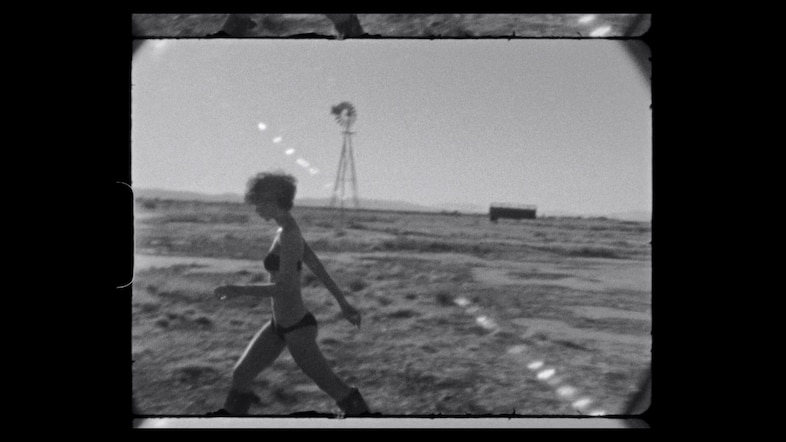
A groundbreaking collaboration between two formidable voices in contemporary photography, Nadia Lee Cohen and Scarlett Carlos Clarke, culminates in their new book, Podunk, published by IDEA Books. This collection of 128 evocative stills, shot in the remote expanse of Lancaster, California, within the Mojave Desert’s Antelope Valley, delves into themes of isolation, femininity, and the often-unseen facets of familial bonds. The highly anticipated launch of Podunk is slated for March 27, 2026, at Dover Street Market Ginza in Tokyo, marking a significant moment for both artists and the broader photographic community.
Unpacking the Enigmatic Podunk
The title itself, Podunk, immediately piques curiosity, hinting at the profound themes explored within the book’s pages. Originating from the indigenous American Algonquian language, where it translates to "where you sink in the mire," the term has evolved in modern American slang to denote a small, insignificant, or isolated town. This dual etymology – at once ominous and eerily descriptive – perfectly encapsulates the mysterious and atmospheric quality of the photographic series. The choice of Lancaster, California, a town often perceived as a quintessential "Podunk" location due to its remote setting in the high desert, serves as an ideal backdrop for this narrative of quiet desolation and introspective exploration. The stark, expansive landscapes of the Mojave Desert lend themselves to a visual language that mirrors the word’s inherent sense of being overlooked, yet possessing a deep, almost primordial significance.
A Decade of Artistic Synergy: The Collaboration’s Genesis
The collaboration between Nadia Lee Cohen and Scarlett Carlos Clarke is not a recent phenomenon but rather the natural evolution of a friendship and artistic partnership spanning almost a decade. Their creative synergy has seen them both behind and in front of the lens for each other’s projects, fostering a unique trust and understanding that permeates their joint work. Carlos Clarke first photographed Cohen in 2014, an early testament to their mutual admiration. Subsequently, Cohen captured Carlos Clarke and her son, Mosco, for Cohen’s critically acclaimed book Women, first published by IDEA Books in 2020. This history of mutual engagement and shared artistic exploration has laid the groundwork for Podunk, allowing for a deeply personal and uninhibited creative process. Their combined body of work consistently challenges conventional portrayals of femininity, womanhood, and motherhood, pushing boundaries and inviting viewers to reconsider established norms.
The genesis of Podunk itself was remarkably organic and spontaneous. Carlos Clarke recounted that the initial shooting in Lancaster was undertaken without a clear objective for a formal project. "We shot really spontaneously, and, to be honest, I didn’t know if we were gonna even use it for anything," she revealed in a joint interview. It was only upon reviewing the stills pulled from the Super 8 film that the artistic potential and cohesive narrative began to emerge. Cohen noted the immediate impression of the stills as reminiscent of a "black and white art movie — one of those boring ones," further emphasizing a "matriarchal" theme due to the absence of adult male figures. This intuitive discovery of a cohesive vision from a spontaneous shoot underscores the profound connection and shared aesthetic sensibility between the two artists.

Individual Trajectories and Artistic Heritage
Both photographers bring distinct, yet complementary, backgrounds to their collaboration. Scarlett Carlos Clarke’s entry into photography was initially marked by a deliberate deviation from her family’s artistic legacy. As the daughter of the renowned photographer Bob Carlos Clarke, she initially pursued hairdressing after a foundation course, intending to forge her own path outside the shadow of her father’s illustrious career. However, the pull of photography proved irresistible. Her innate talent was undeniable, evidenced by her portrait of her father, captured at the tender age of fourteen, which was acquired by the National Portrait Gallery, establishing her as the institution’s youngest photographer on record. Her critically acclaimed photo book, The Smell of Calpol on a Warm Summer’s Night, published by Mörël in 2024 and featuring Nadia Lee Cohen, further cemented her reputation for capturing intimate and often unsettling narratives. Her work, much like her father’s, frequently carries an underlying ominous quality, a trait Cohen herself acknowledges and finds deeply compelling.
Nadia Lee Cohen, on the other hand, is celebrated for her highly stylized, often surreal, and meticulously crafted images that blend elements of pop culture, vintage Americana, and a subversive exploration of identity. Her vibrant, hyper-saturated aesthetic has garnered significant attention, making her a distinctive voice in contemporary photography and filmmaking. Her previous works, including Women, have explored the performative aspects of femininity and the uncanny, often utilizing herself as a subject. Her involvement in Podunk, where she is primarily the subject, allows for a different dynamic, a stripping back of her usual overt artifice, to reveal a more raw and ambiguous portrayal.
The Aesthetic Shift: Black and White Super 8
A notable departure for Carlos Clarke in Podunk is the exclusive use of black and white Super 8 film, a stark contrast to her previously vibrant and colourful photographic style. This aesthetic choice was, according to Carlos Clarke, "completely instinctively" made, feeling "right" for the medium and the subject matter. The Super 8 format itself, with its inherent grain and slightly imperfect quality, lends a timeless, almost archival feel to the images, further contributing to the sense of a bygone era or a parallel reality. The decision to shoot in black and white amplifies the emotional depth and ambiguity, stripping away the distractions of colour to focus on form, texture, and the raw expressions of the subjects.
Cohen suggested that this shift might have been influenced by Carlos Clarke’s close collaboration with filmmaker Vincent Gallo, known for his distinctive cinematic style and meticulous attention to visual detail. "Everything went dark in a good way, and in a way that you really considered," Cohen observed, noting a newfound depth of deliberation in Carlos Clarke’s process. The use of film over stills, particularly Super 8, introduces an element of less preciousness, allowing for a more fluid and less rigid approach to capturing moments. As Cohen articulated, "There’s so much more to extract from… Automatically, when you tell someone it’s a photo, they pose. I think that’s the difference." This echoes the sentiment found in photobooks derived from cinematic works, such as Wim Wenders’ Paris, Texas, where stills carry a narrative weight beyond static images. The black and white palette, combined with the evocative Super 8 medium, imbues Podunk with a cinematic quality, inviting viewers into a world that feels both familiar and unsettlingly distant.
Thematic Exploration: Ambiguity, Matriarchy, and Isolation
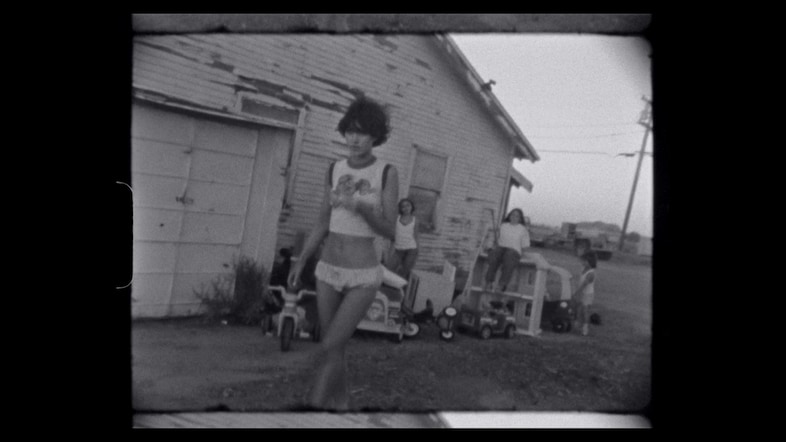
The core themes woven throughout Podunk revolve around ambiguity, matriarchal dynamics, and the profound sense of isolation inherent in the chosen landscape. The images intentionally blur the lines of relationships, presenting Cohen in a role that could be interpreted as a "sister slash mother," with younger subjects potentially being her children or siblings. This deliberate ambiguity, as Carlos Clarke explained, stems from her personal fascination with "weird family dynamics" and a long-held desire for a large family, being an only child herself. Cohen humorously added, "So, she did it [had children] quick. And she’s trying to inflict that on me because I didn’t, and haven’t yet. Hopefully, I will one day, unless I’m barren. Please don’t let me be barren. Touch wood." This playful banter belies a deeper exploration of societal expectations surrounding womanhood and motherhood, a recurring motif in both artists’ work.
The remote setting of Lancaster, California, and the Mojave Desert further amplifies these themes. The harsh desert environment, with its extreme temperature shifts from scorching days to freezing nights, contributed to the raw and authentic mood of the shoot. Cohen recalled the physical challenges: "Every time the sun went down, it was so cold, and that’s something that you don’t realise when you’re in the baking sun during the day." Carlos Clarke noted that exhaustion often leads to a loosening of inhibitions, drawing a parallel to Stanley Kubrick’s methods with Shelley Duvall in The Shining. This intentional pushing of boundaries, both environmental and emotional, facilitated the capture of genuine, unposed moments that define the book’s aesthetic. The matriarchal undertones, further reinforced by the Japanese film Onibaba (a story of women fighting to survive while men are at war) which Cohen cites as an influence, suggest a narrative of female resilience and self-reliance in a desolate, challenging world.
The Creative Process: Trust, Authenticity, and Anti-Commercialism
The collaborative dynamic between Cohen and Carlos Clarke is rooted in profound trust and an shared commitment to authenticity. Cohen describes Carlos Clarke as "brutally honest" and "not shocked or offended by anything," qualities she values deeply in a friend and collaborator. This candidness allows for uninhibited feedback and a mutual pursuit of artistic excellence without the usual anxieties of ego or politeness. "When you’re working with someone you trust, you’re not asking, is it shit? to yourself, you’re asking it to somebody whose opinion you value and that makes a big difference," Cohen elaborated. This level of trust is crucial, especially when one is both the artist and the subject, allowing for a vulnerability that translates into powerful imagery.
Both artists expressed a growing disillusionment with the commercial aspects of photography, particularly the large-scale, heavily crewed shoots that they feel dilute the artistic vision. Carlos Clarke lamented the "faffing that goes on around shoots" and the "eighty people on set" where "everyone has an opinion, everything is watered down." This sentiment echoes a broader trend among artists seeking to reclaim creative control and return to more intimate, authentic methods of production. Cohen, reflecting on her earlier days in Los Angeles, shared her preference for "running around with a light on a stick," reminiscent of her initial, permit-free shooting style. Their shared desire to strip back the layers of commercial production and revert to working with friends who share the same artistic drive underscores their commitment to prioritizing the integrity of their work. "Everyone’s pushing for the same thing: to make good work," Carlos Clarke stated, highlighting the purity of collaborative efforts born from genuine connection.
Social Media’s Influence and the Value of the Physical Book
The conversation also touched upon the pervasive influence of social media on photographic practice and consumption. Cohen observed a subconscious shift in her own work, increasingly taking "more portrait pictures so they fit on a phone screen." Her previous artistic compass, guided by cinematic landscape aesthetics ("does this look like a film?"), has subtly yielded to the demands of vertical phone screens, where the objective is to "fill the space of whatever you’re in." Carlos Clarke, in a playful act of artistic rebellion, confessed to doing "the opposite," actively "self-sabotaging" and "not giving the people what they want" by continuing to prioritize landscape formats and traditional photographic principles. This tension between adapting to digital consumption and upholding artistic vision is a contemporary challenge for many photographers.
Despite the digital omnipresence, both artists strongly emphasized the enduring value of the physical book. For Cohen, "Making something physical puts a line under a project." Carlos Clarke articulated a growing importance for "going back to that process of developing, printing, making books," especially in an era where digital imagery can feel ephemeral or, as she provocatively suggested, potentially "AI." The tangible nature of a book offers a permanence and a curated experience that digital platforms often lack. It allows for a deeper engagement with the artwork, free from the scrolling distractions and fleeting attention spans of social media. The act of holding a book, turning its pages, and experiencing the images in a carefully sequenced narrative becomes an antidote to the instantaneous and often superficial consumption of online content.
Beyond Podunk: Artistic Philosophy and Future Trajectories
The interview also offered glimpses into their broader artistic philosophies. Both expressed a disdain for "overreferenced" art and the ubiquitous use of terms like "iconic" and "moment" in contemporary discourse, advocating for originality and genuine impact. Cohen humorously suggested that "iconic" belongs on "Nicky Haslam’s Tea towels as common," underscoring her aversion to artistic clichés. Carlos Clarke, increasingly, avoids mood boards and external references, preferring to draw from an internal wellspring of inspiration.
They also acknowledged the necessity of artistic evolution, including the periods of "shit work" or, as Cohen suggested, simply taking a "fucking break." In an age where every output is scrutinized and permanently archived online, the pressure to consistently produce "good work" is immense. Their discussion highlighted the challenges of experimentation in a public-facing digital environment, where mistakes are indelible.
The decision to launch Podunk in Tokyo, specifically at Dover Street Market Ginza, is not merely a logistical choice but also a thematic one. Cohen connected the book’s ominous and matriarchal themes to the Japanese film Onibaba, praising its depiction of women fighting for survival amidst a desolate landscape. This cultural resonance, combined with the allure of Japan itself, provides a fitting international stage for a project that transcends geographical boundaries in its exploration of universal human experiences. Cohen’s excitement about discovering local culinary gems and Bacharach shrines in Tokyo exemplifies their adventurous spirit, blurring the lines between work and life.
Podunk stands as a powerful testament to the potency of collaborative art, the enduring appeal of analogue photography, and the profound narratives that can emerge from friendship and shared artistic vision. Published by IDEA Books, a house known for its discerning selection of artist books, Podunk is poised to become a significant contribution to the contemporary photographic canon, challenging perceptions and inviting deep contemplation on the multifaceted nature of human existence in forgotten corners of the world. The Tokyo launch promises to be a celebration of this unique artistic achievement, marking another milestone in the distinguished careers of Nadia Lee Cohen and Scarlett Carlos Clarke.