




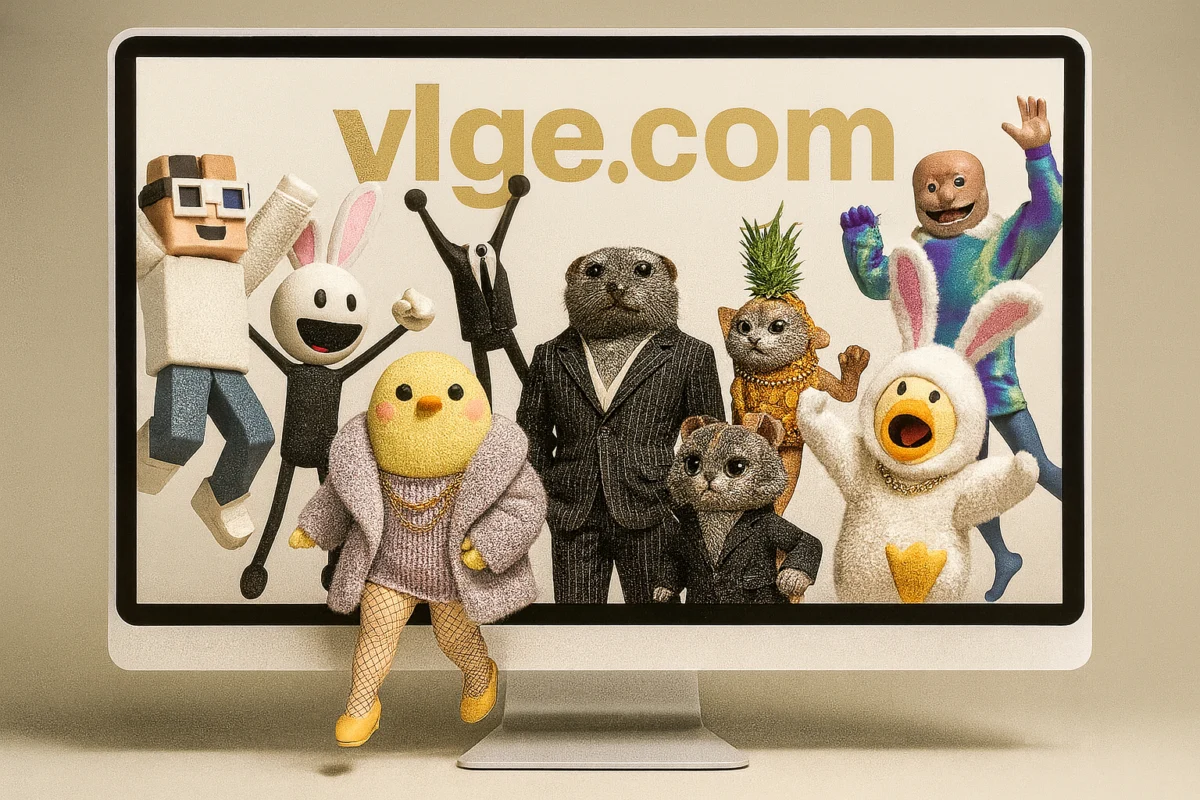
The global fashion industry is undergoing a fundamental shift in how it engages with consumers, transitioning from the exclusive, high-carbon-footprint runways of Paris and Milan to the decentralized, immersive environments of the digital world. At the center of this transformation is VLGE, a gaming and immersive-world-building platform founded by Evelyn Mora. In its most ambitious move to date, VLGE has announced that 50 fashion brands will launch independent, shoppable digital worlds as part of World Fashion Week. This initiative, powered entirely by VLGE’s proprietary technology, represents a significant milestone in the evolution of "gamified commerce," a sector that bridges the gap between traditional retail, interactive entertainment, and social media.
Evelyn Mora, whose early career was rooted in the traditional fashion circuit, recognized a systemic disconnect within the industry. While designers were increasingly vocal about sustainability and environmental responsibility, the logistical requirements of staging large-scale fashion shows—involving international travel, physical set construction, and short-lived runway presentations—remained inherently wasteful. In 2021, Mora launched VLGE to solve this paradox, providing a platform that allows brands to build interactive, sustainable, and scalable digital experiences. The platform’s latest expansion into World Fashion Week serves as a proof of concept for a future where brand identity is defined by interactive participation rather than passive observation.
The Architecture of Virtual Retail and World Fashion Week
World Fashion Week is not merely a digital replica of a physical event; it is an initiative designed to act as a technological bridge for creators and heritage brands alike. By utilizing VLGE’s infrastructure, 50 diverse fashion houses are moving beyond static e-commerce storefronts to create "shoppable worlds." These environments allow users to navigate 3D spaces, participate in games, and purchase products—all within a unified ecosystem.
A critical component of this rollout is the platform’s integration with Roblox, a global immersive platform with over 70 million daily active users. Historically, for a brand to establish a presence on Roblox, the barriers to entry were prohibitively high. Building a custom "experience" or "world" typically required specialized knowledge of Luau (Roblox’s coding language), months of development time, and a financial investment ranging from $10,000 to over $100,000 when hiring external agencies. VLGE’s technology removes these hurdles by offering a no-code, real-time building interface. Brands can now design their worlds within a browser-based environment and export them directly to Roblox, as well as Unreal Engine, with future compatibility planned for Meta Horizon Worlds.
Mora emphasizes that this democratization of tech is essential for the industry’s survival in a Gen Z-dominated market. "This is significant because Roblox has become fashion’s most powerful youth frontier, yet until now, world-building there has been costly, technical, and complex," Mora stated. By making the process instant and affordable, VLGE is positioning itself as the essential infrastructure for the next generation of digital-native commerce.
Strategic Investment and Industry Backing
The viability of VLGE’s vision is supported by significant financial backing and institutional interest. To date, the company has raised $5 million in capital, a notable sum for a startup operating at the intersection of fashion and deep tech. The investor profile is particularly telling of the platform’s broad appeal. Backers include Lammot J. du Pont of the influential du Pont family, signaling confidence from traditional high-net-worth sectors.
Furthermore, the involvement of the L’Oréal Group and the British Fashion Council (BFC) highlights the strategic importance of VLGE to the beauty and apparel sectors. L’Oréal’s investment suggests a move toward "beauty-tech," where virtual try-ons and immersive brand storytelling become standard tools for cosmetic marketing. The BFC’s support indicates that the institutional gatekeepers of the fashion world view digital expansion not as a trend, but as a structural necessity for maintaining global relevance. VLGE has already executed successful projects for high-profile names such as Lancôme, Charlotte Tilbury, and Vogue Scandinavia, proving that luxury and mass-market brands are equally eager to capture the "attention economy" of digital spaces.
A Timeline of the Digital Fashion Revolution
The trajectory of VLGE and World Fashion Week follows a decade of incremental shifts toward digital fashion. To understand the context of this latest announcement, one must look at the chronology of virtual commerce:

- 2019–2020: The rise of digital-only fashion houses like The Fabricant and the first high-fashion collaborations in games (e.g., Louis Vuitton in League of Legends).
- 2021: Evelyn Mora launches VLGE, focusing on the sustainability of virtual shows. This coincides with the NFT and Metaverse boom, though VLGE maintains a focus on utility and accessibility rather than speculative assets.
- 2022: VLGE makes headlines by launching the world’s first 3D and gamified fashion week, proving that large-scale events can exist entirely within a browser.
- 2023–2024: The industry sees a "flight to quality." While many speculative metaverse projects failed, platforms like Roblox and Fortnite saw record engagement from fashion brands (e.g., Gucci Garden, Nikeland).
- 2025 (Current): VLGE announces the 50-brand activation for World Fashion Week, introducing interoperability as a core feature. This allows brands to build once and deploy across multiple gaming platforms.
This timeline illustrates a shift from "marketing stunts" to "infrastructure building." VLGE is no longer just hosting a show; it is providing the software that allows brands to operate their own persistent digital storefronts.
Economic Implications and the Freemium Model
The economic model of VLGE is designed to scale across the industry, from independent designers to multinational conglomerates. The platform operates on a four-tier payment structure:
- Freemium: Allowing emerging creators to experiment with 3D world-building at no initial cost.
- Creator Tier: Tailored for independent artists and digital-native designers.
- Small Business Tier: Providing tools for boutique brands to establish shoppable presence.
- Enterprise Tier: Custom, high-scale solutions for major fashion houses requiring deep integration and advanced analytics.
This tiered approach addresses one of the primary criticisms of early metaverse initiatives: that they were exclusive playgrounds for brands with million-dollar marketing budgets. By lowering the cost of entry, VLGE is fostering a more diverse digital economy.
Furthermore, the platform is preparing to launch a dedicated "e-tail" store. This marketplace will facilitate the sale of physical items from emerging brands alongside 3D assets. This "phygital" approach—where a customer might buy a physical jacket and receive a digital twin for their avatar—is expected to become a major revenue driver. According to industry reports, the market for digital fashion is projected to grow significantly as Gen Z and Gen Alpha consumers increasingly view their digital avatars as an extension of their physical identities.
Data and Market Context: Why Gamification Matters
The pivot toward gamified commerce is backed by compelling consumer data. A recent "Digital Expression, Fashion & Beauty in Roblox" report noted that nearly half of Gen Z users say they express their individuality through their avatar’s style more than they do in the physical world. Additionally, over 30% of users claim that the style of their avatar influences their physical-world fashion choices.
For brands, the engagement metrics in gamified worlds far outperform traditional digital advertising. While a standard social media ad might capture a few seconds of a user’s attention, the average session time in an immersive brand world can span 10 to 20 minutes. During this time, the user is actively interacting with the brand’s aesthetics, values, and products through gameplay. By powering World Fashion Week, VLGE is providing 50 brands with a high-engagement alternative to the declining returns of traditional digital marketing.
Future Outlook: Interoperability as the Gold Standard
The long-term success of digital fashion hinges on interoperability—the ability for a digital asset or a brand experience to move seamlessly between different platforms. Mora’s decision to focus on cross-platform compatibility (Roblox, Unreal Engine, Meta Horizon World) addresses the current fragmentation of the metaverse.
"This moment isn’t just about fashion; it’s about the infrastructure that will power the next generation of commerce," Mora noted. By creating a unified pipeline where a brand can build a world once and deploy it everywhere, VLGE is positioning itself as the "Shopify of the Metaverse."
As World Fashion Week commences, the industry will be watching closely to see how these 50 shoppable worlds perform. If successful, it will mark the end of the "experimental" phase of digital fashion and the beginning of a new era where virtual presence is as mandatory for a brand as a website or a social media account. The move suggests that the future of fashion lies not just in what we wear, but in the interactive worlds we choose to inhabit. Through the lens of VLGE, the runway is no longer a strip of wood and carpet in a tent; it is a limitless, programmable landscape accessible to anyone with an internet connection.