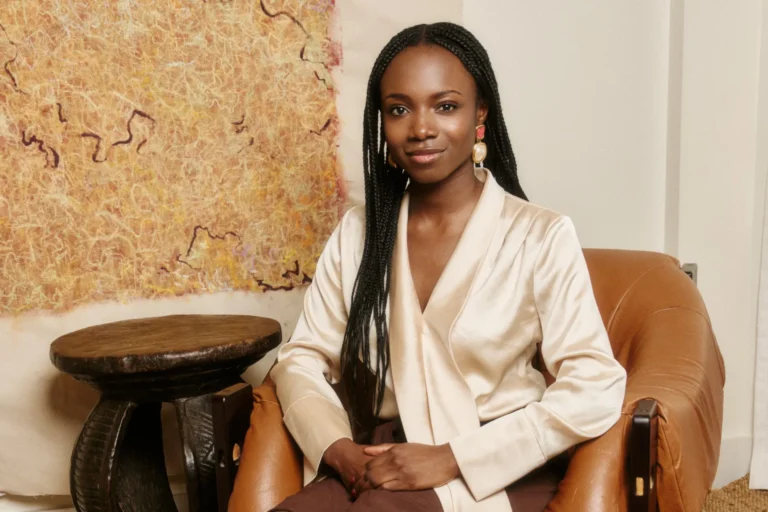








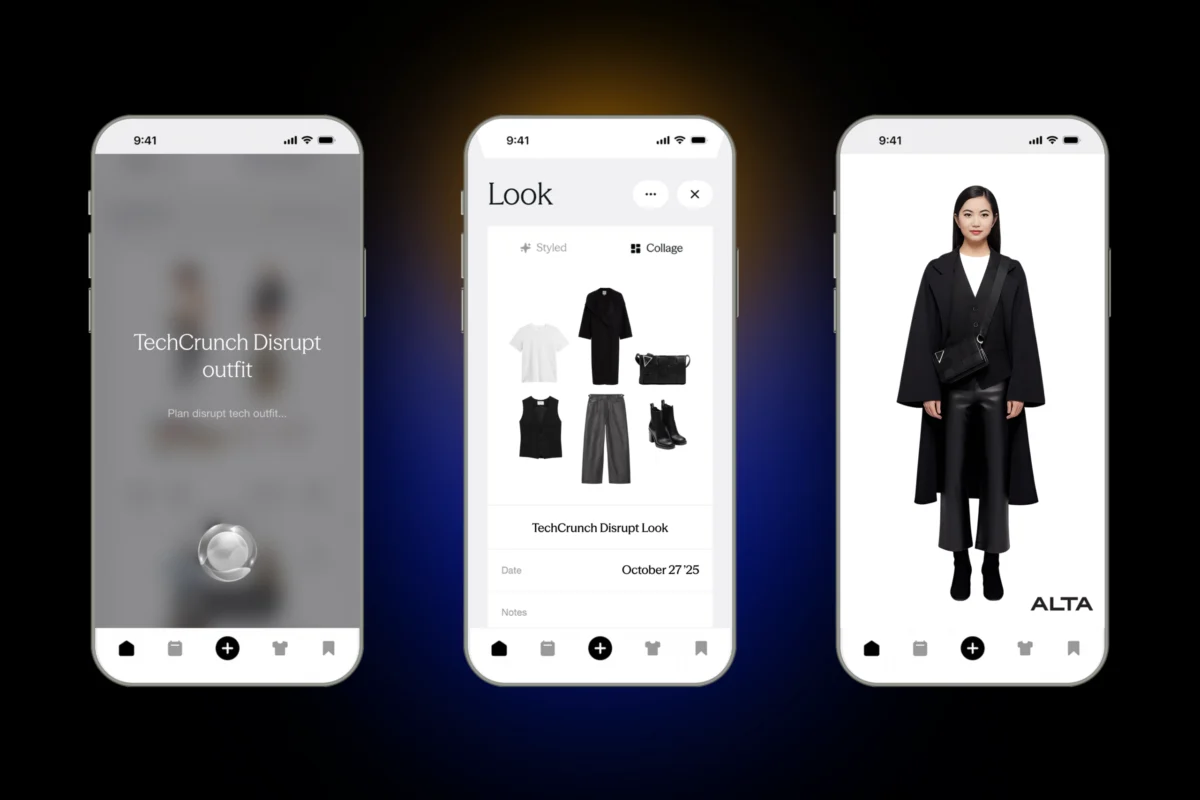
Alta, a nascent technology firm specializing in artificial intelligence-driven personal styling and shopping, has announced the successful completion of an $11 million seed funding round. The investment was led by Menlo Ventures and features a high-profile roster of participants from the venture capital, luxury fashion, and technology sectors. Founded by 28-year-old Harvard-trained engineer Jenny Wang, Alta aims to solve a long-standing challenge in consumer technology: the creation of a seamless, automated personal styling agent that integrates a user’s existing wardrobe with real-time shopping recommendations, budgetary constraints, and environmental factors.
The funding marks a significant milestone for Wang, who has spent years conceptualizing a digital tool capable of replicating the expertise of a professional stylist. While the concept of a "digital closet" has existed in the cultural zeitgeist since the mid-1990s, Wang asserts that recent advancements in generative artificial intelligence and computer vision have finally provided the technical maturity required to bring such a product to market effectively. The capital infusion will be utilized to accelerate research and development, expand the company’s engineering and fashion-focused teams, and facilitate international expansion across Europe and the Pacific.
The Technological Architecture of a Virtual Stylist
Alta functions as a comprehensive fashion assistant that operates at the intersection of logistics and aesthetics. The platform allows users to digitize their physical closets through several methods: uploading photographs of garments, forwarding digital purchase receipts, or selecting items from Alta’s extensive existing database of retail products. Once a closet is digitized, the AI serves as a "personal styling agent," generating outfit recommendations based on four primary data points: the user’s budget, their lifestyle requirements, local weather forecasts, and their personal calendar.
A distinctive feature of the application is its focus on visualization. Taking inspiration from the iconic computerized wardrobe featured in the 1995 film "Clueless," Alta enables users to view recommended outfits on a personalized virtual avatar. This "try-on" technology allows for the mixing and matching of items the user already owns with new pieces they may be considering for purchase. For instance, a user attending a specific industry event, such as TechCrunch Disrupt, can query the AI for an appropriate ensemble. The system then generates a curated lookbook that balances professional standards with the user’s individual style and the specific environmental conditions of the event location.
To ensure the AI’s recommendations maintain a high standard of fashion literacy, Wang collaborated with Meredith Koop, the renowned stylist best known for her work with former First Lady Michelle Obama. Koop’s involvement was instrumental in training the AI models, moving the platform beyond simple color-matching algorithms toward a more nuanced understanding of silhouette, occasion-appropriateness, and contemporary style trends.
A Strategic Coalition of Investors and Industry Titans
The $11 million seed round reflects a unique convergence of Silicon Valley technical expertise and Global Fashion’s elite. Beyond lead investor Menlo Ventures, the round saw participation from Benchstrength and Aglaé Ventures, the investment vehicle backed by the Arnault family, owners of the LVMH luxury conglomerate. The involvement of Aglaé Ventures provides Alta with a direct link to the world’s most prestigious luxury brands, signaling a high level of institutional confidence in the startup’s potential to influence the high-end retail market.
Other institutional participants include Phenomenal Ventures, founded by Meena Harris, and the Anthology Fund, which is the venture arm of the AI safety and research company Anthropic. The inclusion of an AI-centric fund like Anthology suggests that Alta’s underlying technical architecture is viewed as a significant advancement in consumer-facing generative AI.
The round was further bolstered by an array of prominent angel investors from diverse backgrounds:
- Technology Leaders: Tony Xu, co-founder and CEO of DoorDash, and Manish Chandra, co-founder and CEO of Poshmark.
- Fashion Innovators: Jenny Fleiss, co-founder of Rent the Runway.
- Cultural Icons: Supermodels Karlie Kloss and Jasmine Tookes, as well as tech influencer Zita d’Hauteville.
Wang’s ability to assemble this coalition is rooted in her extensive professional network. A former intern at DoorDash and a volunteer for Karlie Kloss’s "Kode With Klossy" initiative, Wang has spent her career bridging the gap between engineering and consumer applications. Her background as a technical advisor to various brands and her experience within investment firms provided the foundation for what she describes as an "aligned" fundraising process.
Market Context and the Evolution of Fashion Technology
The emergence of Alta occurs at a time when the global AI in fashion market is experiencing rapid growth. Market analysts estimate the sector was valued at approximately $1.5 billion in 2023, with projections suggesting it could exceed $16 billion by 2030. While established giants like Google Shopping and Pinterest have introduced AI-driven search and "shop the look" features, Wang argues that these legacy platforms are limited by their original architectures.
"The experiences that consumers will crave and use in the future will need to be built with new technical architectures and new user interfaces," Wang stated. This perspective highlights a shift from "search-based" shopping—where a user looks for a specific item—to "agentic" shopping, where an AI understands the user’s context and proactively suggests solutions.
Alta enters a competitive landscape that includes existing apps such as Whering and Cladwell. However, Alta distinguishes itself through its heavy emphasis on the "agent" model and the integration of professional styling logic into its core code. By moving away from static catalogs and toward dynamic, AI-generated lookbooks that account for a user’s real-world schedule, the company aims to reduce the "cognitive load" associated with daily dressing and long-term wardrobe planning.
Strategic Partnerships and Global Expansion
To cement its position within the fashion industry, Alta has established a strategic partnership with the Council of Fashion Designers of America (CFDA). This collaboration provides Alta with direct access to a membership base comprising America’s foremost designers, potentially creating a pipeline for brand integrations and exclusive digital assets within the app.
The company’s growth strategy also includes a significant geographical shift. While Wang was previously based in San Francisco, she recently relocated the company’s headquarters to New York City. This move was strategic, placing the team at the heart of the American fashion industry while facilitating easier transit to Paris, the global capital of luxury. The partnership with LVMH’s investment arm and Zita d’Hauteville is expected to anchor Alta’s expansion into the European market.
Furthermore, Alta is looking toward the Pacific and Oceania regions through a partnership with Marie Kondo, the world-renowned organizing consultant. This collaboration suggests that Alta intends to position itself not just as a shopping tool, but as a holistic wardrobe management system that aligns with Kondo’s philosophy of intentionality and organization.
Future Outlook: From Personal Styling to Retail Integration
The long-term vision for Alta involves deep integration with global retailers. By providing a platform where users can "try on" new clothes alongside their existing wardrobe, Alta offers a solution to one of e-commerce’s most persistent problems: high return rates. If consumers can accurately visualize how a new purchase fits into their current closet, the likelihood of a successful transaction increases.
The $11 million in capital will sustain a team that Wang describes as "highly technical but also fashion-obsessed." As the company continues to refine its in-house models based on community feedback, the focus remains on maintaining a "human-in-the-loop" approach, where the AI is continuously informed by the expertise of stylists and the real-world needs of its users.
Wang remains deeply involved in the technical development, noting that she continues to code daily. This hands-on leadership, combined with a robust network of advisors from both the technology and fashion sectors, positions Alta as a primary contender in the race to define the next generation of consumer AI. The transition from San Francisco’s tech-centric environment to New York’s fashion-tech ecosystem reflects a broader trend of AI startups seeking to embed themselves directly within the industries they aim to disrupt.
As the company prepares for its next phase, the focus will be on scaling its user base and finalizing partnerships with major retail platforms. In a market increasingly saturated with AI "wrappers," Alta’s emphasis on bespoke technical architecture and high-fashion pedigree represents a concerted effort to build a sustainable, value-driven utility for the modern consumer. For Jenny Wang, the launch of Alta is the culmination of a decade-long pursuit to turn a cinematic fantasy into a functional, everyday reality.