










The Evolution of a Bespoke Wardrobe
For many, the transition from purchasing off-the-rack garments to engaging in the bespoke process represents a significant shift in consumer behavior. Over the past ten years, the global custom clothing market has seen a resurgence, driven by a consumer base increasingly interested in longevity, sustainability, and personal fit. Ivan’s approach serves as a case study for this trend, emphasizing that the value of a custom piece lies not in the pursuit of ephemeral trends, but in the creation of a "versatile template" that integrates seamlessly with existing wardrobe components.

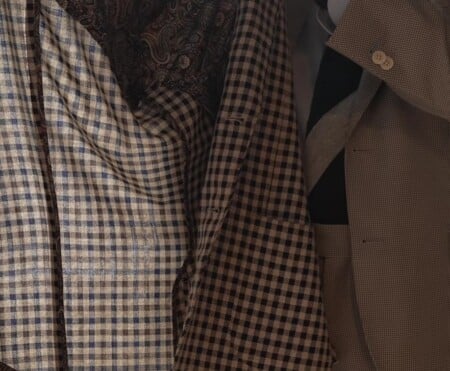
The chronological development of his current collection reveals a move away from "statement pieces"—garments designed for singular, high-visibility occasions—toward items engineered for high-frequency rotation. By analyzing his most-worn jackets, one observes a clear prioritization of fabric performance and structural integrity. Whether it is a cream-colored wool-silk blend capable of transitioning between temperate and warmer seasons, or a robust Prince of Wales flannel designed for deep winter, each garment serves a specific, calculated function.
Technical Specifications and Construction Standards
The technical rigor involved in modern custom tailoring often goes unnoticed by the casual observer. Ivan’s methodology relies on specific, repeatable details that standardize his commissions while allowing for individual character. A core component of his template is the manipulation of the jacket’s interior, specifically the preference for quarter-lining.

Statistically, full-lined jackets offer more structure but trap significantly more body heat, making them less suitable for varied environments. By utilizing a quarter-lined construction, the garment achieves a balance between aesthetic drape and thermal comfort. This design choice reflects a broader industry movement toward "soft tailoring," which reduces the reliance on heavy interlinings and padding to create a more natural silhouette that conforms to the wearer’s physiology over time.
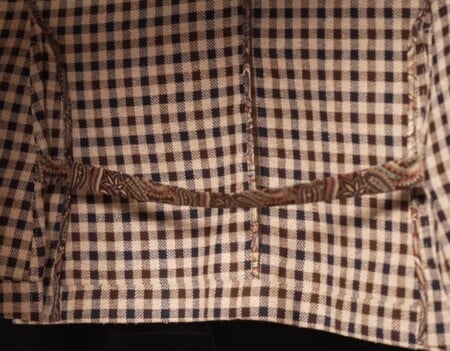
Furthermore, his incorporation of a hidden strap within the back vent demonstrates an attention to structural engineering. By bridging the vent edges, the clothier prevents the fabric from "flaring," ensuring that the silhouette remains clean across the hips and back—a common failure point in poorly constructed mass-market jackets.

The Psychology of Detail: Aesthetic vs. Functional
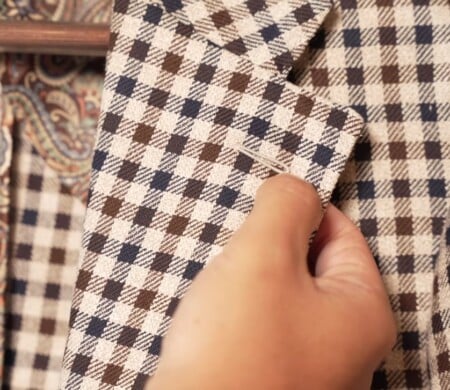
A notable aspect of Ivan’s design philosophy is the strategic application of color and contrast. In his practice, he distinguishes between "focal" and "accent" details. He posits that the lapel buttonhole functions as a visual "bullseye," anchoring the gaze. Consequently, he opts for traditional thread matching on the lapel to maintain a cohesive, professional appearance.
Conversely, he utilizes colored thread on the cuff buttonholes. This is a subtle, interior-facing detail that provides a personalized flourish without disrupting the jacket’s primary lines. This decision-making process is rooted in the principles of visual hierarchy: providing enough interest to distinguish a custom garment from a standard one, while ensuring the piece remains versatile enough for various professional and social settings.
Market Analysis: The Shift Toward Functional Curation
The current state of the tailoring industry suggests a divergence between luxury fashion and functional bespoke wear. Data indicates that consumers who invest in custom commissions are increasingly seeking garments with a "cost-per-wear" focus. Ivan’s decision to avoid excessive concern over lining patterns—choosing instead to select based on personal preference rather than rigid sartorial rules—illustrates this shift.
When asked about the future of wardrobe development, industry experts often point to the "capsule" model. By limiting the number of jackets but maximizing their interchangeability, a wearer can maintain a more sophisticated appearance with fewer items. This approach not only reduces wardrobe clutter but also supports more sustainable consumption habits. Ivan’s "template" approach effectively serves as a blueprint for this model, suggesting that the most successful wardrobe is one where every new commission is measured against the functionality of what is already owned.
Expert Clarifications on Sartorial Terminology
To better understand the implications of these design choices, it is necessary to clarify the technical lexicon used in modern tailoring:
- The Three-Roll-Two Configuration: This refers to a jacket cut with three buttonholes, where the top button is designed to be hidden by the lapel’s roll. The result is a garment that visually aligns with the elegance of a two-button jacket while maintaining the structural depth of a three-button piece.
- Canvas Integrity: The "canvas" serves as the foundation of the jacket. Full canvas, which runs the length of the front panels, allows for the greatest degree of customization and long-term molding to the wearer’s body. Half-canvas offers a compromise, providing structure in the chest and lapels while keeping the skirt of the jacket lightweight.
- Sport Coat vs. Suit Jacket: The distinction remains a critical point of etiquette. A sport coat, often characterized by textured fabrics and less rigid construction, is designed to be paired with mismatched trousers. A suit jacket is inherently more formal, crafted from smoother fabrics, and traditionally intended to be worn only with its matching trousers.
Broader Implications for the Consumer
The implications of Ivan’s approach are significant for those looking to invest in bespoke clothing. By treating a wardrobe as an evolving system rather than a collection of independent acquisitions, the wearer avoids the pitfalls of "chasing trends." The primary takeaway from his walkthrough is that the most successful garments are those that are designed to be "invisible" in their versatility—meaning they are so appropriate for the context that they never draw negative attention.
As the industry continues to emphasize transparency, consumers are demanding more information regarding the "why" behind the stitch. Whether it is the inclusion of Italian-made fabrics or the specific choice of a Reda floral lining for personal satisfaction, the modern clothier must be able to justify every design decision.
Ivan’s documentation of his favorite jackets serves as a reminder that the art of dressing is, fundamentally, an exercise in problem-solving. By identifying personal needs—thermal comfort, color harmony, and structural requirements—and applying a consistent template, the wearer can build a collection that is both highly personal and exceptionally functional. This systematic approach effectively demystifies the bespoke process, providing a roadmap for those who wish to move beyond simple consumption and toward an intentional, curated lifestyle. Through the lens of his experience, we see that the finest jacket is not necessarily the most expensive one, but the one that best serves the daily demands of the person wearing it.