





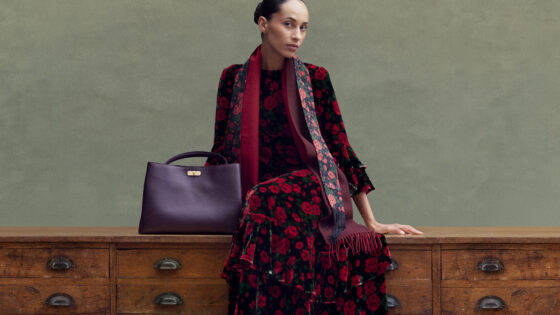
For the autumn/winter 2026 season, Liberty London is doubling down on its most iconic asset: its heritage print archive. As the luxury retail landscape becomes increasingly saturated with minimalist aesthetics and "quiet luxury" branding, the historic department store is pivoting to a strategy that emphasizes its maximalist roots and historical design provenance. This tactical shift, overseen by head of womenswear design Sinead O’Brien, represents a broader industry trend where legacy retailers are seeking to differentiate themselves by leaning into the tangible history of their brand identities.
The Strategic Pivot: Reclaiming the Liberty Print
The Liberty print—historically associated with Art Nouveau, floral motifs, and intricate botanical patterns—has long been the backbone of the store’s commercial success. For the AW26 collection, the design team has curated a selection of archival prints that date back to the late 19th and early 20th centuries, reinterpreting them through modern silhouettes.
According to internal design directives, the objective is to reposition the "Liberty Print" not merely as a fabric choice for accessories or stationery, but as a primary fashion narrative. By integrating these patterns into high-end outerwear, evening wear, and complex knitwear, the store aims to remind consumers of the artisanal craftsmanship that has defined the brand since Arthur Lasenby Liberty first opened his doors on Regent Street in 1875.
Historical Context and Brand Evolution
To understand the significance of this move, one must examine the role of textiles in Liberty’s commercial history. In the 1920s, Liberty became synonymous with the "Liberty Silk," a lightweight, floral fabric that revolutionized the British fashion market. Throughout the 20th century, the store maintained its relevance by collaborating with high-fashion houses, including Yves Saint Laurent and Cacharel, to feature its prints.
However, the late 2010s and early 2020s saw a shift in consumer behavior toward cleaner, logo-less designs. Liberty, while maintaining its reputation, faced the challenge of staying relevant to a younger, more trend-conscious demographic. The AW26 campaign signals a reversal of this trend. By placing the print "front and centre," the business is essentially betting on the consumer’s desire for "heritage storytelling"—a marketing phenomenon where shoppers seek products with a verifiable history and a sense of place.
The Chronology of the AW26 Creative Direction
The development of this season’s collection began in early 2025, following a comprehensive audit of the Liberty design archive.
- Q1 2025: Design teams initiated a digital restoration project, digitizing over 45,000 prints from the physical archive to ensure high-definition reproducibility for modern garment manufacturing.
- Q3 2025: Initial concept meetings for the AW26 womenswear line focused on merging the classic "Art Nouveau" sensibilities with the demand for sustainable, high-performance fabrics.
- Q1 2026: Prototyping began, focusing on how these intricate patterns would appear on diverse materials, including organic wools and recycled silk blends.
- September 2026: Pre-launch marketing campaigns were rolled out, focusing on the craftsmanship behind the screen-printing process.
- October 2026: The official launch of the AW26 campaign, marking the transition from subtle accent pieces to print-dominant runway-inspired collections.
Market Data and Consumer Trends
Market analysts tracking the luxury department store sector have noted a distinct cooling in the "minimalist" fashion cycle. Data from recent retail reports suggest that while logo-heavy luxury saw a decline in Q2 2026, demand for "artisanal" and "heritage-focused" goods has grown by approximately 12% year-on-year.
Liberty’s strategy aligns with this shift. By focusing on prints, the store is essentially moving away from the "disposable" trend cycle and into a "collectible" cycle. This is a critical move, as the department store sector has been hit hard by high operating costs and shifting consumer spending habits. By leveraging its own intellectual property—the prints themselves—Liberty creates a product that is impossible for high-street competitors to replicate, thereby protecting its margins.
Industry Perspectives and Official Commentary
While Sinead O’Brien has noted that the strategy is driven by a need to modernize the brand’s heritage, industry experts view this as a necessary defensive maneuver.
"Liberty has spent years being a house for other brands," notes Sarah Jenkins, an independent retail consultant. "By moving its own print-led collections into the spotlight, they are reminding the market that they are not just a luxury department store; they are a design house in their own right. This increases their brand equity significantly."
The decision has been met with positive sentiment from trade analysts who track the "heritage" segment. The focus is not just on the pattern, but on the narrative of the "Liberty Artist," a figure that the store is currently highlighting in its marketing materials to emphasize the hand-drawn origins of its designs. This move counters the rise of AI-generated patterns and fast-fashion prints, positioning Liberty as a bastion of traditional luxury.
The Implications for Retail Strategy
The broader implications of this focus on prints extend beyond the AW26 season. Should the collection perform as expected, it is likely that Liberty will adopt this as a permanent pillar of its seasonal strategy. This would mark a departure from the "multi-brand, single-source" model that most department stores utilize, moving instead toward a "vertically integrated heritage" model.
Furthermore, this pivot has significant implications for supply chain management. Printing high-quality, complex designs at scale requires specialized facilities. Liberty’s reliance on its long-standing partnerships with print works ensures quality control, but it also ties the brand’s success to the stability of these artisanal suppliers. As global logistics remain complex, maintaining these relationships is as much a strategic necessity as it is a creative choice.
Challenges and Future Risks
Despite the optimism surrounding the AW26 collection, challenges remain. The primary risk is the potential for "print fatigue." While the strategy is currently unique, a rapid saturation of the market with floral and heritage-based patterns—from other luxury houses following suit—could dilute the impact of Liberty’s collection.
Additionally, the price point associated with archival-inspired, high-end printed garments is significant. In an economic climate where discretionary spending is under pressure, convincing consumers to invest in high-priced patterned items requires a strong brand narrative. Liberty is betting that the "heritage" story will be enough to justify these price points.
Conclusion: A Calculated Heritage
Liberty’s decision to put its famous prints at the heart of its AW26 strategy is a sophisticated response to a maturing market. It is a calculated move that balances the store’s storied past with the demands of a modern, discerning consumer base. By reclaiming its identity as a design house, Liberty is attempting to insulate itself from the volatility of the multi-brand retail market.
Whether this move will define the next decade of the store’s history remains to be seen, but the initial indications suggest that the strategy is both timely and aligned with the current consumer desire for authenticity. As the AW26 season progresses, the industry will be watching closely to see if this "print-first" approach can deliver the commercial results required to keep a legacy brand at the forefront of the luxury retail conversation.
The successful execution of this vision will depend on the brand’s ability to maintain the delicate balance between tradition and innovation, ensuring that while the prints are historical, their application remains undeniably forward-looking. As the retail landscape continues to shift, Liberty’s focus on its unique creative heritage provides a clear, if ambitious, roadmap for how legacy retailers can survive and thrive in an era defined by rapid, often disorienting, change.