











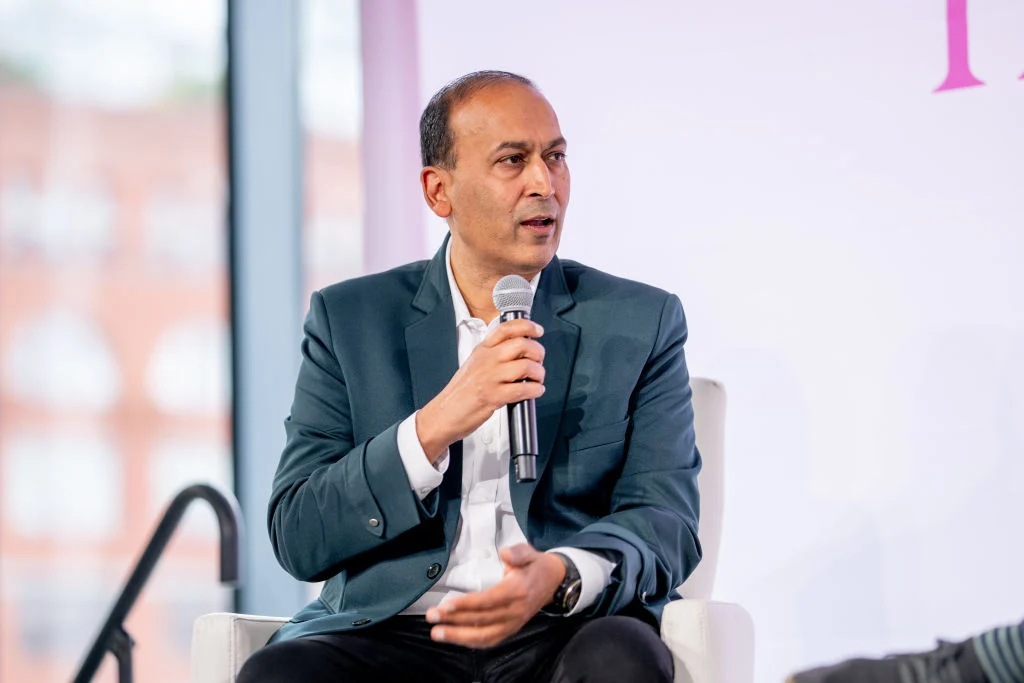
Fashion resale marketplace Poshmark has officially announced a major leadership transition, with founder Manish Chandra stepping down from his role as Chief Executive Officer after nearly a decade and a half at the helm. Namsun Kim, who has served as the company’s executive chairman since April, has been appointed as his successor, effective immediately. Chandra, who launched the company out of a Silicon Valley garage in 2011 alongside three co-founders, will remain connected to the enterprise by transitioning to a seat on the board of directors.
The change in leadership marks the end of an era for one of the pioneering forces in the social commerce and peer-to-peer resale economy. Under Chandra’s visionary stewardship, Poshmark evolved from a modest mobile application centered around women’s fashion into a massive, multi-billion-dollar global marketplace boasting approximately 150 million registered users. The company navigated several monumental milestones during his tenure, including an initial public offering (IPO) on the public markets in early 2021 and a subsequent high-profile acquisition by South Korean internet conglomerate Naver in 2022.
As the platform prepares for its next phase of growth under Kim, industry analysts are closely watching how the transition will impact Poshmark’s competitive positioning within the increasingly crowded recommerce sector. The leadership shift also underscores the growing integration of Poshmark into Naver’s broader global strategy, as the parent company looks to leverage advanced technologies, cross-border commerce capabilities, and AI-driven recommendations to sustain momentum in the digital fashion marketplace.
A Decade-and-a-Half Chronology of Poshmark
The journey of Poshmark began in 2011, a time when mobile-first shopping was still in its infancy and the concept of peer-to-peer digital closets was largely unproven. Manish Chandra, recognizing the massive potential of combining social media mechanics with e-commerce, co-founded the company in Silicon Valley. The platform initially launched as an iPhone app focused primarily on women’s fashion, allowing everyday consumers to buy and sell pre-owned clothing seamlessly from their mobile devices.
By incorporating social engagement features—such as virtual "parties," the ability to follow favorite sellers, and interactive listing shares—Poshmark carved out a distinct niche that set it apart from traditional static online classifieds and auction sites like eBay. As smartphone adoption soared through the early and mid-2010s, Poshmark expanded its catalog beyond women’s apparel to include menswear, children’s items, home goods, and beauty products.
A pivotal moment in the company’s trajectory occurred in March 2021, when Poshmark officially went public, trading on the Nasdaq stock exchange under the ticker symbol POSH. The IPO valued the company at over $3 billion at its peak, providing the capital necessary to scale its operations, expand its community trust and safety teams, and invest in marketing campaigns aimed at capturing a broader demographic of sustainable shoppers.
However, shifting macroeconomic conditions, rising inflation, and volatility in public tech markets eventually prompted a strategic pivot. In October 2022, South Korean internet giant Naver announced a definitive agreement to acquire Poshmark for approximately $1.2 billion in cash. The deal, which closed later that year, positioned Poshmark as a standalone subsidiary of Naver, granting the resale platform access to Naver’s robust technological ecosystem, search technologies, and expertise in artificial intelligence.
Throughout these sweeping changes, Chandra remained at the helm, steering the company through the complexities of public market compliance, integration with a foreign parent corporation, and evolving consumer preferences surrounding sustainable fashion. After nearly 15 years of continuous leadership, his decision to step down closes a foundational chapter in the company’s corporate history.
Inside the Transition: The Rise of Namsun Kim
Incoming CEO Namsun Kim is no stranger to the inner workings of Poshmark or its parent organization. Prior to stepping up as Poshmark’s executive chairman in April, Kim served as the president of investments at Naver. In that capacity, he played a central role in orchestrating Naver’s acquisition of Poshmark, giving him deep familiarity with the marketplace’s financial structures, corporate culture, and strategic roadmap.
According to statements released by the company, the groundwork for this leadership transition has been carefully coordinated over several months. Manish Chandra noted that he and Kim have been collaborating closely since the beginning of the year to ensure the handover of executive responsibilities is executed as smoothly and transparently as possible. By placing an executive with deep financial and strategic ties to Naver at the helm, the board aims to maintain operational continuity while accelerating synergy between Poshmark and its parent company’s technological capabilities.
In his farewell message directed to the Poshmark community of buyers, sellers, and creators, Chandra expressed profound gratitude for the collective journey. Writing to users in an emotional email, Chandra stated that leading the company had been the greatest honor of his professional life. He credited the platform’s successes and its resilience in overcoming challenges directly to the dedication and creativity of its user base. Witnessing the personal and entrepreneurial growth of community members over the years, he noted, served as a daily source of inspiration. Concluding his message, Chandra thanked the community for their trust, creativity, and the collaborative spirit that built the platform into what it is today.
Market Context and Broader Recommerce Industry Implications
Chandra’s departure comes at a transformative juncture for the global fashion resale market, commonly referred to as recommerce. Driven by increasing environmental awareness among Gen Z and millennial consumers, economic pressures, and a growing cultural preference for sustainable shopping habits, the second-hand apparel market has expanded exponentially over the past decade. Industry reports consistently project that the global secondhand market will continue to outpace traditional retail growth significantly over the next several years.
However, the competitive landscape has also grown fiercely intense. Poshmark finds itself battling for market share against a diverse array of domestic and international competitors, including generalist platforms like eBay, dedicated fashion recommerce apps like Depop and Mercari, and direct-to-consumer sustainability giants like ThredUP and The RealReal. Additionally, fast-fashion behemoths and traditional legacy retailers have increasingly launched their own resale and trade-in programs, further crowding the digital marketplace.
Under Namsun Kim’s leadership, Poshmark is expected to lean heavily into technological innovations designed to enhance user experience and merchant efficiency. Naver’s core competencies in search algorithms, generative AI, and localized content delivery offer significant leverage for Poshmark as it seeks to refine its product discovery mechanics. Improving search relevance, streamlining the listing process through automated image recognition, and strengthening buyer-seller trust remain critical operational priorities for the platform.
Furthermore, Kim’s extensive background in global investments and corporate strategy suggests that Poshmark may explore new avenues for international expansion or deeper integration with Naver’s broader digital ecosystem in Asia and beyond. While Poshmark has historically maintained a strong foothold in North America, cross-border commerce opportunities facilitated by Naver could unlock new growth vectors in overseas markets.
Outlook and Future Governance
As Manish Chandra transitions into his new role as a member of the board of directors, his ongoing presence will ensure that Poshmark retains institutional knowledge and maintains its core brand ethos. Board participation by a founding visionary often provides a vital bridge during executive successions, offering continuity to employees, long-term sellers, and strategic partners alike.
For Namsun Kim, the immediate mandate is clear: sustain user engagement, navigate ongoing macroeconomic headwinds affecting discretionary retail spending, and successfully integrate Naver’s technological innovations into the daily operations of the marketplace. As digital recommerce matures from a niche alternative into a core pillar of modern retail, the leadership team’s ability to balance community-driven social commerce with scalable technological infrastructure will dictate Poshmark’s trajectory in its next decade of operation.
The transition officially signals that Poshmark has completed its evolution from a nimble Silicon Valley startup into a globally integrated enterprise. As the marketplace enters this next chapter under Kim’s direction, stakeholders across the retail, technology, and investment sectors will be watching closely to see how the platform adapts to the shifting paradigms of sustainable digital commerce.