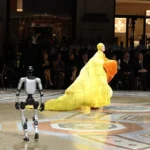

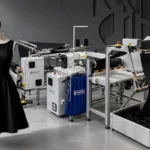

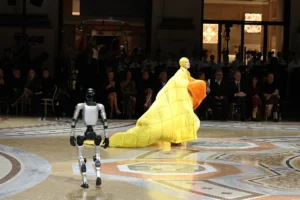

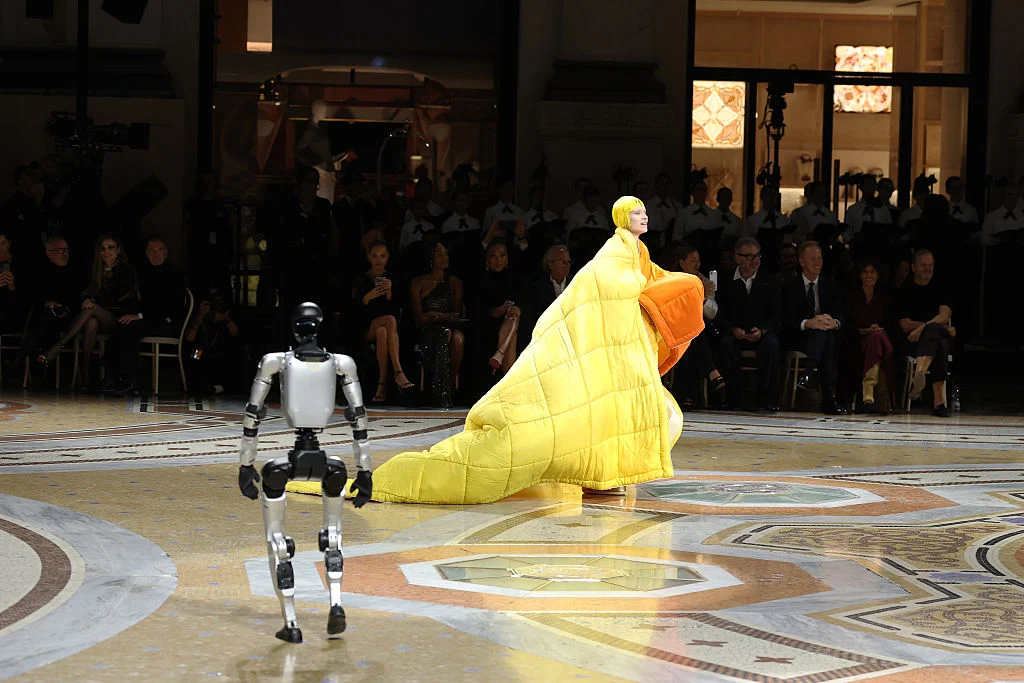
The annual global traveling spectacle known as Vogue World concluded its Milan edition with a controversial display that has since ignited intense debate across both the fashion and technology sectors. Designed to celebrate Italian craftsmanship and the enduring presence of the human touch in an era dominated by rapid technological advancement, the event instead pivoted to feature a troupe of unclad humanoid robots. Manufactured by the Chinese robotics firm Unitree, the machines marched into the historic Galleria under the soundtrack of Gigi D’Agostino’s "L’Amour Toujours," waving their arms and executing mechanical gestures.
This unexpected segment, titled "The Age of Intelligence," immediately overshadowed the clothing collections on display. Rather than sparking discussions regarding textile innovation, tailoring, or seasonal trends, public discourse fixated almost entirely on the presence of the robots. The viral circulation of Valentino Creative Director Alessandro Michele’s visibly perplexed reaction from the front row became emblematic of a broader cultural unease. As the fashion industry grapples with its evolving identity, the Milan showcase has amplified critical questions concerning the intersection of haute couture, corporate sponsorship, and the societal implications of automation.
The Evolution of Vogue World and the Strategic Pivot to Silicon Valley
Launched five years ago, Vogue World has established itself as a hybrid cultural phenomenon, combining runway presentations, celebrity showcases, variety entertainment, and high-value commercial partnerships. Previous iterations of the traveling event have transformed public spaces in major global capitals, including New York, London, Paris, and Los Angeles. Each edition is carefully curated to reflect the cultural heritage of its host city while serving as a prominent ad-sales platform for global luxury brands.
The decision to stage the upcoming 2027 edition in San Francisco signals a profound strategic realignment by Condé Nast and Vogue leadership. For over a decade, the publication has systematically cultivated ties with the technology sector. Historical milestones in this relationship include Apple Chief Design Officer Jony Ive co-hosting the Met Gala in 2015, followed by subsequent collaborations with prominent figures from the tech industry. The Milan edition itself was financially supported by major tech entities, including Meta Glasses and OpenAI.
By aligning more closely with technology executives during a broader macroeconomic climate characterized by global cost-of-living pressures, Vogue has intentionally positioned itself at the nexus of old-world luxury and new-world wealth. However, this strategic embrace has exposed a widening philosophical chasm between traditional artistic creation and the corporate interests driving modern technological expansion.
Chronology of the Controversy and Global Reactions
The integration of robotics into high-profile fashion events has accelerated noticeably throughout the 2026 fashion calendar.

- Early 2015: Apple’s Jony Ive co-hosts the Met Gala, marking an early formal bridge between Silicon Valley and the fashion establishment.
- Spring 2024: Schiaparelli showcases a critically acclaimed collection featuring a crystal-encrusted robot baby and garments constructed from vintage PC microchips, demonstrating a nuanced artistic approach to technology.
- August 2026: Vogue formally announces San Francisco as the destination for its next major global event, solidifying its partnership with tech-sector leadership.
- September 2026: Vogue World Milan stages "The Age of Intelligence" segment, featuring Unitree humanoid robots performing unclad on the runway.
- September 2026: Concurrently, similar robotic displays appear on runways during London Fashion Week, generating mixed reactions from attendees and media outlets.
- Post-Event (September 2026): Viral images, including the pained expression of Valentino Creative Director Alessandro Michele, circulate globally across social media platforms, sparking extensive industry commentary.
Reactions to the Milan presentation were swift and deeply polarized. Critics from both creative and labor advocacy backgrounds expressed dismay at the normalization of automation during a period marked by widespread workforce displacement and economic anxiety. Observers noted the disconnect between celebrating human artistry while simultaneously platforming machinery associated with job reduction. Conversely, defenders and industry analysts suggested that such spectacles represent a calculated commercial necessity, noting that technology firms possess substantial capital resources while legacy media publications maintain the cultural influence and access coveted by Silicon Valley elites.
Analysis of Fashion-Tech Integration: Beyond Surface-Level Gimmicks
Industry strategists and design professionals have noted that the deployment of standard humanoid robots fails to capture the sophisticated ways advanced engineering and artificial intelligence are genuinely influencing modern design. Rather than utilizing robots as novelty entertainment, various creative technologists have successfully merged material science with digital innovation to produce ephemeral and sustainable art forms.
For instance, the artist duo AA Murakami gained critical acclaim for engineering an "everlasting bubble" dress worn by Olympic athlete Eileen Gu at the Met Gala, pioneering concepts of temporary and sustainable fashion technology. These sophisticated applications contrast sharply with the mechanical performances seen in Milan, which many critics characterized as a superficial attempt to bridge two distinct industries without offering substantive artistic commentary.
Designers argue that successful fashion-tech collaborations historically rely on transforming technological components into wearable art—such as historical integrations of microchips and crystalline robotics—rather than relying on autonomous machines that divert attention entirely from the garments themselves.
Broader Economic and Cultural Implications
The convergence of luxury fashion and the technology sector carries significant socio-economic implications. As wealth concentration within the technology sector continues to grow, traditional cultural institutions are increasingly reliant on tech-backed sponsorships to maintain financial stability. This dynamic has raised concerns regarding the democratization of fashion and its alignment with corporate entities frequently scrutinized for issues related to mass surveillance, energy consumption, and labor displacement.
Furthermore, the choice of San Francisco as the next host city for Vogue World underscores a deliberate shift toward the epicenter of global tech capital. While executives maintain that these partnerships offer mutually beneficial financial and cultural exchanges, critics argue that the aestheticization of automation risks trivializing the real-world economic challenges faced by labor forces globally.
Ultimately, the Milan experiment has forced the fashion industry to confront uncomfortable realities regarding its corporate sponsorships and artistic integrity. Whether the upcoming San Francisco edition will refine this dialogue or lean further into corporate technology integration remains to be seen, but the event has irrevocably altered the discourse surrounding the future of creative expression in an automated world.