









The contemporary Western beauty paradigm heavily associates hairlessness with femininity, hygiene, and modern aesthetic standards. However, a rigorous examination of historical, artistic, and cultural records reveals that the preference for a completely smooth body is far from a universal or permanent constant. From the preservation of intimate locks in 18th-century jewelry to the prominent display of body hair in modern high fashion, societal expectations surrounding female pubic hair have continually fluctuated, reflecting shifting attitudes toward morality, class, bodily autonomy, and gender politics.
Main Facts and Historical Context
Popular perceptions often assume that the rise of commercial hair removal products in the 20th century marked the beginning of grooming practices. In reality, archaeological and historical evidence demonstrates that human societies have engaged in pubic hair management for millennia. Ancient Romans utilized specialized bronze tweezers to meticulously pluck body hair from the underarms and pubic regions. Conversely, historical standards of health and hygiene have frequently favored the natural state. According to The Oxford Companion to the Body, 15th-century European culture viewed a full pubic bush as a symbol of health, vitality, and prosperity. During this era, being clean-shaven could arouse suspicion, as it was frequently associated with attempts to conceal venereal diseases.
As hygiene standards and social values evolved, pubic hair grooming became directly tied to social status and material wealth. In ancient Greece, smooth skin was often viewed as an indicator of refined femininity because it required the leisure and resources necessary for dedicated grooming. During the medieval period, however, the presence of pubic lice and associated sexually transmitted infections led to the invention and popularization of "merkins"—synthetic or human-hair pubes used as wigs for the genital region. These items were widely utilized by sex workers and even aristocratic women seeking protection or concealment.
The cultural significance of pubic hair extended deeply into personal relationships during the 18th and 19th centuries. Lovers frequently exchanged locks of pubic hair as tokens of affection, enclosing them in intricate pieces of jewelry, envelopes, or small trinket boxes. Notably, Anne Lister, a prominent 19th-century diarist frequently recognized as the first modern lesbian, meticulously documented her collection of locks gathered from various romantic partners.
Chronology of Aesthetic Standards in Art and Society
The representation of the female body in Western art historical traditions has historically favored smooth, idealized forms. Art historian Cathelijne Blok notes that this aesthetic standard can be traced back approximately 30,000 years to the Venus of Willendorf, a prehistoric figurine featuring pronounced feminine curves and genitalia, yet entirely devoid of pubic hair.
This visual convention persisted across centuries. In Sandro Botticelli’s 15th-century masterpiece The Birth of Venus, the subject’s mons pubis is deliberately covered by long hair cascading from her head—a classical artistic gesture known as the Venus Pudica (modest Venus), which signifies the subject’s sudden awareness of her own nudity upon arriving on land. More than five centuries later, the Gillette company would explicitly name a women’s razor after this artistic archetype.
For centuries, the creation of fine art was dominated by male perspectives, turning women’s bodies into canvases designed to project specific cultural virtues such as innocence, chastity, and divinity. Blok observes that youth and smoothness were consistently equated with beauty, whereas body hair was marginalized and associated with animalism. Over time, this underlying bias deteriorated into problematic pseudoscientific theories that framed visible body hair as a marker of a primitive or less-evolved evolutionary state.
It was not until the late 19th century that explicit depictions of pubic hair began to emerge in mainstream Western art through the works of pioneering painters such as Gustave Courbet, Gustav Klimt, and Egon Schiele. Courbet’s 1866 painting L’Origine du monde (The Origin of the World), which offered a close-up perspective of a full-bushed vulva, sparked intense controversy. Rejected from mainstream exhibition spaces for decades, the piece was not publicly displayed in Paris until 1995 and faced algorithmic censorship on modern social media platforms more than a century after its creation.
A genuine shift occurred when female artists reclaimed the narrative, depicting pubic hair through the female gaze. Creators such as Suzanne Valadon, Frida Kahlo, Judy Chicago, and Tracey Emin challenged traditional expectations by presenting female anatomy authentically from their own lived perspectives, thereby linking the representation of pubic hair with personal autonomy and artistic freedom.
Commercialization and 20th-Century Shifts
The modern hair removal industry took formal shape in 1915 when the Gillette company introduced the Milady Decollete, the first safety razor marketed specifically toward women. Accompanying marketing campaigns framed natural body hair as an "embarrassing personal problem," effectively establishing the corporate playbook of manufacturing a perceived flaw to sell a commercial remedy.
Despite the introduction of the razor, societal fashion trends throughout the early and mid-20th century dictated that conservative clothing covered enough of the body to keep pubic hair largely out of the public sphere. As documented by Rebecca Herzig in Plucked: A History of Hair Removal, extensive grooming of the pubic region remained uncommon for the general public until later decades.
The 1970s marked a major cultural turning point, as body hair became overtly politicized during the second-wave feminist movement. Activists and intellectuals rejected traditional patriarchal beauty standards, viewing hair removal as an unnecessary submission to societal control. The inaugural issue of Ms. Magazine featured an influential critique of hair removal, arguing that women who shaved their pubes were effectively "emulating the infantile sexlessness of a little girl." Concurrently, unedited body hair achieved mainstream prominence across cultural media, appearing regularly within the pages of publications like Playboy and Penthouse.
However, beauty standards proved cyclical. The fitness-obsessed, leotard-heavy aerobics culture of the 1980s and the minimalist, grunge-adjacent fashion movements of the 1990s—typified by models like Kate Moss—prompted a return to streamlined grooming. The commercial availability of laser hair removal in the 1990s, paired with the introduction of ultra-low-rise trousers in the 2000s, drove pubic hair removal to unprecedented peaks. When pubic hair did appear in popular films and television shows during this era, it was frequently utilized as the butt of a joke or a source of comedic revulsion, as seen in comedic features like 2000’s Scary Movie.
Contemporary Revival and Industry Responses
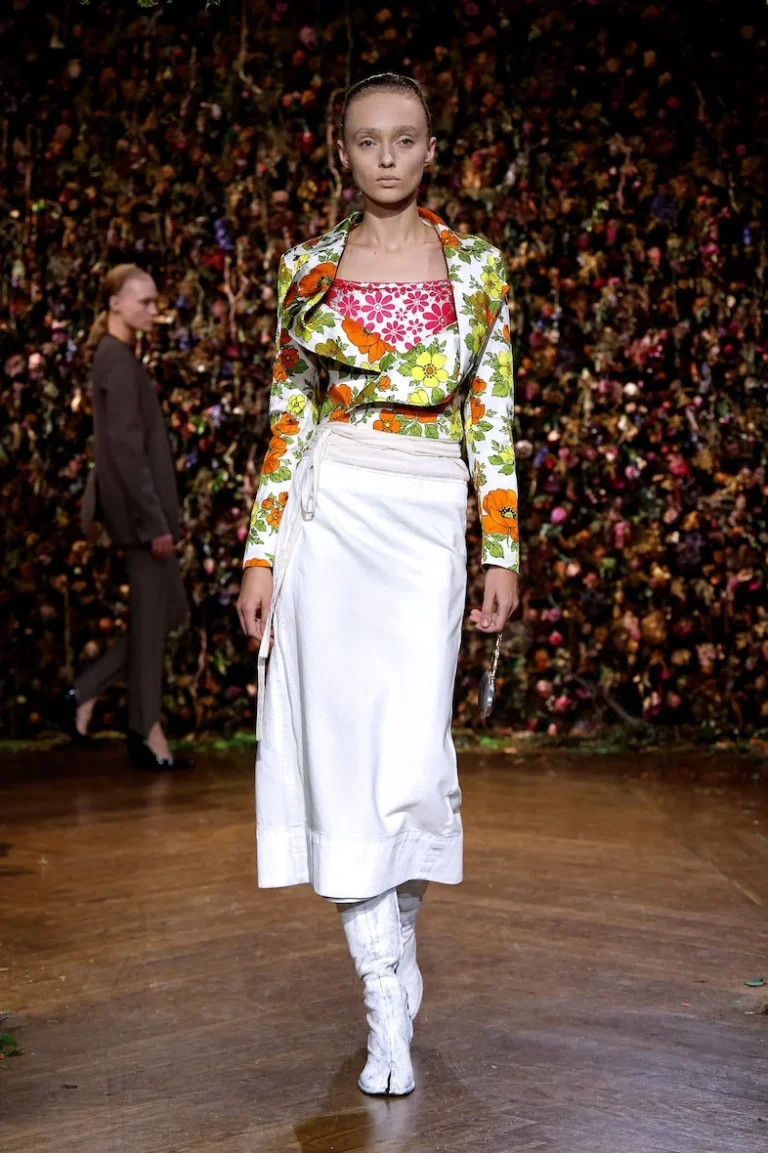
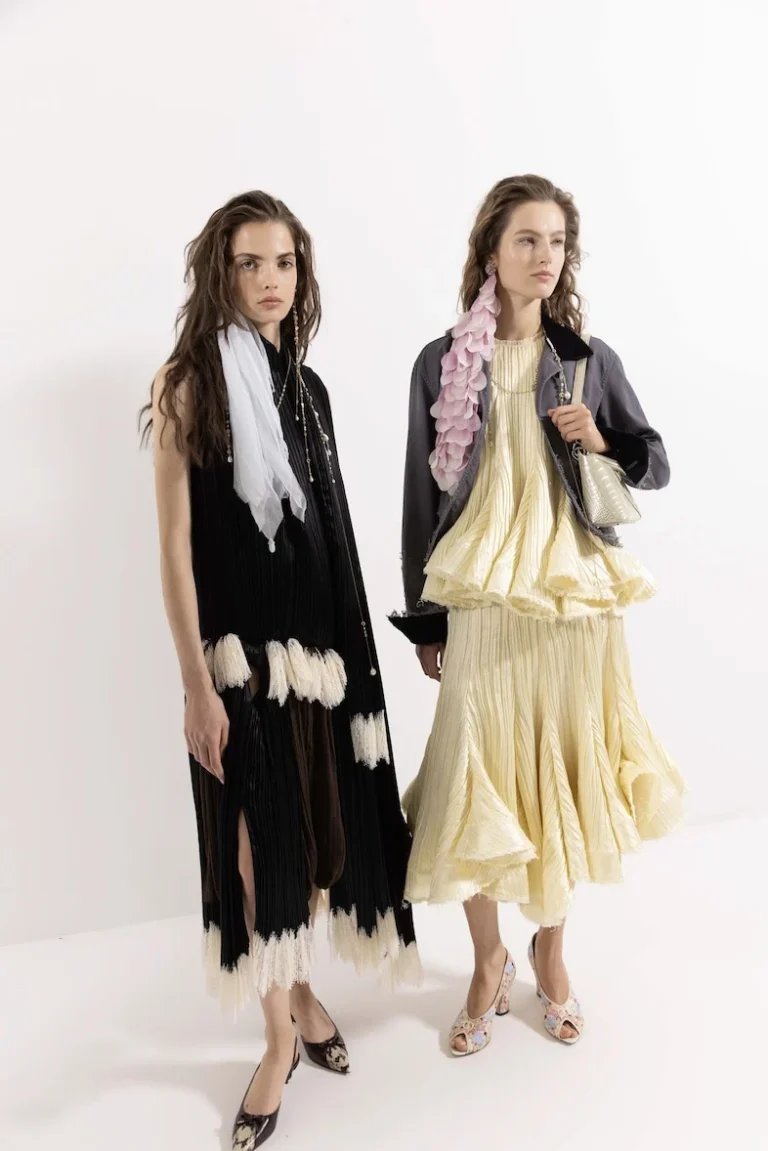
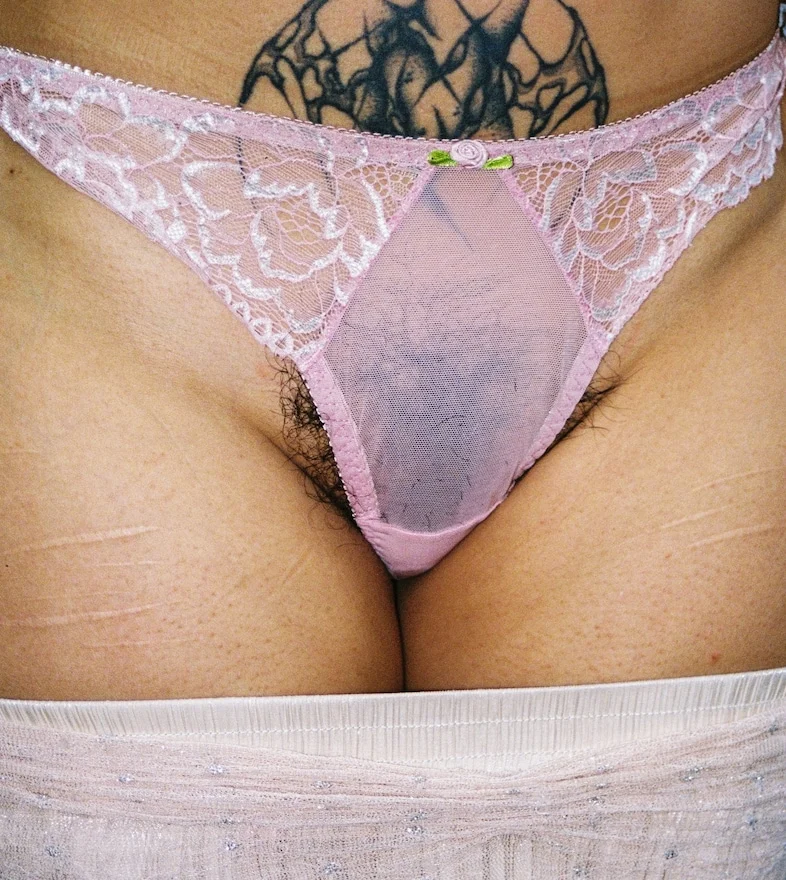
In recent years, the cultural pendulum has swung back toward visibility. The resurgence of pubic hair in contemporary culture became impossible to ignore beginning in 2024, appearing prominently on international runways during Maison Margiela’s Haute Couture collection under John Galliano. This physical revival quickly permeated digital spaces, sparking viral discourse on social media platforms under hashtags like "BushTok" and igniting broader conversations regarding the "full bush in a bikini" trend. Commercial entities rapidly capitalized on the cultural shift; notably, Kim Kardashian’s shapewear brand Skims introduced specialized "merkin" thong garments designed to embrace the aesthetic.
Industry professionals emphasize that the current focus on pubic hair represents a deeper questioning of modern bodily standards. Hair artist Yumiko Hikage notes that while social media, contemporary art, and fashion have successfully brought body hair back into the public eye, visibility does not automatically equate to absolute freedom. Hikage cautions that even natural body hair can quickly be co-opted to become yet another rigid beauty ideal that individuals feel pressured to maintain.
Broader Impact and Implications
An analysis of the historical trajectory of pubic hair standards demonstrates that discussions surrounding grooming are rarely just about the hair itself. Instead, they serve as barometers for deeper societal negotiations regarding bodily autonomy, reproductive rights, gender roles, and individual expression.
Whether examining medieval Europeans resisting contagion, 1970s feminists rejecting patriarchal control, or modern consumers navigating the digital landscape of social media trends, the management and display of the human body remain profoundly tied to cultural power structures. As contemporary society continues to reevaluate the necessity of adhering to fixed aesthetic templates, the ongoing discourse surrounding body hair highlights an enduring human desire for self-determination over one’s own physical form.