












The landscape of South Korean cinema has continually evolved over the past two decades, characterized by daring directorial visions, genre-defying narratives, and unprecedented critical acclaim on the global stage. Building upon this legacy of cinematic excellence, acclaimed filmmaker Na Hong-jin has returned with Hope, a monumental science fiction blockbuster widely reported to be the most expensive South Korean film ever produced. Spanning nearly three hours of relentless, high-octane spectacle, the feature blends explosive kinetic action with profound philosophical inquiries, positioning itself as a landmark release in contemporary international cinema. Following its high-profile premiere and subsequent refinements, the film bridges the gap between massive commercial entertainment and elevated arthouse storytelling, offering audiences an immersive cinematic experience designed specifically for the largest screens available.
Main Facts and Production Overview
At its core, Hope is an uncompromising sci-fi narrative that largely bypasses conventional, exposition-heavy backstories in favor of an immediate immersion into chaos. Set against the isolated backdrop of Hope Harbour—a fictionalized town situated near the heavily fortified South Korean Demilitarised Zone—the plot initiates with a series of unsettling local disturbances. Concerned residents begin discovering mutilated animal carcasses, shredded perimeter fences, and, most alarmingly, a human arm suspended from a tree branch.
These chilling discoveries soon give way to full-scale extraterrestrial mayhem. The visiting entities are depicted as blue, lanky, spindly organisms whose anatomical designs evoke a hybrid between a spiky oak tree and a biomechanical Xenomorph endowed with athletic musculature. Crucially, these creatures are brought to life through advanced motion-capture performances delivered by an internationally renowned ensemble cast featuring Michael Fassbender, Alicia Vikander, and Taylor Russell.
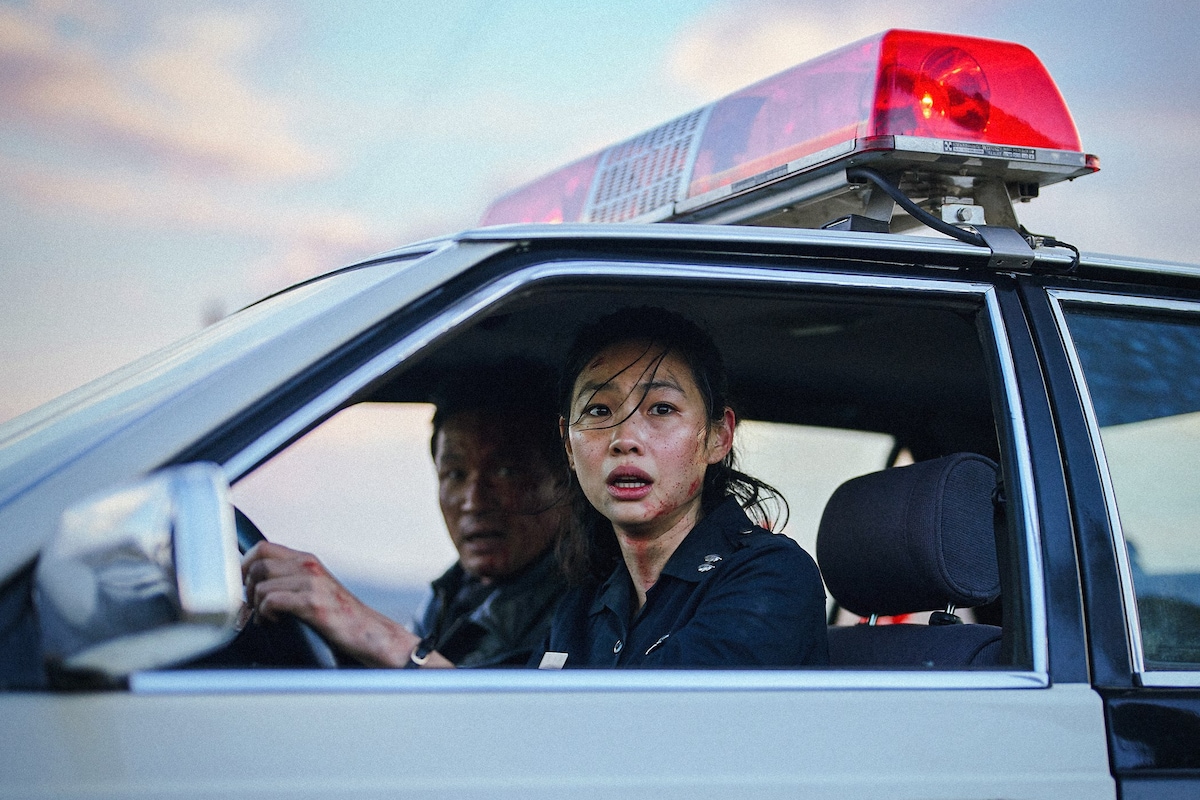
Despite the visceral violence and relentless pacing—which features high-speed vehicular pursuits, horseback action sequences, and chaotic highway shootouts—the film incorporates moments of sharp black comedy. Performances from actors such as Jung Ho-yeon (recognized for Squid Game) as policewoman Sung-ae, Zo In-sung as an amateur marksman, and octogenarian veteran actor Im Hyun-sik provide unexpected levity amid the apocalyptic tension. Furthermore, the film’s distinctive visual identity is anchored by cinematographer Hong Kyung-pyo, celebrated for his work on Parasite and Burning. Eschewing the traditional reliance on nocturnal darkness typical of creature features, Hong captures the carnage almost entirely in harsh, unforgiving daylight, heightening the surreal nature of the extraterrestrial invasion.
Chronology and Development of the Project
The journey of Hope to the international screen reflects Na Hong-jin’s meticulous, decades-long evolution as a master of genre filmmaking. Prior to embarking on this ambitious sci-fi epic, Na established his reputation as a premier Korean auteur with three consecutive features that premiered at the prestigious Cannes Film Festival: The Chaser (2008), The Yellow Sea (2010), and the critically lauded supernatural thriller The Wailing (2016).
The conceptualization of Hope began years prior to its theatrical rollout, originating from an expansive script that Na ultimately divided into two distinct halves.
- Early Development: Na penned a massive foundational manuscript exploring the dynamics between humanity and an otherworldly intelligence, recognizing that the scope required a multi-part narrative structure.
- Festival Premiere: Months ahead of its commercial release, Hope competed for the prestigious Palme d’Or at the Cannes Film Festival, where industry critics praised its technical ambition while noting initial imperfections in its computer-generated imagery.
- Post-Cannes Refinement: Responding directly to critical feedback regarding visual effects, the production team undertook a comprehensive overhaul of the CGI, ensuring the integration of digital entities with practical stunts met global blockbuster standards.
- Theatrical Release: The completed film made its scheduled debut in United Kingdom cinemas on September 25, setting a new benchmark for South Korean box-office investment and production value.
Supporting Data and Technical Achievements
As the costliest production in the history of the South Korean film industry, Hope represents a significant financial and artistic gamble. The capital investment is visible across every frame, balancing massive digital rendering with tangible, practical filmmaking techniques.
| Production Metric / Feature | Detail / Personnel Involved |
|---|---|
| Director & Writer | Na Hong-jin |
| Estimated Scale | Most expensive South Korean film in history |
| Runtime | Approximately three hours |
| Cinematographer | Hong Kyung-pyo (Parasite, Burning) |
| Principal Mo-Cap Cast | Michael Fassbender, Alicia Vikander, Taylor Russell |
| Supporting Cast | Jung Ho-yeon, Zo In-sung, Im Hyun-sik |
| Primary Setting | Hope Harbour, near the South Korean DMZ |
| Theatrical Release Date | September 25 (UK Cinemas) |
The technical execution relies heavily on the juxtaposition of flawless practical stunt work and expansive natural environments. The decision to shoot entirely in daylight presented unique technical challenges and advantages. According to production notes and director statements, abandoning traditional night shoots eliminated the need for complex artificial lighting setups, allowing the natural density of the Korean forests to serve as a stark territorial boundary between human civilization and the encroaching extraterrestrial threat.
Official Statements and Creator Intentions
In discussions surrounding the thematic underpinnings of the film, Na Hong-jin has consistently emphasized that Hope operates on multiple intellectual levels rather than functioning merely as a creature feature. Addressing the deliberate ambiguity of the extraterrestrial visitors, Na noted through an interpreter that the beings experience genuine fear and subsequent disappointment upon encountering Homo sapiens.
"These aliens – or otherworldly beings – have fear in meeting Homo sapiens, and then also disappointment," Na explained in late September. When exploring the mirror-like psychological dynamic between humans and the visitors—who communicate through alien linguistics and exhibit visible, human-like emotional expressions such as tears—Na clarified linguistic nomenclature: "To the visiting creatures, it’s the humans that are aliens, and therefore the word is irrelevant."
Furthermore, the film incorporates subtle theological motifs that reflect Na’s personal background. In the closing moments of the narrative, Vikander’s character, J’aur, delivers a striking line of dialogue: "Faith is evidence of what we do not see," a direct citation from the biblical Book of Hebrews. This thematic exploration of belief and unseen existence builds upon Na’s previous filmography, which frequently engaged with spiritual and religious frameworks, notably in The Wailing.
Elaborating on the broader mythology, Na revealed that the narrative scope extends far beyond the events depicted in the current runtime. "At the end, you see a spaceship falling. If you look closely in the sequel, the design of the spaceship is very ancient. Within it, there is an emperor," Na noted, outlining his vision for the continuation of the story. "From our human point of view, it could be a god that’s fallen in that spaceship. To the aliens, it might be their king, who they consider a god… I wanted to ask a question: when that disappears, how will the cosmic world go on?"
Broader Impact and Implications for the Industry
The release of Hope signals a transformative moment for the South Korean entertainment industry, demonstrating its capability to marshal Hollywood-tier budgets while retaining distinctive auteur-driven artistic sensibilities. By merging high-concept science fiction with localized geopolitical tensions—specifically utilizing the thematic shadow of the DMZ—the film transcends standard genre tropes to offer a commentary on division, communication barriers, and existential dread.
Industry analysts have observed that the financial risk undertaken by the production of Hope could pave the way for increased international co-productions and cross-cultural talent integration within Asian cinema. The utilization of western A-list actors performing motion-capture roles under the direction of an established Korean auteur exemplifies a growing globalization of production pipelines.
Moreover, Na’s confirmation that a sequel is already in active development—described as a darker, more aggressive tragedy focused primarily on the perspective of the extraterrestrial beings—ensures that Hope will not remain a standalone experiment. As the film completes its rollout across international theatrical markets, its commercial and critical performance will likely serve as a vital bellwether for the viability of mega-budget, uncompromisingly original science fiction in an era dominated by established intellectual properties.