








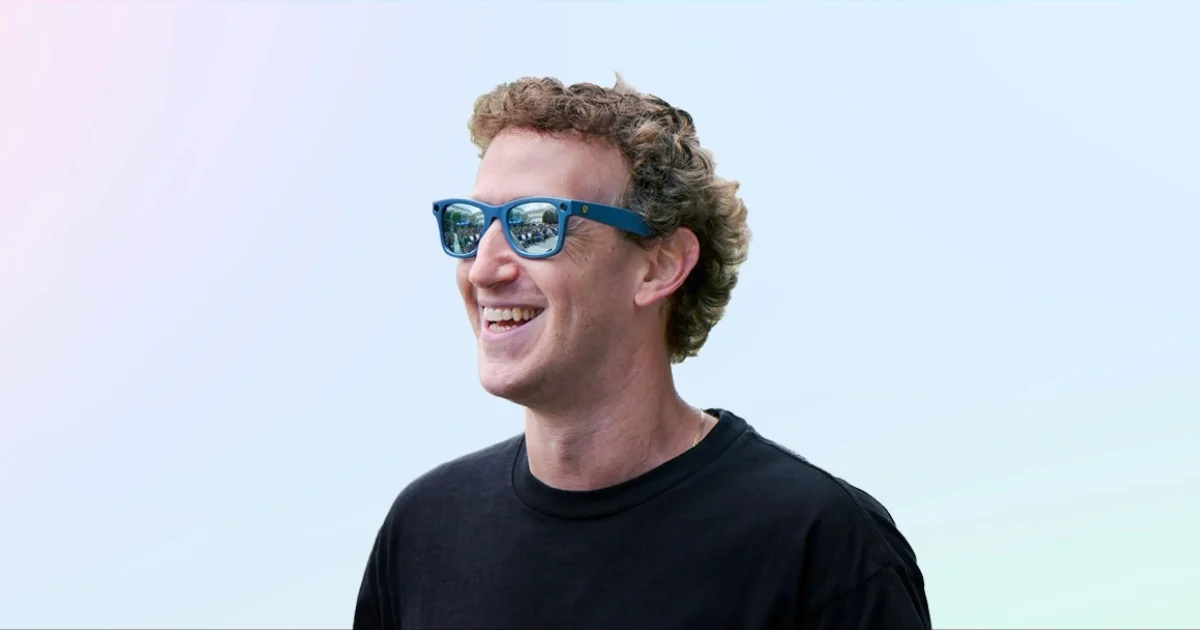
The intersection of high fashion and consumer technology appeared to draw closer this week as Meta Chief Executive Officer Mark Zuckerberg was spotted in the front row of Prada’s Fall/Winter 2026 Fashion Week presentation in Milan. Seated alongside Lorenzo Bertelli, Prada’s chief merchandising officer and son of head designer Miuccia Prada, Zuckerberg’s prominent presence at the high-profile industry event has intensified long-standing speculation that Meta is preparing to introduce a luxury-branded tier of its popular Meta AI smart glasses.
While the technology executive has undergone a visible personal rebranding in recent years—frequently showcasing a more contemporary wardrobe and relaxed public profile—industry analysts suggest that his appearance in Milan was strategic rather than purely aesthetic. The sighting arrives amid mounting reports that Meta is actively expanding its hardware portfolio to encompass luxury design partnerships, leveraging its manufacturing relationships to bridge the gap between everyday utility and high-end couture.
The Evolution of Meta’s Smart Eyewear Ecosystem
Meta’s push into smart eyewear began with initial iterations under the Ray-Ban Stories banner, developed in partnership with EssilorLuxottica, the prominent French-Italian multinational eyewear corporation and maker of Ray-Ban. What initially started as a modest experimental product has rapidly evolved into a commercial powerhouse.
Earlier this month, EssilorLuxottica reported a massive surge in market adoption, announcing that global sales of Meta AI glasses surpassed 7 million units in 2025 alone. This figure represents a dramatic increase from the roughly 2 million units sold during the previous year. The robust sales figures encompass both the ubiquitous Ray-Ban Meta frames and the recently introduced Oakley Meta line, which is tailored specifically toward athletes and active lifestyle consumers.
By incorporating specialized frames for distinct consumer segments, Meta and EssilorLuxottica have successfully dismantled the historical stigma associated with wearable facial technology. However, a noticeable gap remains within the ultra-luxury and high-fashion demographic—a niche that a potential collaboration with Prada aims to fill.
The Business Case for a Prada Collaboration
Rumors regarding a potential Prada AI smart glasses line first surfaced publicly last summer, though Meta has continuously declined to confirm the development pipeline. Industry analysts note that a partnership between Meta and Prada is a logical next step, particularly given the existing commercial ties between Prada Group and EssilorLuxottica.
The two luxury entities recently renewed their long-term licensing agreement for eyewear spanning the Prada and Miu Miu brands. The renewed contract ensures an extended partnership through December 31, 2030, with an option for further renewal extending to December 31, 2035. Because EssilorLuxottica acts as the foundational manufacturing bridge between Meta and traditional eyewear houses, integrating Prada into the smart glasses ecosystem represents a seamless operational transition.
From a branding perspective, introducing a Prada-branded variant of the Meta AI glasses would afford the social media conglomerate a coveted foothold in high-end retail markets. Positioning smart glasses as an aspirational luxury symbol could fundamentally alter consumer perception, elevating the device from a mere gadget to a staple fashion accessory.
A Chronology of Wearable Technology and Strategic Partnerships
To understand the trajectory of Meta’s current hardware strategy, it is helpful to examine the chronological development of its smart eyewear initiatives:
- September 2021: Meta, then operating under its former corporate identity of Facebook, partners with EssilorLuxottica to launch the first-generation Ray-Ban Stories, focusing primarily on capturing photos and recording short videos.
- September 2023: Meta announces the second-generation Ray-Ban Meta smart glasses, integrating advanced multimodal AI capabilities, live-streaming features, and voice-activated assistance.
- June 2025: Industry reports emerge indicating that Meta is actively expanding its collaborative framework to include additional luxury and sports brands, specifically targeting Oakley and Prada.
- June 2025: Meta officially unveils the Oakley Meta smart glasses, designed to capture athletic markets with ruggedized frames and performance-oriented ergonomics.
- December 2025: EssilorLuxottica and Prada Group officially finalize the extension of their eyewear licensing agreement, securing manufacturing terms through the next decade.
- February 2026: EssilorLuxottica reports that annual sales of Meta-powered AI glasses reached over 7 million units for the 2025 fiscal year, reflecting a tripling of previous-year volume.
- February 2026: Mark Zuckerberg attends Prada’s Fall/Winter Fashion Week show in Milan, sitting next to luxury executives and fueling widespread speculation of an impending product announcement.
Privacy Concerns and Consumer Backlash Amid Tech Expansion
Despite the undeniable commercial success of Meta’s hardware division, the brand’s rapid expansion into AI-driven wearable technology is navigating an increasingly hostile public relations environment regarding consumer privacy.
The introduction of ubiquitous recording and computing devices has coincided with a broader global backlash against surveillance technology. In recent months, public frustration has manifested in physical resistance, with consumers dismantling or destroying domestic surveillance infrastructure, including Ring doorbell cameras and Flock automated license plate reading cameras across various municipalities.
This growing societal weariness regarding continuous surveillance has begun to cast a shadow over Meta’s hardware ambitions. Recent reports from outlets such as The New York Times indicate that Meta is actively planning to integrate facial-recognition capabilities into its smart glasses. The prospect of consumers walking through public spaces with facial-recognition-enabled recording devices has drawn sharp criticism from privacy advocates, civil liberties organizations, and everyday citizens alike.
The controversy has already prompted a grassroots technological counter-movement. Independent developers have recently released specialized mobile applications designed to scan local environments and warn users if nearby individuals are wearing active AI-powered smart glasses. These developments highlight the mounting tension between consumer demand for advanced personal technology and the fundamental right to public anonymity.
Strategic Implications and Market Outlook
Meta now faces a delicate balancing act as it contemplates the formal introduction of luxury-tier smart eyewear. On one hand, aligning with a prestigious fashion house like Prada offers an unprecedented opportunity to normalize wearable technology within elite cultural circles, driving adoption among demographics that traditionally shun consumer electronics.
On the other hand, associating high-fashion aesthetics with a device increasingly scrutinized for privacy invasions could amplify regulatory scrutiny and public pushback. As lawmakers around the world examine the legal boundaries of biometric data collection and public recording, Meta’s hardware division must navigate consumer trust just as carefully as supply chain logistics.
To date, Meta has not issued an official statement regarding Mark Zuckerberg’s presence in Milan, nor has the company confirmed a definitive timeline for the release of Prada-branded smart glasses. However, as the technological and fashion industries continue to converge, the formal unveiling of a luxury AI eyewear line appears increasingly inevitable—bringing with it both lucrative commercial prospects and profound societal questions about the future of personal privacy.