











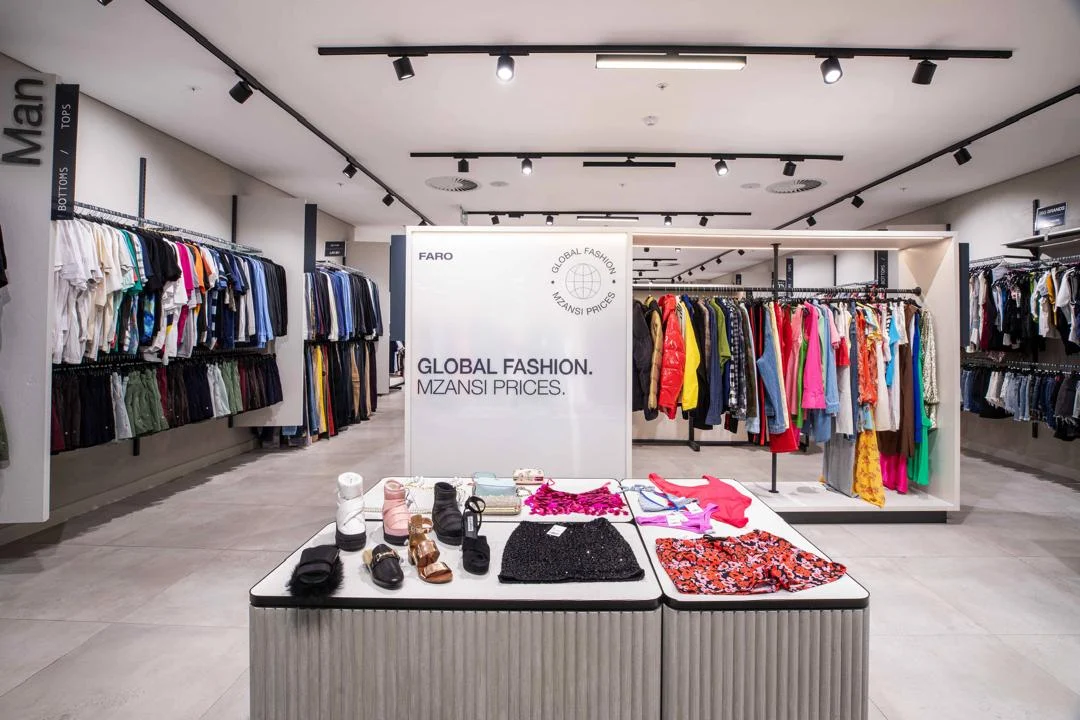
The global fashion industry is currently grappling with an unprecedented inventory crisis, characterized by billions of dollars in unsold merchandise sitting in warehouses across Europe and North America. This surplus has created a systemic challenge for major brands, which often resort to incineration or landfilling to protect brand equity and prevent market cannibalization in their primary territories. Amidst this backdrop of waste, FARO, a South African-based startup, has emerged with a disruptive "recommerce" model designed to bridge the gap between Western oversupply and the burgeoning demand for high-quality, affordable apparel in emerging markets. The company recently announced it has successfully raised $6 million in a seed funding round to accelerate its expansion and refine its proprietary technology.
The funding round was led by JP Zammitt, President of Bloomberg, with significant participation from prominent venture capital firms including Presight Capital, Gharage Ventures, and E4E Africa. A diverse group of individual investors also joined the round, including Mato Perić (MPGI), Leonard Stiegeler (Pulse), Oliver Merkel (Flink), Vikram Chopra (Cars24), Tushar Ahluwalia (Razor Group), Sudeep Ramnani (885 Capital), and Kresten Buch (88mph). This influx of capital marks a significant milestone for FARO, which seeks to transform the traditional retail landscape by leveraging artificial intelligence and a circular economy approach.
The Global Inventory Glut and the African Dilemma
The fashion industry is responsible for approximately 10% of global carbon emissions and is a major contributor to environmental degradation. A significant portion of this impact stems from the "take-make-waste" model. Current estimates suggest that global fashion brands are holding record levels of unsold inventory. For instance, companies like ASOS have recently reported substantial losses attributed to the cost-of-living crisis and the subsequent buildup of discounted stock. Historically, brands have been reluctant to offload this inventory in their core markets like the United Kingdom or the United States, fearing that doing so would devalue their premium positioning and eat into full-price sales.
Simultaneously, emerging markets, particularly in Africa, have long relied on the "mitumba" or secondhand clothing trade. While this provides affordable options for millions, the system is fraught with inefficiency and environmental hazards. Data indicates that between 30% and 40% of secondhand clothing imports arriving in African ports are unusable or unsellable due to poor quality or damage. These items often end up in massive, unauthorized landfills or are burned, leaching chemicals into the soil and atmosphere.
FARO’s entry into the market addresses this paradox. By providing a structured, high-value alternative to the chaotic secondhand market, the startup aims to provide authentic branded products—such as those from Zara, Tommy Hilfiger, Levi’s, and Calvin Klein—to consumers who desire these labels but lack the economic capacity to purchase them at traditional retail prices.
FARO’s Strategic Arbitrage: Turning Waste into Value
At its core, FARO operates on a sophisticated arbitrage model. The company targets two specific types of inventory: overstock and consumer returns. Consumer returns are particularly problematic for brands; many items are returned with minor defects—a missing button, a loose thread, or a slight smudge—that make them unfit for full-price shelves. In developed economies, the labor cost required to inspect, clean, and repair these items often exceeds the potential resale value, leading brands to discard them.
FARO intervenes by purchasing this inventory at ultra-low prices, sometimes for as little as £1 per garment. The company then transports these items to its specialized facilities in South Africa, where it leverages more affordable local labor and industrial-grade infrastructure. These facilities are equipped with steam tunnels, industrial laundries, and repair stations designed to restore items to a "like-new" condition.
David Torr, co-founder and co-CEO of FARO, explains that the business operates on a disciplined fixed-margin model. The company targets a 45% margin after accounting for all operational costs, including logistics, processing, and re-tagging. "Our fundamental belief is if we can be the most exciting driver of great value for the customer, that is how we create loyalty and stickiness," Torr stated. By keeping margins stable, the company can pass significant savings to the consumer, often offering premium brands at discounts of up to 70% off their original retail price.
The Role of Artificial Intelligence in Off-Price Retail
One of the primary reasons global off-price giants like TJX (parent company of TJ Maxx) have remained largely offline is the sheer complexity of managing "single-item" inventory. Unlike traditional retail, where a store might receive 1,000 identical shirts, an off-price retailer deals with thousands of unique items, each requiring individual processing, pricing, and tracking.
FARO aims to solve this through the deployment of AI-powered agents. Torr notes that many major brands still rely on massive teams—sometimes exceeding 15,000 employees—who manually manipulate inventory data using legacy spreadsheet software like Excel. This manual process is slow, prone to error, and expensive.
"We’ve started deploying our first buy models that can do this—not in a matter of hours, but in a matter of seconds," Torr said. These AI agents are designed to break down complex buyer workflows into micro-tasks, streamlining the procurement and manifest management process. This technological edge allows FARO to maintain a lean operation while handling a highly fragmented inventory mix. Furthermore, the startup plans to introduce personalized shopping tools that notify customers when specific brands or styles arrive at their local store, bridging the gap between the treasure-hunt experience of off-price retail and the convenience of modern e-commerce.
Chronology of Growth and Performance
FARO’s trajectory since its inception has been marked by rapid scaling and proof-of-concept validation:
- Early 2023: FARO launched as an experimental pop-up store in South Africa. The initial trial was designed to test consumer appetite for reconditioned branded goods. The store generated $100,000 in its first month, far exceeding internal projections.
- Mid-2023: Based on traditional retail benchmarks, the founding team—which includes veterans from Amazon, Jumia, and Takealot—estimated they would need seven physical locations to reach an annual revenue run rate of $2 million.
- Late 2023: The company surpassed its targets with higher efficiency than expected. With only four stores operational in urban hubs and mid-market centers, FARO achieved $2.3 million in revenue, representing 20x growth over the calendar year.
- 2024: Following the $6 million capital injection, the company is targeting a fivefold increase in revenue. The inventory mix has stabilized at approximately 40% reconditioned returns and 60% brand overstock.
Market Context and Competitive Landscape
South Africa represents a unique entry point for FARO. Unlike many other African nations where retail is fragmented and informal, South Africa possesses a highly developed formal retail sector with over 2000 shopping centers. This infrastructure provides the ideal environment for a physical off-price model.
However, the landscape is becoming increasingly competitive. The rise of ultra-fast fashion platforms like Shein and Temu has disrupted price-sensitive markets globally. These platforms offer trendy, low-cost apparel that appeals to the same demographic FARO targets. FARO’s counter-strategy relies on the "aspirational" value of established global brands. While a consumer can buy a generic trendy item from Temu, FARO offers the status and perceived quality of a brand like G-Star or Levi’s at a comparable price point.
Furthermore, the logistics of e-commerce in Africa remain a significant hurdle. High delivery costs and lower population density in certain areas make the "last-mile" delivery model difficult to sustain profitably. By focusing on physical stores in high-traffic urban areas, FARO avoids the logistical pitfalls that have hampered the growth of pure-play e-commerce platforms like Jumia and Takealot.
Broader Impact and the Road to 1,000 Stores
The long-term vision for FARO is nothing short of a global overhaul of the off-price market. Torr and his co-founders—Will McCarren, Chris Makhanya, and Amber Penney-Young—aim to scale the brand to 1,000 stores over the next decade. This expansion plan extends beyond South Africa, eyeing other emerging markets in South America, Asia, and the Middle East.
The success of this expansion will depend on FARO’s ability to localize its "price profiles." Consumer preferences in Lagos, Nigeria, differ significantly from those in Nairobi, Kenya, or Johannesburg, South Africa. The company’s AI models will need to ingest regional data to ensure that the inventory sent to each market aligns with local demand and cultural nuances.
From an environmental perspective, FARO’s model offers a blueprint for a more sustainable fashion ecosystem. By extending the lifecycle of garments that would otherwise be destroyed, the company contributes to a reduction in the industry’s total waste output. It also provides a formal, tax-paying alternative to the informal secondhand trade, potentially creating thousands of jobs in logistics, reconditioning, and retail management across the continent.
As the global fashion industry faces increasing pressure from regulators and consumers to address its waste problem, startups like FARO provide a commercially viable solution that turns a logistical nightmare—unsold inventory—into a scalable retail opportunity. The $6 million investment serves as a vote of confidence in the belief that the future of fashion is not just about what is new, but about how we intelligently redistribute what already exists.