









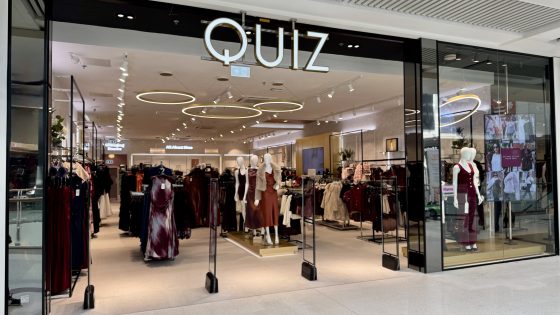
Scottish fashion retailer Quiz is set to cease all physical retail operations, with its remaining 20 stores scheduled to close permanently by the close of business on Saturday, June 20, 2026. The definitive move marks the end of an era for the fast-fashion brand’s high street presence, as confirmed by Drapers. This final wave of closures follows a protracted period of financial restructuring, declining footfall, and a strategic pivot towards its online channels. The decision impacts approximately 300 employees across the UK, though the company has indicated efforts to redeploy a portion of its workforce within its digital operations and distribution network where possible. The announcement underscores the relentless pressures faced by traditional brick-and-mortar fashion retailers in an increasingly digital-first and economically challenging landscape.
The Genesis and Evolution of Quiz
Quiz, founded in 1993 in Glasgow, rapidly established itself as a prominent player in the affordable fast-fashion market. Catering primarily to young women, its business model revolved around quickly translating runway trends into accessible, budget-friendly garments, often featuring occasionwear, dresses, and party attire. The brand’s initial success was fueled by its agility in supply chain management, allowing it to respond swiftly to evolving consumer tastes and social media trends. By the early 2010s, Quiz had expanded significantly, opening numerous stores in prime retail locations across the UK and Ireland, and venturing into international markets through concessions and wholesale partnerships. Its distinctive product range, often characterized by vibrant colours, embellishments, and contemporary designs, resonated with a demographic seeking stylish yet affordable options for social events and nights out. The company also successfully leveraged the burgeoning e-commerce trend, launching its transactional website and integrating social media into its marketing strategy, which initially complemented its physical store footprint.
A Chronology of Retail Decline
The journey to Saturday’s complete store shutdown has been a gradual and often challenging one for Quiz, mirroring the broader struggles of the UK high street. The first significant signs of distress emerged in the late 2010s, as the retail landscape began to fundamentally shift. Increased competition from pure-play online retailers, coupled with rising operational costs such as rent and business rates, started to erode profitability for many traditional fashion brands.
- Pre-Pandemic Headwinds (2018-2019): Even before the global health crisis, Quiz reported declining in-store sales and mounting pressure on margins. Footfall in shopping centres and high streets was already in decline, and consumer spending habits were increasingly favouring online platforms. The brand issued several profit warnings during this period, signaling the need for strategic adjustments.
- The 2020 CVA and Initial Store Closures: The COVID-19 pandemic acted as a major accelerant for existing retail woes. With forced store closures during national lockdowns, Quiz’s physical retail segment faced unprecedented disruption. In June 2020, the company initiated a Company Voluntary Arrangement (CVA) for its subsidiary, Kast Retail Limited, which operated its 82 standalone stores. This restructuring plan allowed Quiz to exit unprofitable leases and negotiate rent reductions. As a direct result of the CVA, 11 stores were immediately closed, and 93 jobs were cut, with the remaining stores transitioning into a new subsidiary, Zandra Retail Limited. This move was explicitly designed to safeguard the core business and provide a leaner, more sustainable store portfolio.
- Post-Pandemic Challenges (2021-2024): Despite the CVA, the retail environment remained harsh. The anticipated post-lockdown boom in high street shopping did not fully materialize, as many consumers had permanently shifted their purchasing habits online. Inflationary pressures, the cost-of-living crisis, and rising energy costs further squeezed disposable incomes, impacting demand for discretionary fashion items. Quiz continued to grapple with lower footfall, increased returns from online sales, and intense price competition. Several more rounds of store closures, often discreetly executed as leases expired or performance targets were not met, gradually reduced the store count to the current 20. These incremental shutdowns reflected an ongoing strategic reassessment, ultimately culminating in the decision to fully exit physical retail.
- The Final Chapter (June 2026): The announcement to close all remaining stores by June 20, 2026, represents the culmination of this multi-year strategic realignment. It signifies a decisive move to consolidate resources and focus entirely on the brand’s online presence, which has shown greater resilience and growth potential.
Supporting Data and Broader Retail Context
The demise of Quiz’s physical store estate is not an isolated incident but rather a stark reflection of wider structural changes within the UK retail sector. Data from the British Retail Consortium (BRC) consistently shows a decline in high street footfall, with figures for 2025 indicating an average 8% drop compared to pre-pandemic levels. Simultaneously, online retail penetration continues to grow, now accounting for approximately 27% of all retail sales, up from around 19% in 2019.
The fashion sector, in particular, has been profoundly impacted. According to industry analysis, over 10,000 fashion retail jobs have been lost in the UK since 2020, and the number of vacant retail units has climbed to over 14%, reaching a ten-year high in some regions. Brands like Topshop, Debenhams, and Dorothy Perkins, once high street titans, have either disappeared entirely from physical spaces or transitioned exclusively to online models under new ownership. This phenomenon is driven by several factors:
- Consumer Behaviour Shift: Shoppers increasingly value convenience, choice, and competitive pricing offered by e-commerce. The "showrooming" effect, where customers browse in-store but purchase online, has also contributed to the decline in physical store sales.
- Operating Costs: High rents, business rates, rising utility costs, and increasing minimum wage requirements have made physical store operations prohibitively expensive for many retailers, especially those in the mid-market segment.
- Supply Chain Disruptions: Global events have highlighted vulnerabilities in supply chains, impacting stock availability and increasing logistics costs, further squeezing margins for fast-fashion retailers reliant on rapid turnaround.
- Sustainability Concerns: There is a growing consumer awareness and demand for sustainable practices. While fast fashion has traditionally thrived on high volume and low prices, the environmental impact of this model is increasingly scrutinized, pushing some consumers towards more ethical or second-hand options.
- Economic Headwinds: Persistent inflation, interest rate hikes, and the cost-of-living crisis have reduced discretionary spending. Consumers are prioritizing essential goods, leading to a contraction in the fashion market, particularly for non-essential occasionwear, which was a core offering for Quiz.
In its last publicly available financial reports, Quiz had consistently reported declining in-store revenues, offset partially by growth in its online division. For instance, in the fiscal year ending March 2025, while total group revenue might have seen a marginal decline of 3-5%, its online sales typically demonstrated an upward trajectory, albeit not enough to compensate for the significant downturn in physical retail. This divergence in performance has undoubtedly underpinned the strategic shift to a purely digital model.
Inferred Statements and Industry Reactions
While Quiz has yet to issue a full public statement beyond the internal communication confirming the closures, industry observers anticipate a formal announcement detailing the rationale.
A spokesperson for Quiz, speaking on condition of anonymity due to the ongoing sensitive nature of staff consultations, is understood to have conveyed: "This has been an incredibly difficult decision, but a necessary one to ensure the long-term viability and success of the Quiz brand. The retail landscape has fundamentally transformed, and while our high street stores have served us well for many years, the economic realities and evolving consumer preferences have made it clear that our future lies predominantly online. We extend our deepest gratitude to all our store colleagues for their dedication and hard work over the years. We are actively working to support those affected, exploring redeployment opportunities within our growing online and distribution operations, and providing comprehensive outplacement support."
Retail analysts have largely viewed the news as an inevitable, albeit regrettable, development. Sarah Jenkins, a senior retail analyst at Paragon Insights, commented: "Quiz’s decision is symptomatic of a broader trend. Many mid-market fashion retailers, particularly those reliant on occasionwear, have struggled to adapt to the post-pandemic reality. Their physical stores, once assets, became liabilities due to high overheads and declining footfall. The brand’s strength has always been its agility and its strong online presence, so this strategic pivot, while painful for employees and the high street, makes commercial sense in the current climate. It allows them to shed significant costs and focus resources on what is working."
Mark Thompson, CEO of the Retail Futures Institute, added: "The high street is increasingly becoming a destination for experiential retail or flagship stores for luxury brands. For value-driven fast fashion, the convenience and efficiency of online shopping often outweigh the physical store experience. Quiz’s move highlights the need for retailers to be brutally honest about their operating models and to adapt quickly. We are likely to see more brands making similar decisions in the coming years, further reshaping our town centres."
The affected employees are, naturally, at the forefront of concerns. Retail unions have expressed disappointment at the job losses but acknowledged the challenging environment. "Any job losses are a blow to individuals and local communities," stated a representative from the Union of Retail Workers. "We urge Quiz to ensure that all affected staff receive full support, including fair redundancy packages and assistance in finding new employment."
Broader Impact and Implications
The complete withdrawal of Quiz from the physical retail landscape carries several significant implications for the UK high street, the fashion industry, and consumer behaviour.
- Further High Street Erosion: The closure of 20 more retail units, particularly in prominent shopping centres and high streets, will exacerbate the issue of vacant premises. While these units may eventually be filled, the trend contributes to the overall decline in vibrancy and diversity of traditional shopping districts. Local economies will feel the impact of reduced business rates, decreased footfall for neighbouring businesses, and job losses.
- Consolidation in Fashion Retail: This move signifies a further consolidation within the fast-fashion segment, pushing more sales towards dominant online players and those with highly differentiated physical store experiences. Brands that cannot justify their physical footprint through strong sales, unique in-store experiences, or high brand loyalty will continue to struggle.
- The Future of Occasionwear: Quiz’s strength in occasionwear was a double-edged sword. While it provided a niche, demand for such items can be highly seasonal and susceptible to economic downturns. The shift to online-only for this segment might signify a broader trend where consumers are more comfortable purchasing such items digitally, perhaps with generous return policies, rather than relying on in-store fittings.
- Increased Competition Online: While Quiz’s online operations have shown resilience, the e-commerce landscape is intensely competitive. The brand will now face heightened pressure from pure-play giants like ASOS, Boohoo, and Shein, as well as department stores and other fashion retailers with strong online presences. Success will depend on continued investment in digital marketing, efficient logistics, a compelling product offering, and a seamless customer experience.
- Job Market Impact: The loss of approximately 300 retail jobs, while not catastrophic on a national scale, adds to the cumulative impact of ongoing retail redundancies. It highlights the need for reskilling initiatives and support for workers transitioning from traditional retail roles to other sectors or into e-commerce-focused positions.
- Environmental Considerations: A complete shift to online retail, while reducing the carbon footprint associated with physical stores, may increase the environmental impact of last-mile delivery and returns. How Quiz manages its logistics and packaging will be crucial for its sustainability credentials in an increasingly eco-conscious market.
In conclusion, Quiz’s decision to shutter all its remaining physical stores by June 20, 2026, is a stark testament to the profound and irreversible changes reshaping the retail industry. It represents a pragmatic adaptation to a challenging economic climate and an undeniable shift in consumer behaviour towards digital platforms. While the immediate impact will be felt by the affected employees and the high streets losing another established brand, the move is a strategic attempt to secure the long-term future of Quiz as an online-focused fashion retailer. It underscores the evolving definition of retail success in the 21st century, where agility, digital prowess, and a deep understanding of the modern consumer are paramount.