








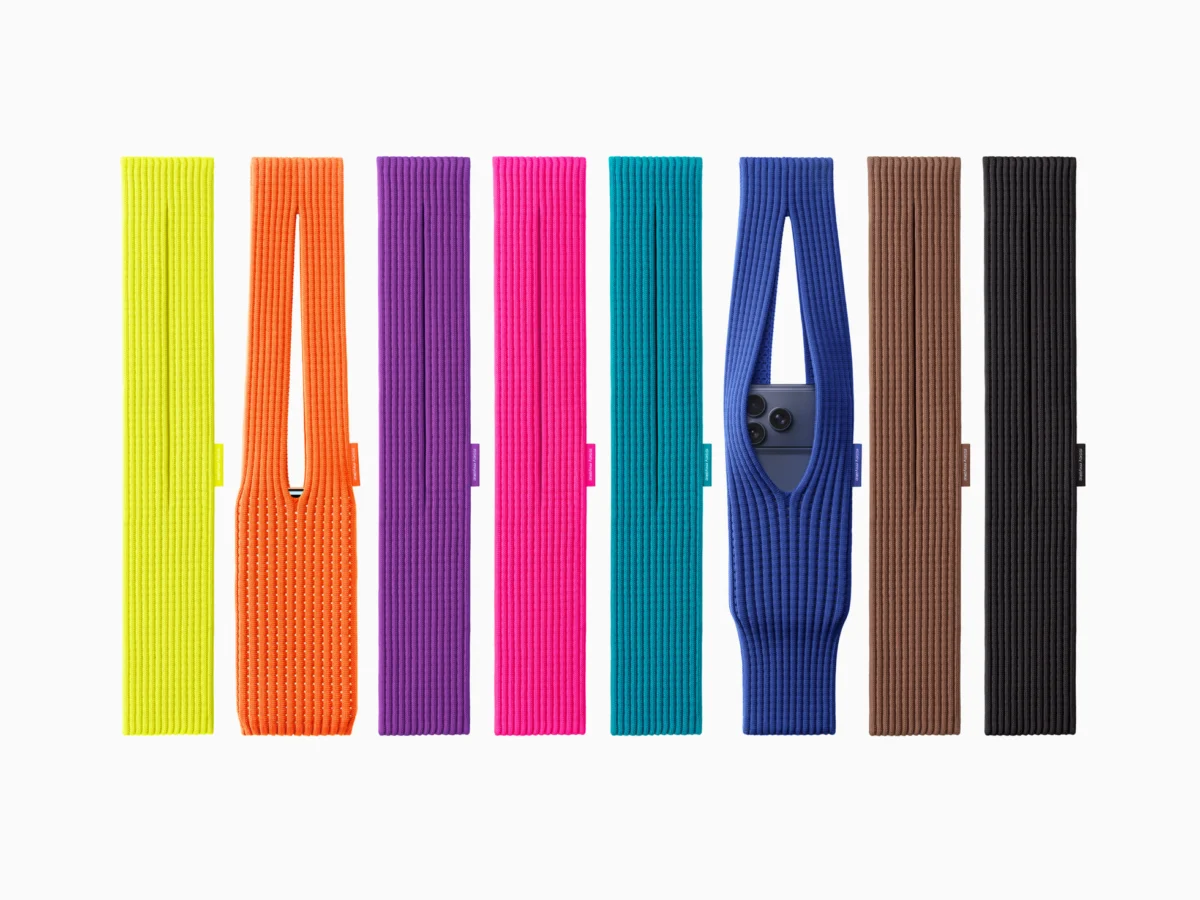
Apple Inc. has expanded its accessory ecosystem through an unexpected collaboration with the renowned Japanese fashion label Issey Miyake. The newly introduced iPhone Pocket is a limited-edition fabric sling designed to house Apple’s flagship smartphone. Retailing at $149.95 for the short variant and $229.95 for the long, crossbody iteration, the product merges high fashion with consumer electronics. While the pricing has drawn immediate scrutiny from consumer technology analysts, the release is deeply rooted in decades of design philosophy, minimalist aesthetics, and the evolving intersection of personal accessories and mobile hardware.
Product Specifications and Market Positioning
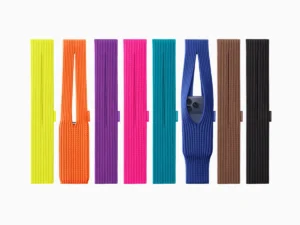
The iPhone Pocket is constructed from a single continuous piece of fabric, utilizing a ribbed mesh structure that incorporates the signature pleating techniques pioneered by Issey Miyake. According to official product documentation provided by Apple, the textile is engineered to stretch, allowing users to view notifications and interact with the device’s display while the phone remains inside the enclosure.
The product is available in two distinct form factors targeting different consumer behaviors:
- The Short Size ($149.95): Designed for handheld use or attachment to larger carryalls, offering a compact profile and a wider array of color choices.
- The Long, Crossbody Size ($229.95): Built for hands-free wear, available in a more limited palette of three neutral tones, leaning directly into the growing consumer preference for wearable tech accessories.
This release follows Apple’s previous ventures into high-margin luxury accessories, most notably the $19 polishing cloth and the company’s proprietary $59 crossbody strap released earlier in the year. By partnering with a globally recognized fashion house, Apple is signaling a deliberate strategy to position its hardware not merely as utilitarian electronics, but as integral components of personal style and lifestyle branding.

Historical Context: The Convergence of Apple and Issey Miyake
The philosophical alignment between Apple and the Issey Miyake brand is not a recent development; it spans several decades and is fundamentally linked to the historical relationship between Apple co-founder Steve Jobs and the late designer Issey Miyake.
In the early 1990s, Steve Jobs visited a Sony factory in Japan and observed employees wearing corporate uniforms. Inspired by the sense of community and streamlined aesthetic, Jobs sought to implement a similar standard for Apple employees. He approached Issey Miyake to design a corporate uniform. While Apple’s workforce ultimately rejected the idea of standardized daily attire, Jobs personally resonated with Miyake’s work.
This interaction led to a lasting friendship and the creation of Jobs’ iconic personal uniform—the black mock-neck shirt that became synonymous with his keynote presentations. Miyake, who passed away in August 2022, revolutionized the fashion industry in 1997 with the introduction of his APOC ("A Piece Of Cloth") concept. The initiative aimed to produce garments from a single continuous roll of fabric using advanced industrial knitting technology, drastically minimizing textile waste while maximizing structural integrity.
Although Issey Miyake did not personally design the iPhone Pocket prior to his passing, the product directly utilizes the APOC philosophy and signature pleating methodologies established by his design house, bridging the gap between historical tech minimalism and modern wearable accessories.
The Rise of Wearable Tech and Micro-Accessories
The launch of the iPhone Pocket arrives amid a broader consumer cultural shift toward hyper-accessorization and micro-bags. Over the past several years, the market has seen explosive demand for functional accessories that personalize everyday items.

The trend encompasses various sectors of the retail market:
- Bag Charms and Collectibles: The massive commercial success of art toys such as Pop Mart’s Labubu demonstrates consumer willingness to invest significant capital into decorative attachments for primary accessories like handbags and backpacks.
- Drinkware Customization: The viral trend of accessorizing Stanley and Yeti tumblers with secondary pouches, straps, and charms has created an entire sub-economy of add-on products.
- Micro-Bags: Mainstream fashion brands, including Baggu, Lululemon, and Free People, have experienced sustained high demand for miniature versions of their flagship totes, often utilized exclusively to carry mobile devices and payment cards.
Furthermore, advancements in mobile technology have reduced consumer reliance on traditional carryalls. With the ubiquity of contactless Tap to Pay systems, digital boarding passes, mobile identification, and smart-home entry integrations, many consumers routinely leave their residences with only a smartphone. As a result, industrial designers are increasingly treating the smartphone itself as the primary item requiring a dedicated carrier, rather than a traditional wallet or purse.
Industry Implications and Expert Analysis
Market analysts view the Issey Miyake iPhone Pocket as a calculated experiment in brand halo effects rather than a mass-market utility product. By entering the luxury accessory tier, Apple continues to test the boundaries of how far consumer hardware brands can penetrate the traditional fashion space.
While critics point to the steep price point relative to standard protective cases and utility straps, proponents argue that the product occupies the same cultural space as designer phone charms, luxury keychains, and limited-edition streetwear collaborations. Whether the iPhone Pocket achieves cultural ubiquity or remains a niche collector’s item for fashion enthusiasts, the collaboration underscores a permanent shift: consumer technology and high-end fashion are increasingly speaking the same design language.