











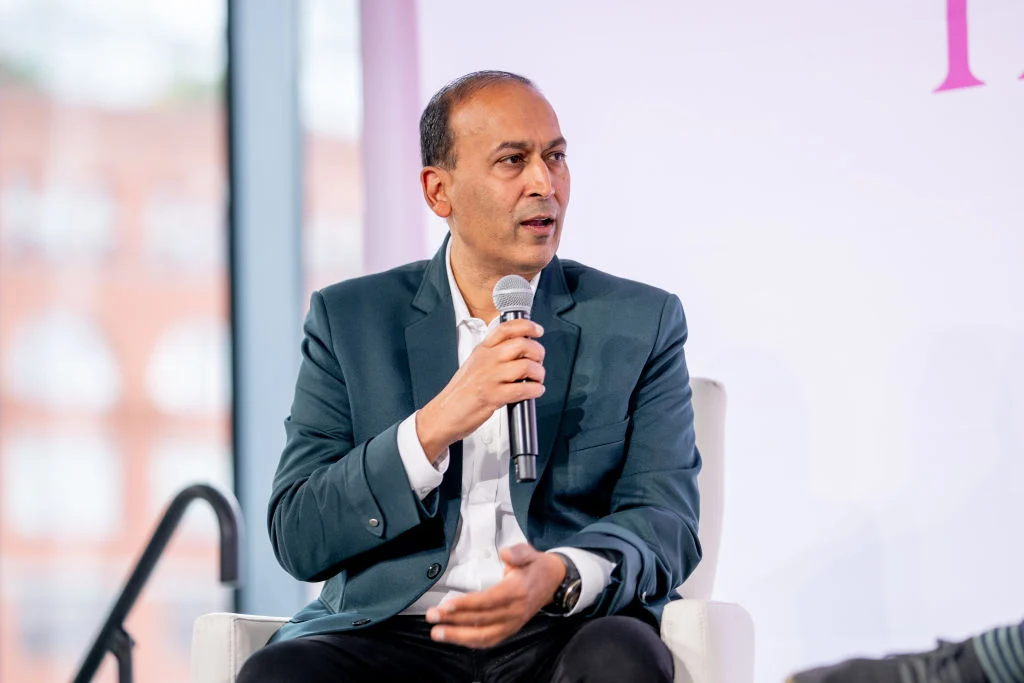
Fashion resale marketplace Poshmark has officially announced a major leadership transition, as founder Manish Chandra steps down from his role as Chief Executive Officer after nearly a decade and a half at the helm. Namsun Kim, who has held the position of executive chairman at the company since April, has been appointed as his successor, effective immediately. Chandra, who launched the platform alongside three co-founders from a Silicon Valley garage in 2011, will remain connected to the enterprise by transitioning to a seat on the board of directors.
The leadership handoff marks a significant milestone for one of the pioneering entities in the social commerce and peer-to-peer fashion resale industry. Under Chandra’s stewardship, Poshmark evolved from a modest local startup into a global digital destination boasting a community of 150 million users. The company navigated several monumental corporate chapters during his tenure, including a highly publicized entry into the public markets and a multi-billion-dollar acquisition by South Asian internet giant Naver.
As the platform prepares for its next phase of growth under Kim, industry analysts are closely watching how the change at the top will influence Poshmark’s strategic positioning within an increasingly crowded and competitive secondhand retail market.
The Origins and Rise of Poshmark
The story of Poshmark is deeply intertwined with the vision of Manish Chandra, who recognized early on the potential of combining social media interactivity with e-commerce. Long before circular fashion became a dominant consumer trend driven by environmental awareness and economic factors, Chandra envisioned a marketplace where closets could be digitized and shopping could be inherently social.
Founded in 2011 in Silicon Valley, the platform adopted a mobile-first approach that empowered everyday consumers to act as both buyers and sellers. By integrating features reminiscent of social networking apps—such as the ability to follow users, share listings, "like" items, and participate in themed virtual shopping events known as "Posh Parties"—Chandra cultivated a highly engaged user base. This community-centric model transformed online thrift shopping from a purely transactional experience into a vibrant digital culture.
Throughout the 2010s, Poshmark expanded its footprint across North America, scaling its operational infrastructure to accommodate millions of daily listings ranging from fast-fashion staples to luxury designer goods. As the platform gained traction, it attracted significant venture capital backing, setting the stage for its eventual transition into a publicly traded entity.
Chronology of Major Milestones
To understand the magnitude of Chandra’s departure, it is necessary to examine the key evolutionary stages of Poshmark over the past decade and a half:
- 2011: Manish Chandra and his co-founders launch Poshmark out of a Silicon Valley garage, introducing a social commerce application tailored for fashion resale.
- 2017–2019: The platform experiences rapid expansion, broadening its product categories beyond women’s apparel to include men’s and children’s fashion, home goods, and pet accessories, while scaling its gross merchandise value (GMV).
- January 2021: Poshmark makes its debut on the Nasdaq Global Select Market under the ticker symbol "POSH," pricing its initial public offering at $42 per share and valuing the company at over $3 billion at its peak market debut.
- October 2022: South Korean technology conglomerate Naver announces a definitive agreement to acquire Poshmark for approximately $1.2 billion in cash, representing a significant strategic play to expand Naver’s global e-commerce footprint.
- January 2025: Namsun Kim begins working closely with Manish Chandra to prepare for an executive transition, laying the groundwork for a structured handover of leadership responsibilities.
- April 2025: Namsun Kim is appointed executive chairman of Poshmark, positioning him to oversee corporate governance and strategic alignment with parent company Naver.
- August 2025: Poshmark officially announces that Chandra is stepping down as CEO, with Kim named as his successor, while Chandra transitions to the board of directors.
The Naver Acquisition and Strategic Integration
The trajectory of Poshmark shifted notably in late 2022 when Naver Corporation acquired the fashion marketplace for $1.2 billion. Naver, often referred to as South Korea’s Google, brought substantial technological capabilities to the table, particularly in artificial intelligence, search algorithms, and image recognition.
Following the acquisition, Poshmark operated as a standalone subsidiary under Naver, benefiting from the conglomerate’s vast technological ecosystem. Namsun Kim, who serves as president of investments at Naver, played an integral role in bridging the strategic objectives of the parent company with the daily operations of the U.S.-based resale platform.
Kim’s appointment as executive chairman earlier this year signaled a tightening integration between Naver’s global vision and Poshmark’s operational roadmap. By installing Kim as the permanent CEO, Naver appears to be cementing a leadership structure focused on scaling technological synergies, enhancing search and discovery features through AI, and optimizing the platform’s supply chain and logistics capabilities on an international scale.
Farewell Messages and Community Reaction
Upon announcing his departure, Manish Chandra reflected on his 15-year journey in a heartfelt email directed to the Poshmark user community. His words underscored the emotional connection he forged with the millions of buyers and sellers who built their micro-businesses on the platform.
"Leading this company has been the greatest honor of my professional life," Chandra wrote. "Every success we’ve achieved, every challenge we’ve overcome, has been because of you. It’s been the privilege of a lifetime witnessing each of you grow, and it has truly inspired me every single day. From the bottom of my heart, thank you. For being the extraordinary community that you are, for your trust, your creativity, and for all the possibilities you continue to create together."
Chandra also addressed the deliberate nature of the succession planning, highlighting that he and Kim had been collaborating since the beginning of the year to ensure a seamless leadership transition. Industry observers noted that this extended runway helped mitigate market uncertainty and demonstrated a high level of corporate governance during a critical leadership change.
The Resale Market Landscape and Future Implications
Chandra’s departure comes at a pivotal juncture for the broader recommerce and apparel resale sector. Driven by shifting consumer demographics—particularly Gen Z and millennial shoppers prioritizing sustainability, value, and circular fashion—the secondhand market has matured rapidly. Competitors such as Depop, Thrifty, Mercari, and eBay continue to innovate rapidly, vying for market share in an increasingly crowded digital landscape.
Furthermore, macroeconomic pressures, shifting consumer discretionary spending, and regulatory scrutiny regarding sustainability claims and authentication practices present both challenges and opportunities for resale platforms.
Under Namsun Kim’s leadership, Poshmark is expected to accelerate its technological evolution. With Naver’s backing, the platform has access to advanced machine learning tools that can improve recommendation engines, streamline the listing process for sellers through automated image tagging, and enhance trust and safety measures—a critical component for peer-to-peer marketplaces dealing with high-value luxury goods.
Market analysts suggest that Kim’s extensive financial and investment background within Naver will likely guide Poshmark toward disciplined financial growth, operational efficiency, and potential cross-border collaborations with Naver’s other global commerce holdings, such as the Japanese resale platform Kream.
Conclusion and Outlook
As Manish Chandra concludes his foundational chapter at Poshmark, the company transitions from a founder-led startup into a globally integrated enterprise guided by institutional leadership. While the departure of a visionary founder is invariably met with a period of adjustment, the deliberate multi-month transition period orchestrated by Chandra and Kim is designed to maintain continuity.
With 150 million users spanning North America and beyond, Poshmark remains a dominant force in social commerce. The forthcoming era under Namsun Kim will test the platform’s ability to innovate technologically while preserving the unique community ethos that Chandra spent a decade and a half cultivating.