





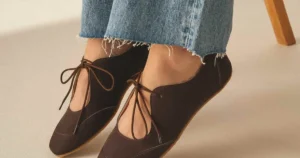



The digital fashion landscape is witnessing a significant shift with the emergence of Phia, a mobile shopping platform and browser extension designed to streamline the online retail experience. Founded by Phoebe Gates, daughter of Microsoft co-founder Bill Gates, and her Stanford University roommate Sophia Kianni, the startup has quickly ascended from a campus project to a venture-backed disruptor. Often described by its founders as "Google Flights for fashion," Phia utilizes advanced search algorithms to allow users to compare prices across a vast spectrum of retailers, addressing a growing demand for transparency and efficiency in the e-commerce sector.
In early September 2025, Phia announced the successful closing of an $8 million seed funding round, a milestone achieved in just three and a half weeks. The round was led by the prestigious venture capital firm Kleiner Perkins and drew an eclectic and powerful roster of investors, including Spanx founder Sara Blakely, former Meta COO Sheryl Sandberg, Fanatics CEO Michael Rubin, and media personalities Kris Jenner and Hailey Bieber. This influx of capital follows a period of rapid user acquisition; since its initial launch in April 2025, the platform has reportedly amassed approximately 500,000 users, signaling strong market fit within the competitive fashion-tech ecosystem.
The Evolution of Phia: From Desktop Extension to Mobile Powerhouse
The genesis of Phia traces back to the friendship between Gates and Kianni, who met two years ago while students at Stanford. Their collaborative efforts began approximately a year later with a shared interest in how technology could solve common frustrations in the fashion industry. The initial iteration of their product was a desktop Chrome extension specifically designed to help users locate secondhand alternatives to new clothing items. However, early testing and user feedback revealed critical insights that necessitated a strategic pivot.
Kianni noted that the original desktop product was "buggy" and, more importantly, misaligned with the habits of their target demographic. Data collected from their early user base indicated that the majority of Gen Z and millennial consumers conduct their shopping almost exclusively on mobile devices rather than laptops. Furthermore, while sustainability remains a core value for many, the immediate demand among their peers was for price optimization across the primary market rather than just secondhand comparisons.
"We should have known this honestly from our own behavior," Gates remarked regarding the shift to mobile. "The girl who’s obsessively shopping and scrolling all the time is often doing it on her phone; laptop more when she’s working, but the phone is key." This realization prompted a complete overhaul of the platform, shifting the focus toward a mobile-first application centered on real-time price comparisons and seamless cross-platform search capabilities.
Strategic Funding and the Power of Networks
The rapid success of Phia’s fundraising efforts underscores the intersection of technical innovation and high-profile networking. While the founders initially sought support through Stanford’s social entrepreneurship programs, the transition to institutional venture capital was catalyzed by proactive outreach. Soma Capital provided one of the first institutional checks after discovering the product via LinkedIn, subsequently introducing the founders to the team at Kleiner Perkins.

The composition of the seed round reflects a deliberate strategy to blend traditional Silicon Valley expertise with the influence of the fashion and lifestyle industries. By securing investment from figures like Michael Rubin and Sara Blakely, Phia gains access to decades of experience in retail logistics and brand building. Rubin, who has long championed the role of technology in e-commerce, expressed confidence in the founders’ vision. "I’ve always believed in the power of technology to transform how people shop online," Rubin stated. "What excites me about Phia is how Phoebe and Sophia are bringing real innovation to the space by making shopping smarter."
The involvement of Kris Jenner and Hailey Bieber further emphasizes Phia’s focus on the "creator economy" and digital-first marketing. These investors bring not only capital but also a direct line to the massive consumer bases that drive modern fashion trends.
Technical Infrastructure and the 300 Million Item Database
At the core of Phia’s value proposition is its robust search engine, which Kianni confirms now indexes more than 300 million fashion items. The goal is to create a frictionless environment where consumers can track their purchase history, manage search queries, and receive intelligent recommendations for new products. This level of data aggregation places Phia in direct competition with established shopping aggregators, yet its specific focus on the aesthetic and social nuances of fashion provides a distinct edge.
The platform is part of a broader wave of startups utilizing artificial intelligence to humanize the online shopping experience. Phia’s founders have been transparent about their use of AI, including utilizing ChatGPT to assist in developing viral marketing campaigns and social media strategies. Looking ahead, Gates has articulated a vision for a "personalized agent" within the app. This feature would theoretically sync with a user’s digital calendar to suggest specific outfits or purchases based on upcoming events, and provide data-driven advice on when to buy, keep, or resell specific wardrobe pieces.
The Founders: A Synergy of Activism and Entrepreneurship
The leadership of Phia brings together two distinct yet complementary backgrounds. Sophia Kianni is already a well-established figure in global activism. Before founding Phia, she established Climate Cardinals, a nonprofit dedicated to translating climate change information into over 100 languages. Her work earned her a seat as one of the youngest advisers to the United Nations and recognition on the BBC’s 100 Women list. Kianni’s experience in scaling a global nonprofit and navigating high-level international organizations has provided a foundation for the rapid scaling of Phia.
Phoebe Gates, while often recognized for her family’s philanthropic and technological legacy, has carved out her own space in the fashion world through her studies at Stanford and her presence in the digital fashion community. Together, they have adopted a "digital-first" and "open-source" approach to company building. This is most evident in their podcast, "The Burnouts," which launched alongside the app in April.
"The Burnouts" has become a central pillar of Phia’s marketing strategy, amassing nearly half a million followers on Instagram and generating over 10 million views across various social platforms. The podcast serves as a funnel for the app, offering career advice to young women while documenting the "stumbles and hurdles" of building a startup. By sharing their entrepreneurial journey in real-time, Gates and Kianni have fostered a loyal community that feels invested in the brand’s success.

Market Context and Future Implications
Phia enters a market that is increasingly crowded yet ripe for disruption. Large-scale platforms like Google Shopping and Klarna offer similar price-tracking features, but Phia’s success suggests there is a significant niche for platforms that cater specifically to the lifestyle and discovery-based habits of younger shoppers. The fashion industry, which is projected to continue its shift toward e-commerce dominance, is currently grappling with issues of price volatility and fragmented inventory across thousands of niche retailers.
The $8 million in fresh capital will primarily be directed toward expanding the Phia team, which currently consists of 12 employees. In keeping with their digital-native approach, the founders have utilized social media as their primary recruitment tool, sourcing designers and developers directly from their online audience.
The success of Phia also highlights the evolving role of the "founder-influencer." In an era where brand loyalty is often tied to individual personalities, the public-facing roles of Gates and Kianni provide Phia with an organic marketing reach that traditional retail platforms struggle to replicate. However, the long-term challenge for Phia will be maintaining its technological edge as AI becomes a standard feature across all e-commerce platforms.
As Phia continues to scale, its ability to integrate more deeply into the consumer’s lifestyle—moving beyond a simple search tool to a comprehensive "personalized agent"—will be the true test of its longevity. For now, the company stands as a prominent example of how the next generation of entrepreneurs is leveraging both high-level venture capital and grassroots social media engagement to redefine the boundaries of fashion technology.
"There’s so much more that we still need to do, so much more we want to learn and grow," Kianni said, reflecting on the company’s trajectory. "We want to be able to do that publicly, so that our audience can learn and grow alongside us." With a massive database, a high-profile investor list, and a rapidly growing user base, Phia is well-positioned to remain at the forefront of the digital fashion revolution.